The current situation in the Strait of Hormuz resembles a geopolitical game of chess worth billions of USD, in which the role of pawns is played by supertankers filled with millions of barrels of oil.
Yuri tanker and the U.S. blockade
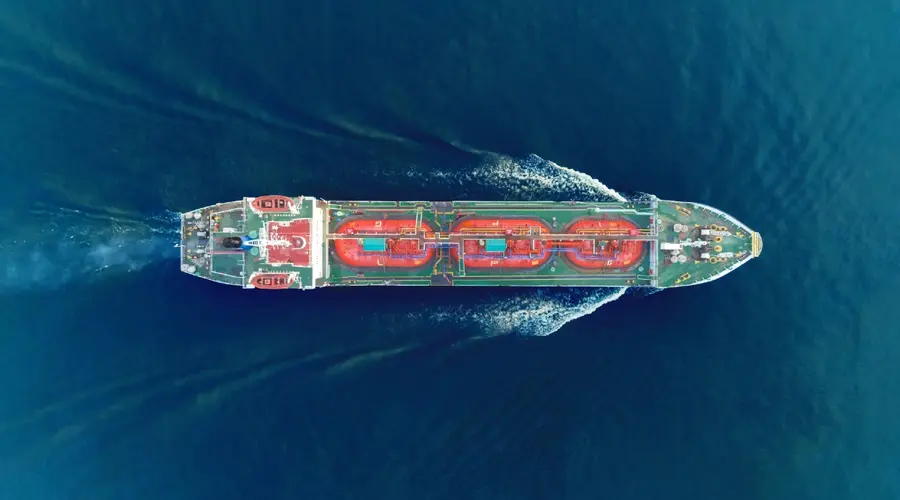
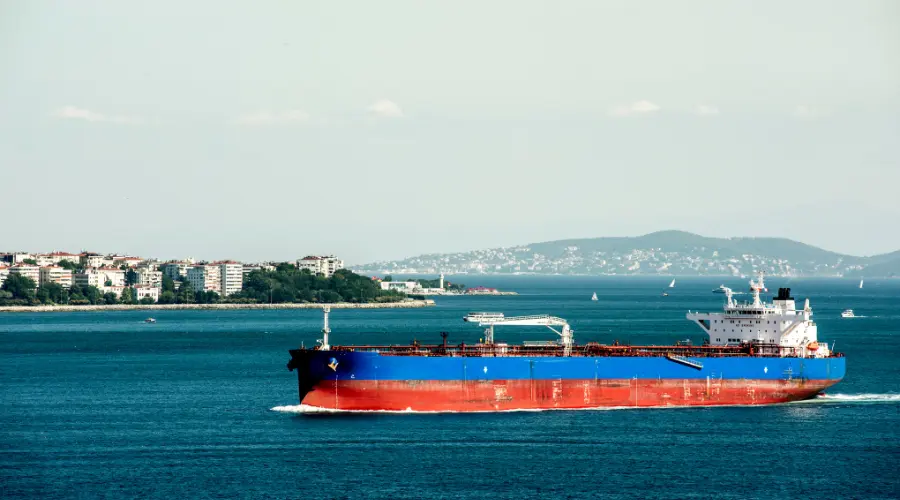
Yuri, a giant under U.S. sanctions, carrying 2 million barrels of oil loaded on the island of Kharg, after several days of “radio silence” and transponder shutdown, suddenly appeared at the entrance to the strait.
Read also: Suspicious transactions on the oil market. The insiders earned billions of dollars. “A terrifying example of market manipulation”
The decision of Tehran is a clear test of the White House’s determination. The tanker passing the island of Larak, heads straight toward the U.S. blockade, which in practice has almost completely halted commercial traffic in the region.
CENTCOM confirmed that since the start of the Strait of Hormuz blockade operation, the U.S. military has already redirected 33 ships and detained two Iranian tankers this week.
The risk of a direct clash on the waters of the Strait of Hormuz between the U.S. and Iran is highest in decades. That is why trading algorithms on the London and New York exchanges are operating at maximum speed.
It should be noted that this is not the end of the problems, because another Iranian supertanker Helm appeared unexpectedly near Singapore.
Although its ultimate goal remains unknown, the very presence of such large transports outside Washington’s control effectively destabilizes market forecasts.
Continuously rising tension in the strait broke supply chains at the most critical moment.

Source: VesselFinder.
See also: Fuel prices before the next drop? TACO Trump rules the oil market. Expert warns of a “catastrophe”
Brent and WTI oil prices still up
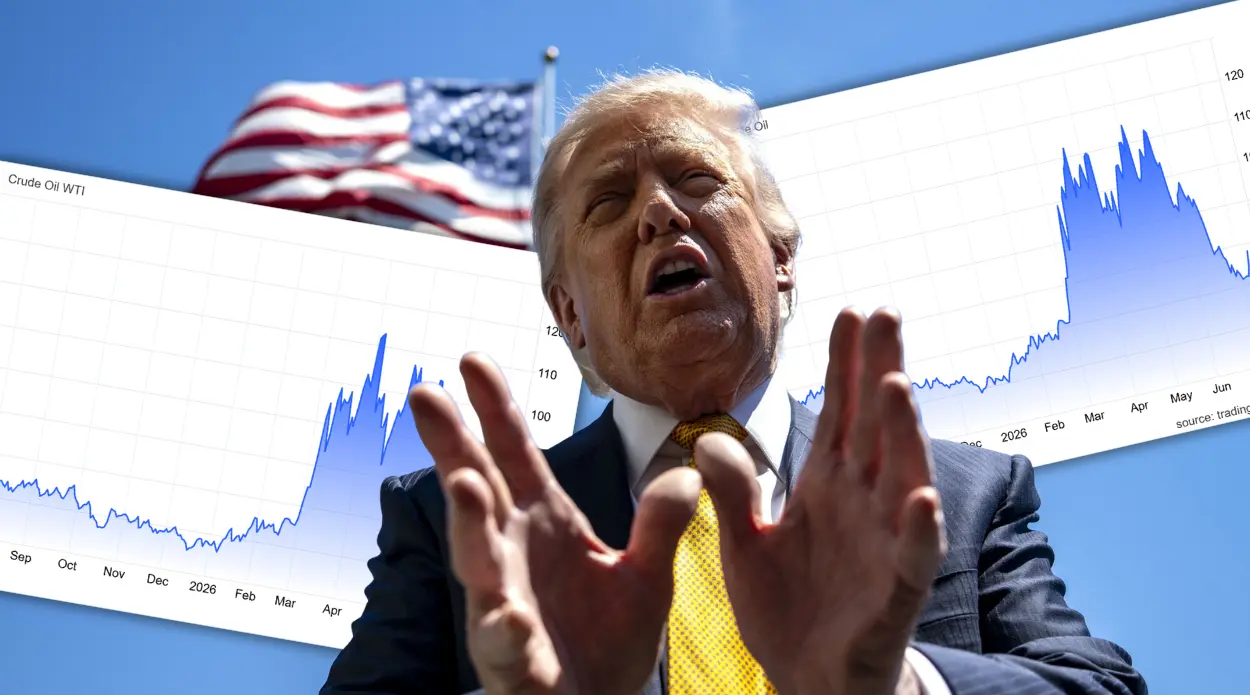
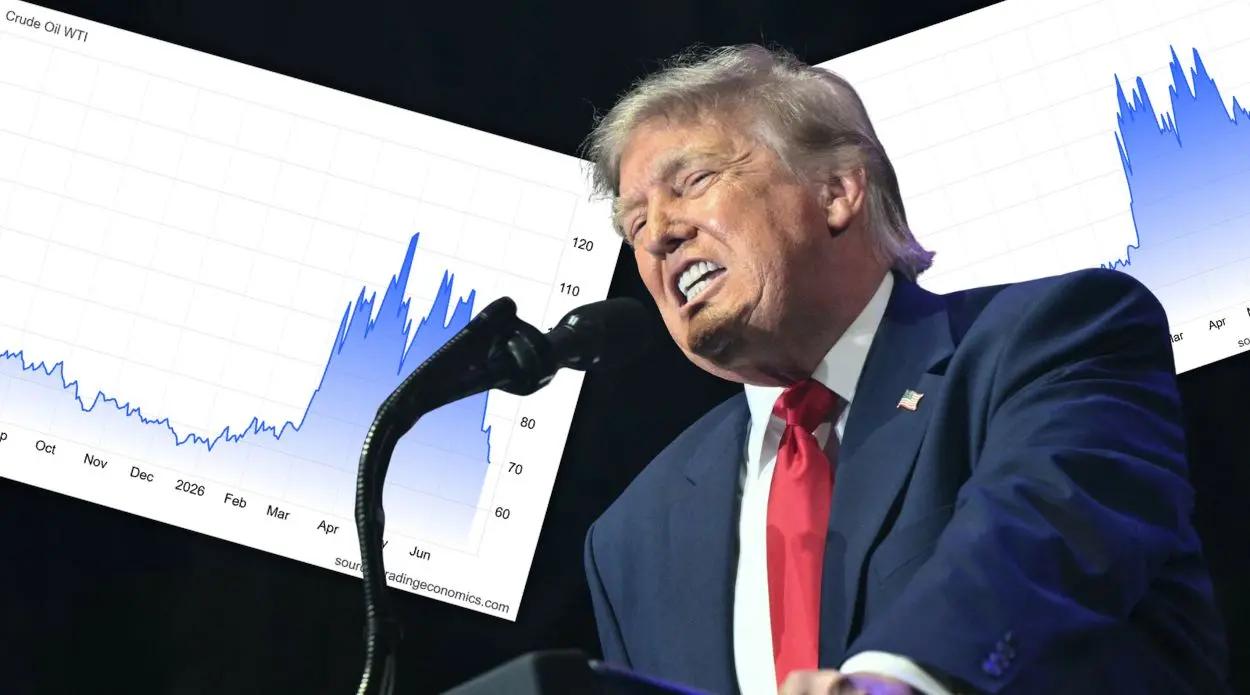
Futures markets are boiling. Brent oil price currently oscillates around 105 USD per barrel.
This is a 17% increase in just one week.
Chart. Futures contract prices for Brent oil

Source: Trading Economics.
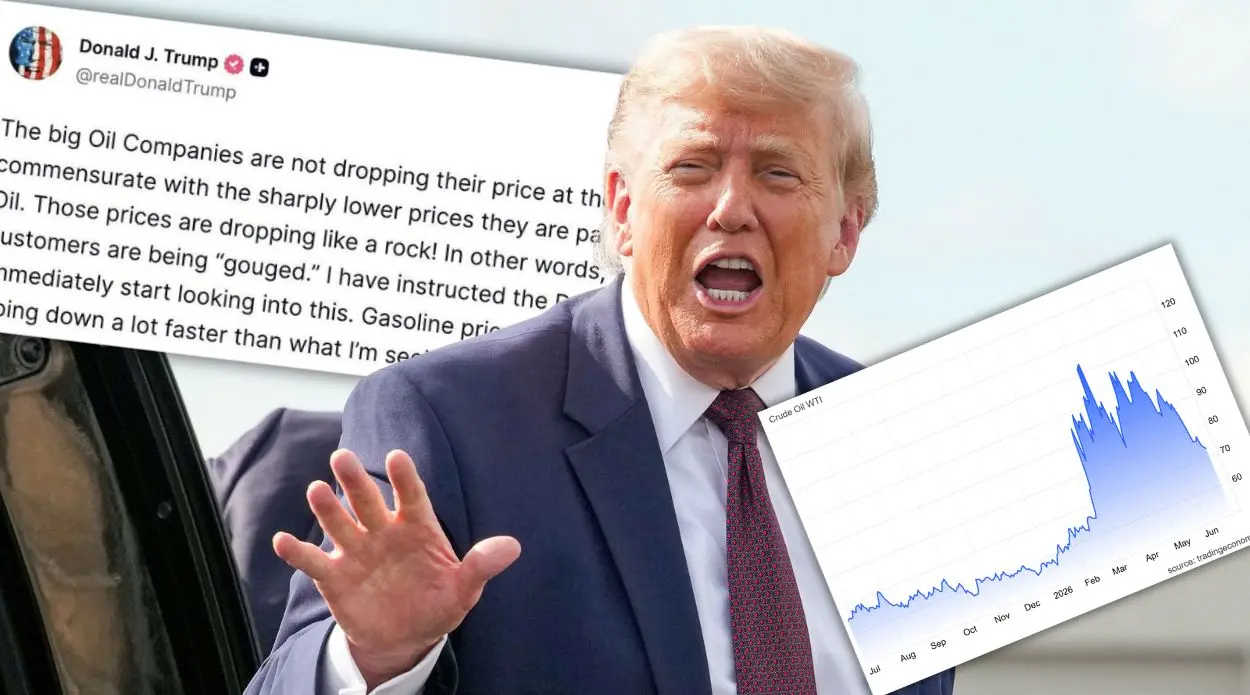
Meanwhile the sweet and light WTI oil is already trading around 96 USD.
Such a sharp price rally for the fifth consecutive day is the result of informational chaos coming from the Persian Gulf.
Prices are also still buoyed by the ongoing deadlock in diplomatic talks.
Investors anxiously follow Donald Trump’s activity on the Truth Social platform.
Hard rhetoric, including an order to the U.S. Navy regarding the “elimination” of mine-laying units, effectively torpedoes the efforts of Pakistani mediators. As strategists at Saxo Markets note, we are currently dealing with a real, physical supply shock.
When oil flows are halted, theoretical pricing models lose relevance and pure panic and a fight for access to the commodity take over.
Especially concerning in the context of the latest note from analysts at Goldman Sachs, who leave no room for illusion.
They claim that even with immediate lifting of the Strait of Hormuz blockade and no further attacks, restoring full processing capacity in the Persian Gulf will take at least several months.
According to the latest estimates, in April oil production was limited to 14,5 million barrels per day, which is over 50% of the entire region’s potential.
If the Yuri supertanker manages to break through the blockade or, conversely, is sunk or seized, the current 105 USD for Brent oil may turn out to be only a stopover on the way to even higher peaks.
Chart. Futures contract prices for WTI oil (West Texas Intermediate)

Source: Trading Economics
Read also: Deadlock in the Middle East hits fuel prices. Will there soon be a drop to 40 USD per barrel?
See also: Fuel prices in Poland will rise, will there be shortages at stations? Expert: “It will not be a one-time sharp move that will affect drivers”
Source: Bloomberg.