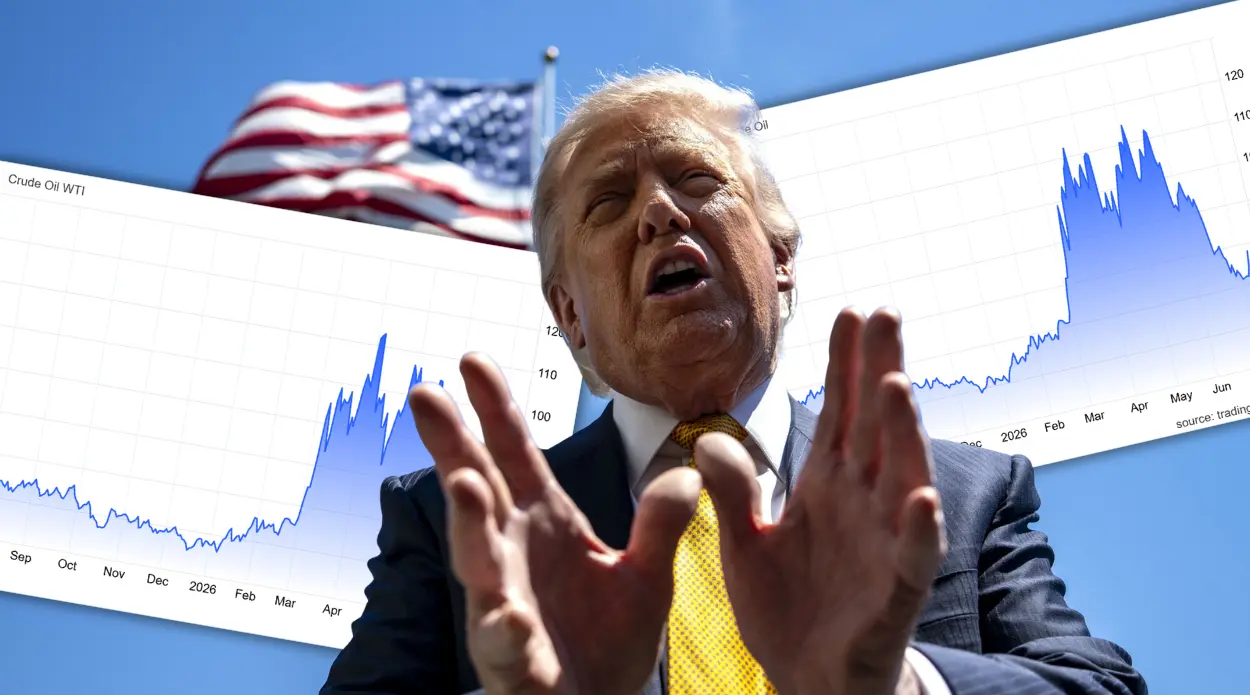
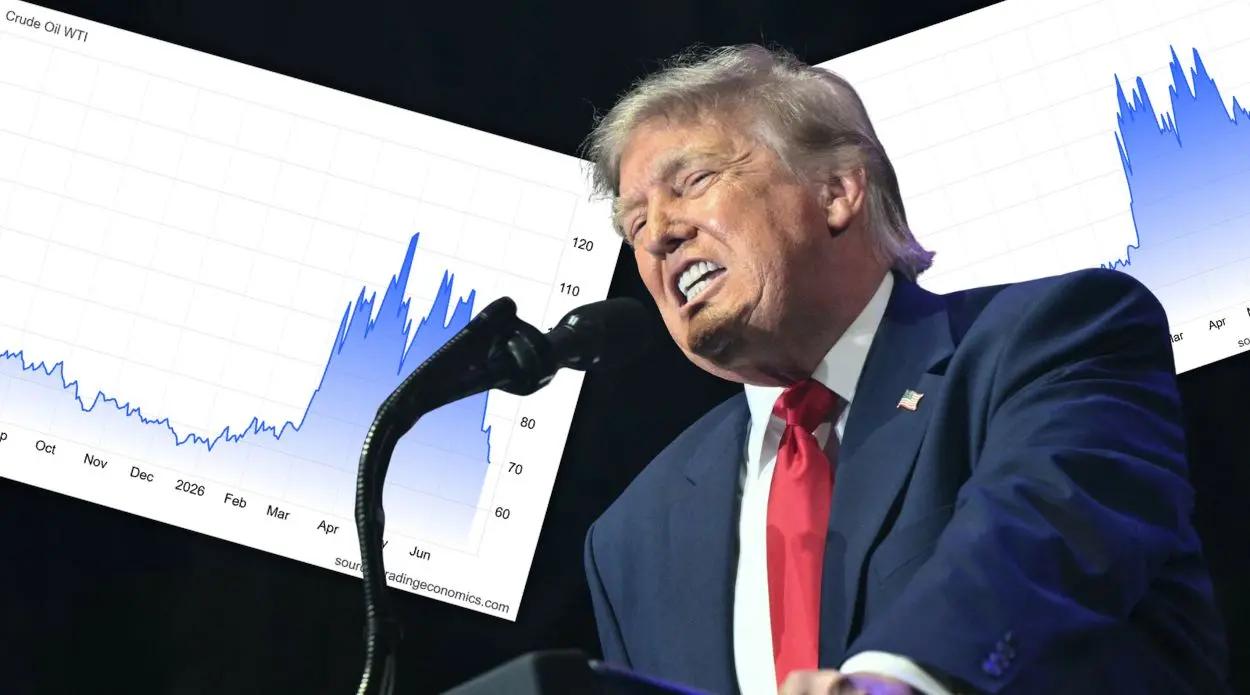
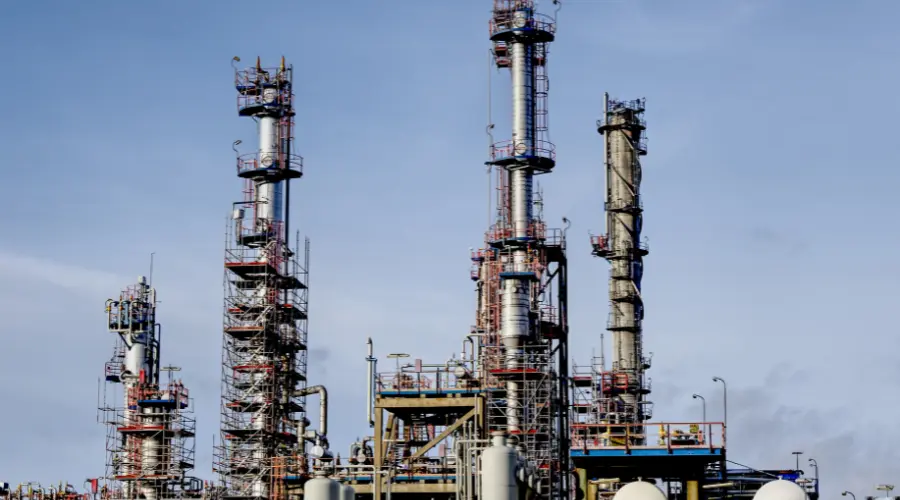
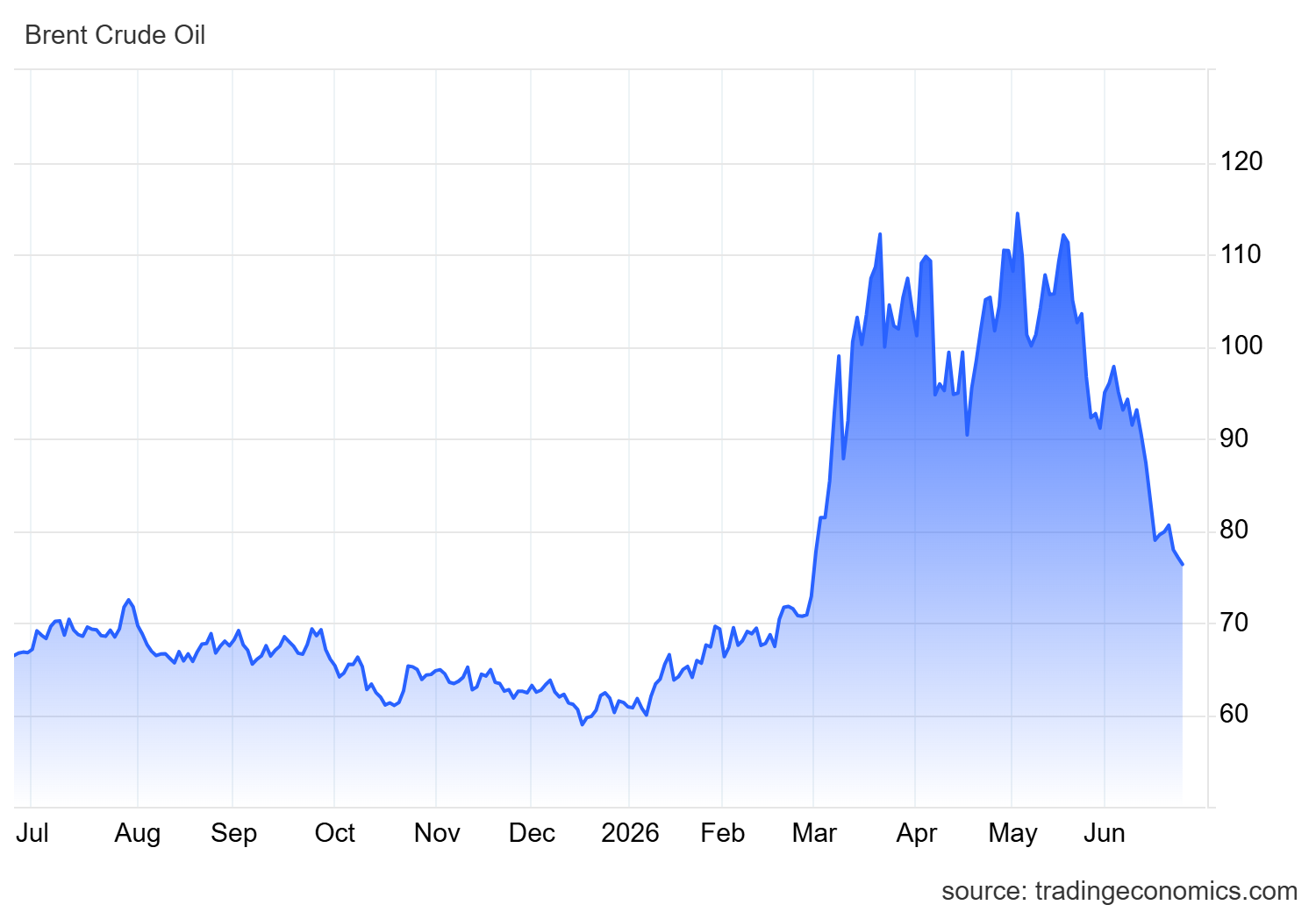
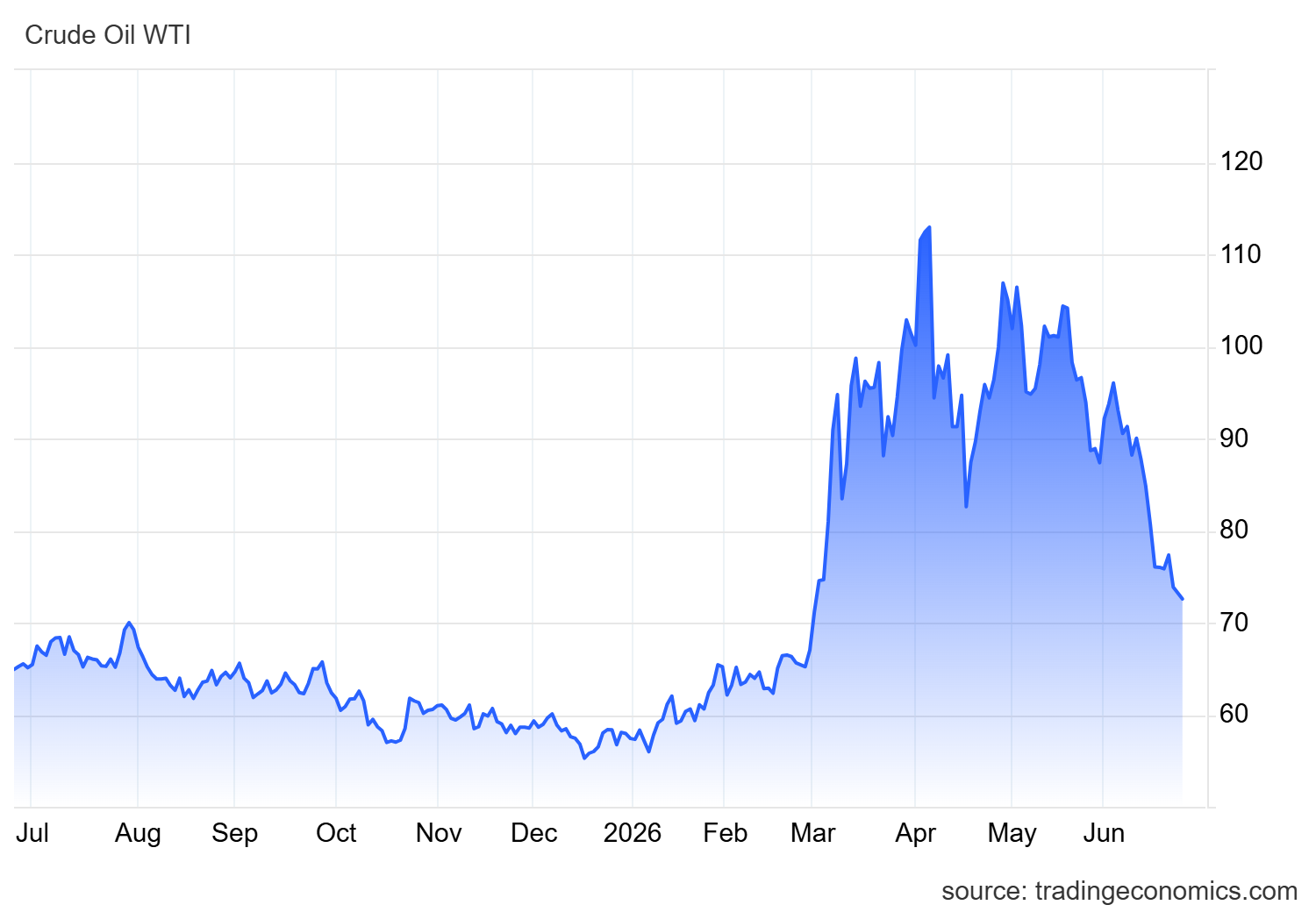
Oil prices on Wednesday, June 24, recorded a more than 1-percent drop, continuing the trend of discounts and brushing against four‑month lows.
Algorithms betting on declines, i.e. a return to geopolitical normalcy
Brent crude reached 76,30 USD, while U.S. West Texas Intermediate crude fell to 72,43 USD.
This is a clear signal that systemic supply risk is decreasing, and speculative capital is looking for other paths.
Chart. Futures price for Brent crude
Source: Trading Economics.
The main driver of these dynamic changes is latest news from the Middle East.
Bank strategists at ING point to “positive signals from the Persian Gulf” that fuel optimism about the stabilization of crude flow through the strategic Strait of Hormuz.
Although the volume of passing units still falls short of pre‑war levels, recent days have brought noticeable revitalization of trade activity.
Chart. Futures price for WTI (West Texas Intermediate)
Source: Trading Economics.
See also: Shock in the oil market. UAE exit OPEC and OPEC+. Reuters warns of “chaos”
Washington plays the cards. Diplomacy versus market speculation
Pressure for price declines intensified after Washington officially granted Tehran a 60‑day suspension of existing sanctions. This decision followed preliminary peace talks and coincided with a visible weakening of military actions in the Lebanon region.
Tomomichi Akuta, senior economist at the renowned Mitsubishi UFJ Research and Consulting, notes a direct causal link between real hopes for easing tensions on the U.S.–Iran line and the rapid recovery of transport liquidity across the region.
In theory, further progress in nuclear negotiations could ultimately push barrel prices back to pre‑conflict levels. Nevertheless, the war in Iran has shown that frequent media statements are largely irrelevant to the hard geopolitical reality.
What we see today in the market is emotional play and the fact that investors simply believed the war in the Middle East would end.
Example? On Tuesday, Oman and Iran agreed to continue talks on future shipping administration in the Strait area. U.S. Secretary of State Marco Rubio immediately countered these revelations, warning that any Iranian attempt to impose transit fees would be a blatant violation of international law.
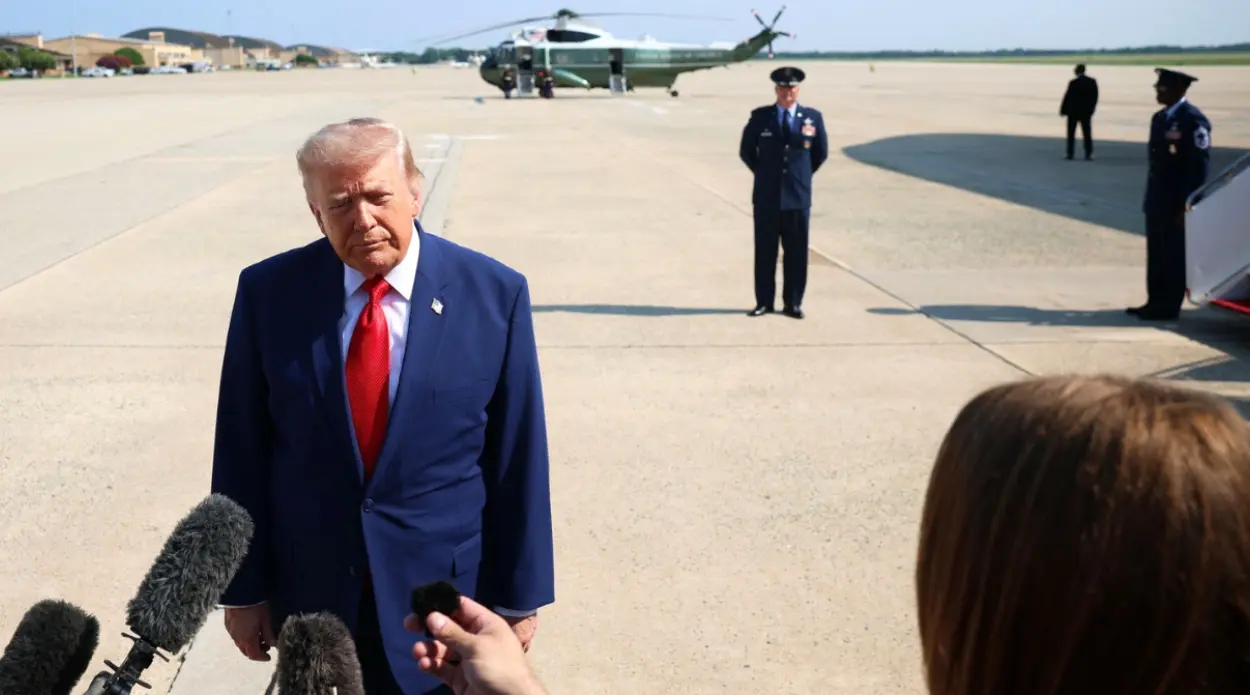
Additionally, President Donald Trump stoked the fire, announcing that Iran had finally agreed to stringent nuclear inspections “to infinity”. Tehran immediately denied it.
These discrepancies show that the market must constantly evaluate not only hard facts but also the massive information noise.
See also: Oil above $150 per barrel. Experts paint bleak forecasts. Fuel prices enter a “radical scenario”
Satellites verify reality, and supertankers set sail
Tech sector investors and hedge funds do not base their strategies solely on politicians’ statements. For them, hard data analysis from specialized ship‑tracking systems remains key.
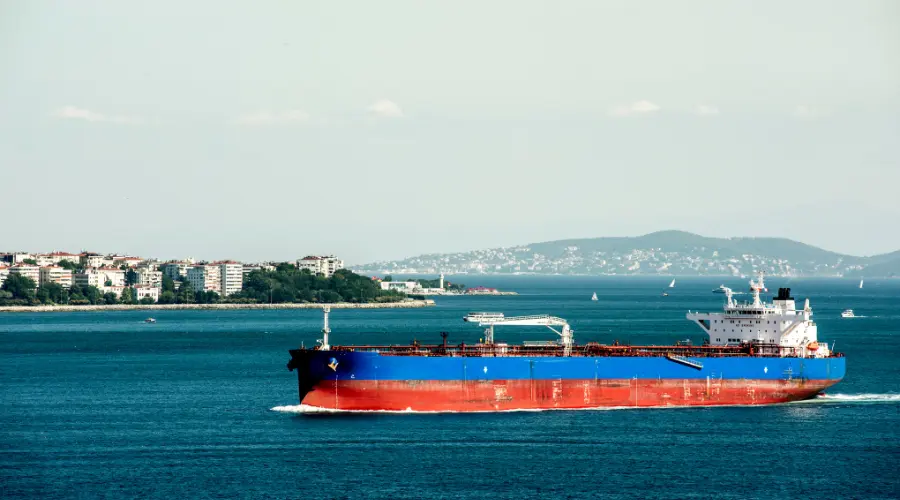
Telemetry data clearly showed that on Tuesday three previously trapped supertankers safely left the fiery Strait.
Moreover, the UN shipping agency launched a comprehensive evacuation plan for hundreds of ships and nearly 11000 sailors still trapped in the Gulf, made possible by the U.S.–Iran ceasefire agreement.
Although an Iranian military source linked to the Fars agency claims that daily throughput remains limited and coordinated by the Islamic Revolutionary Guard Corps Navy, the free market sees primarily the breaking blockade.
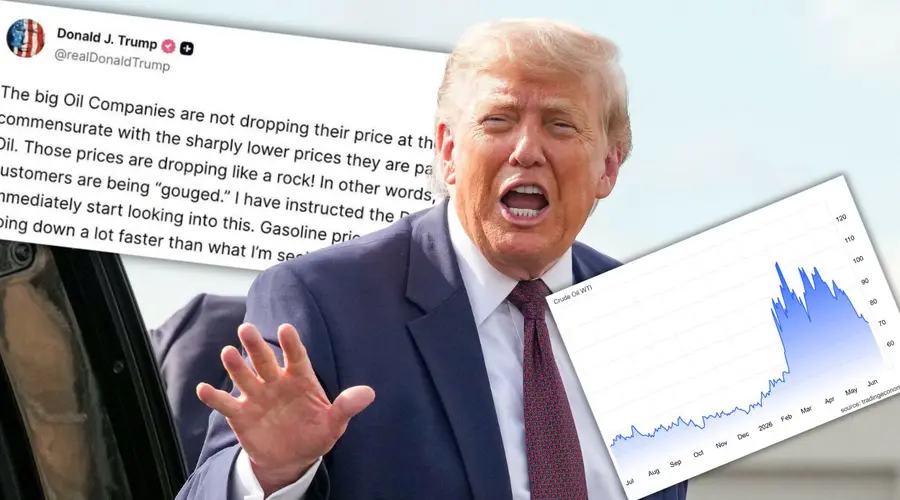
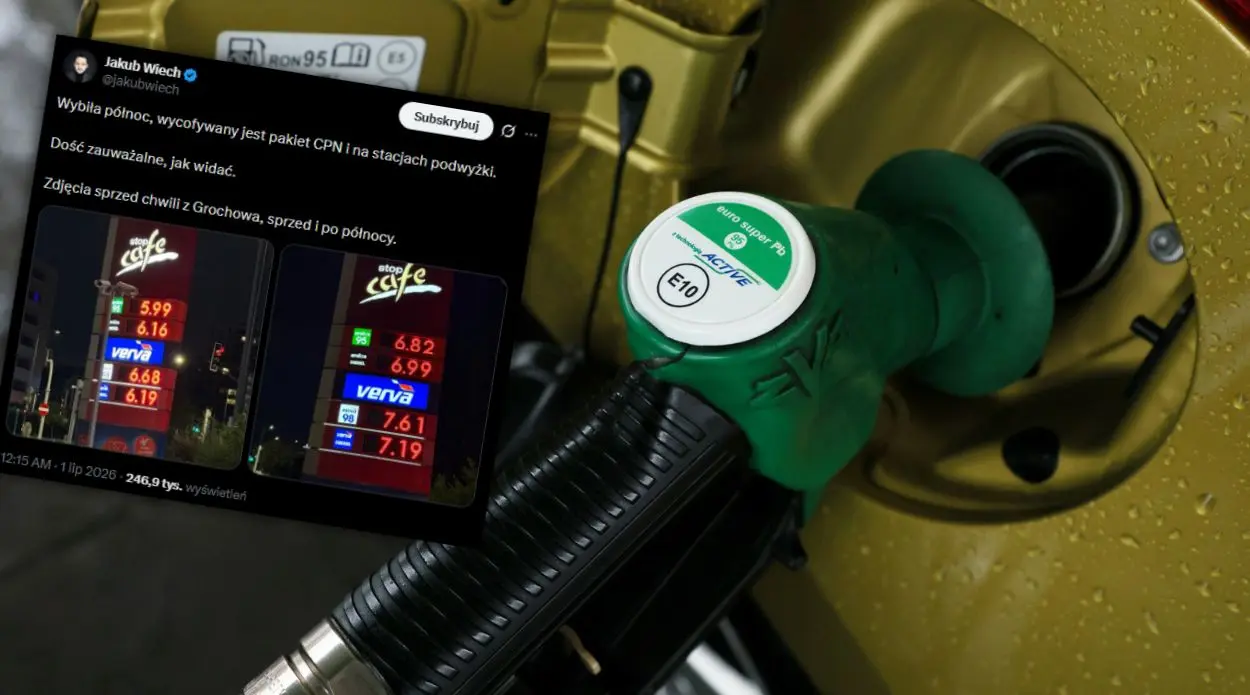
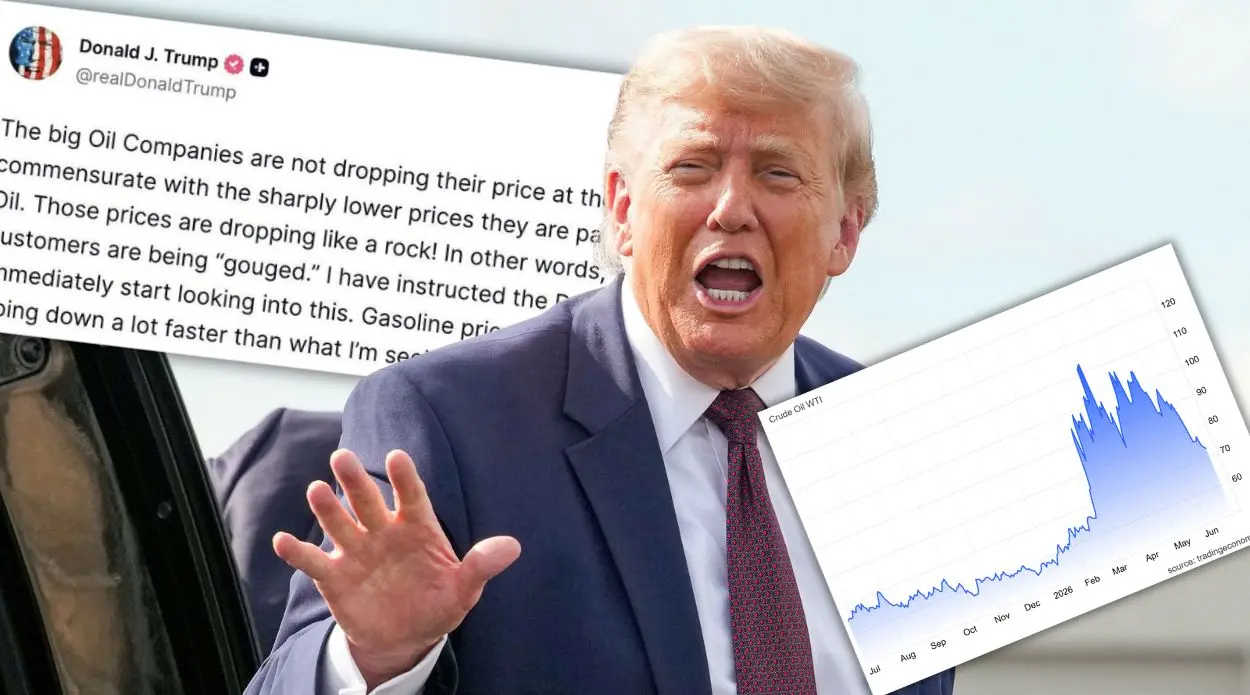
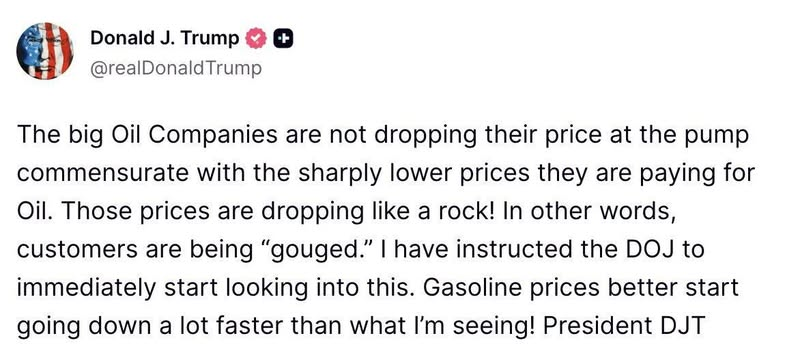
Oil is, of course, further inflamed by President Donald Trump, who on the Truth Social platform accuses U.S. oil companies of too slow price cuts at stations. Trump noted that he has already filed a complaint with the Department of Justice and stated that consumers are “being ripped off”.
Source: Truth Social.
See also: Trump in Beijing. Nvidia shares may not escape the rally? The giant’s CEO counts on a U.S.–China agreement
Source: Reuters, Truth Social.