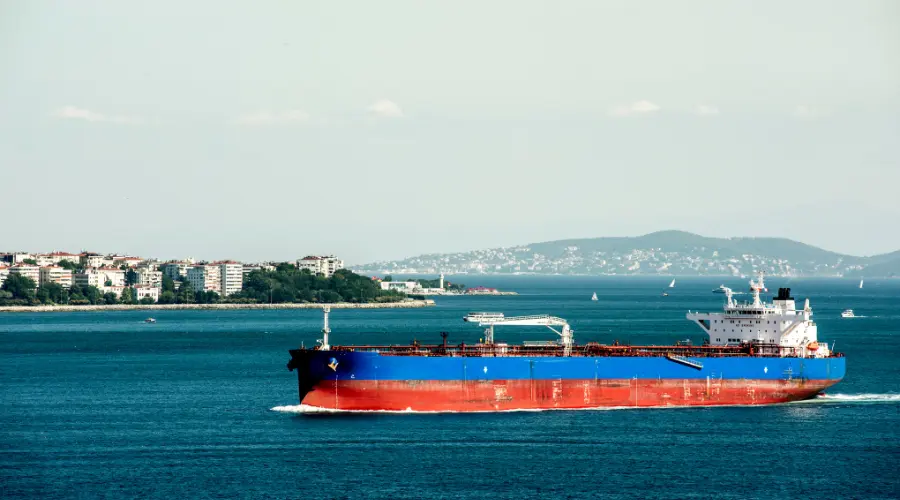
Analysts Goldman Sachs claim that oil transport through the Strait of Hormuz, a vital artery linking the Persian Gulf to global markets, could fall to only about 70% of pre-conflict levels.
Hormuz at a crossroads. Goldman Sachs report rattles market calm
Recall that before the war, about 20 million barrels of oil flowed through this point daily, forming the backbone of energy security.
According to Goldman Sachs estimates, current flow is only 1,3 million barrels of oil per day.
Read also: Impasse in the Middle East hits fuel prices. Will a drop to $40 per barrel soon?
Additional 1,6 million barrels come from the Oman Sea, linked to so‑called “dark runs.” To return to the old normal, flow would need to rise by another 13 million barrels per day.
Although supply revival will occur by the end of next month and regional production will rebuild by October, volumes through the Hormuz route may remain permanently limited. Producers in the region have learned to live without this choke point.
While Washington and Tehran imposed mutual blockades, paralyzing commercial traffic, Middle Eastern countries did not sit idle. They leveraged modern infrastructure and logistics to redirect raw material streams. It was a survival lesson that forced the implementation of alternative routes.
Saudi Aramco, the Saudi oil giant, dramatically increased use of its transcontinental pipeline, pushing crude directly to the Red Sea coast. United Arab Emirates launched a pipeline to the port of Fujairah, safely out of Hormuz’s reach.
Iran directed its export capacity toward the Turkish port of Ceyhan. Currently, as much as 7,5 million barrels per day flow through Yanbu on the Red Sea, Fujairah, and Ceyhan. The traditional, politically sensitive route lost its monopoly.
See also: Shock in the oil market. UAE exit OPEC and OPEC+. Reuters warns of “chaos.”
Paradigm shift. UAE and Kuwait aim for full independence
What began as an emergency plan evolved into a lasting long‑term strategy.
The best evidence is the declarations from United Arab Emirates. The country announced an ambitious plan to fully detach from the whims of the Strait of Hormuz. UAE is expanding the ports of Dibba, Fujairah, and Khor Fakkan on the Oman Sea, also planning a new port.
UAE’s Minister of Foreign Trade Thani Al Zeyoudi made it clear: the country seeks zero dependence on Hormuz, regardless of whether the route is open. Kuwait is moving in a similar direction.
State producer Kuwait Petroleum Corp is already negotiating with Saudi Arabia and UAE on expanding their pipeline systems. Chairman Sheikh Nawaf Al‑Sabah confirmed that the country seeks alternatives to avoid blockades.
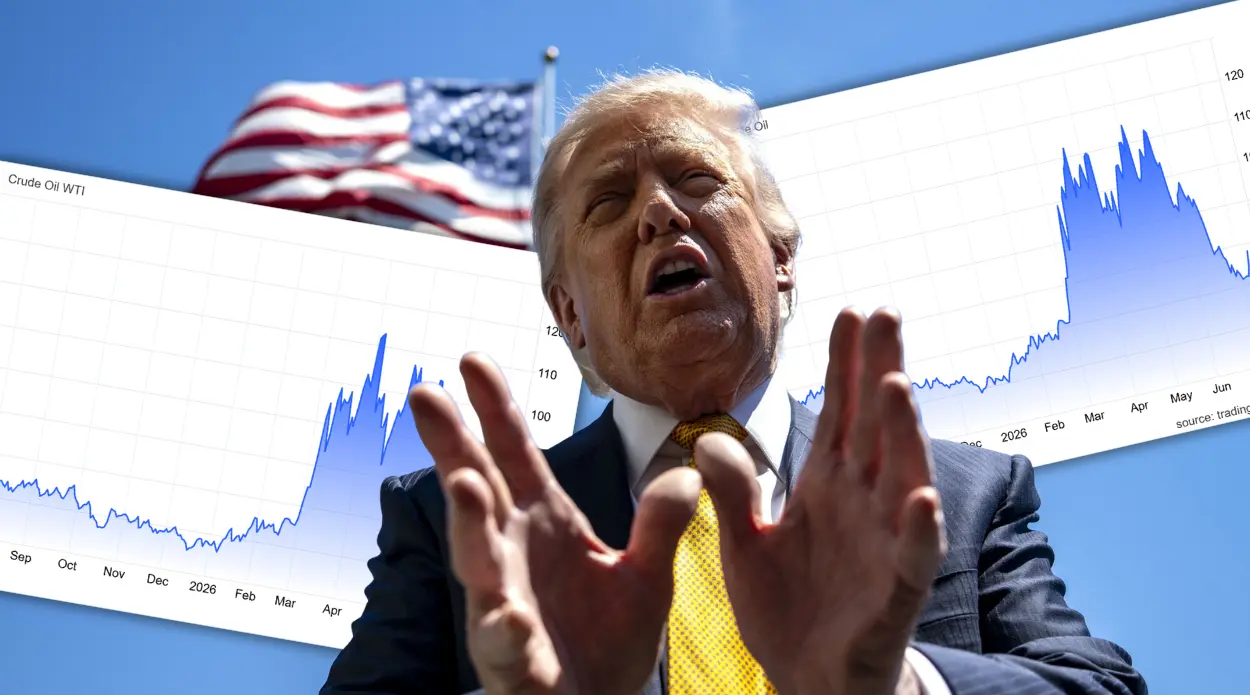
How does the oil market react? Brent oil price on 18 June is still falling, landing at 77,23 USD.
Chart. Brent futures contract price

Source: Trading Economics.
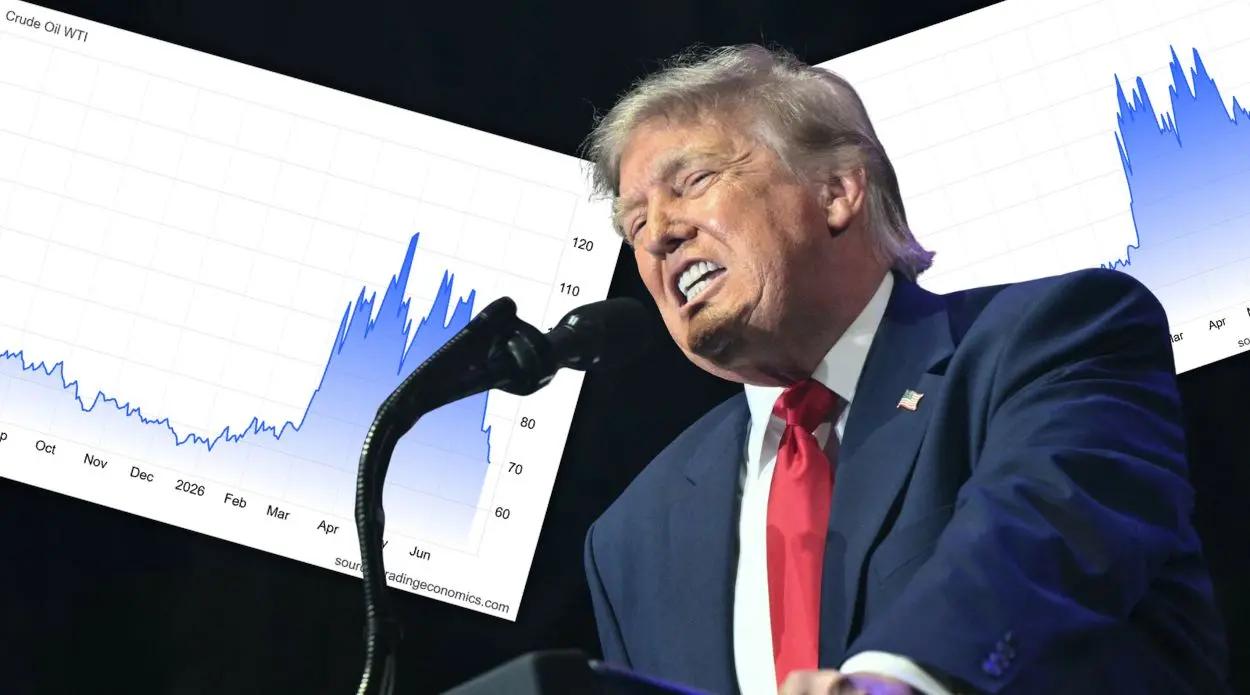
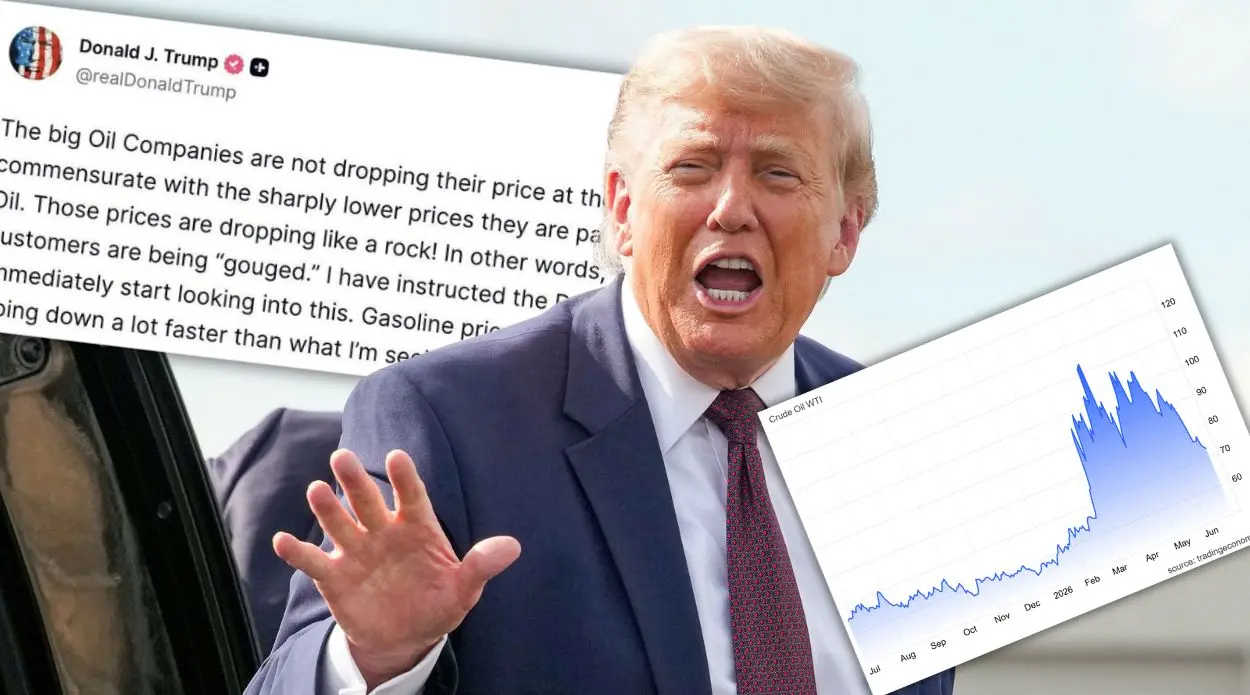
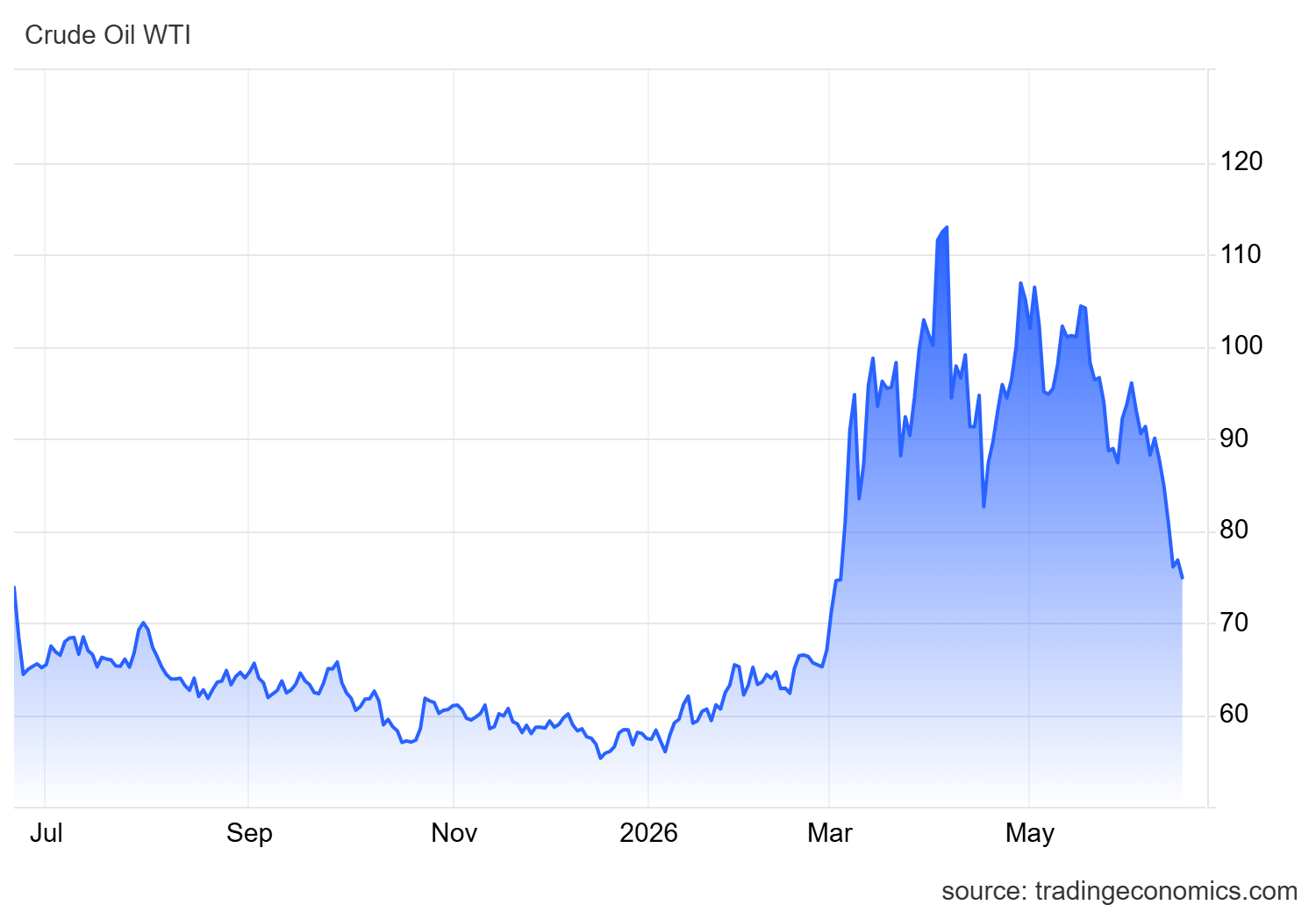
Meanwhile the light and sweet WTI price falls to 74,41 USD.
This is a steep drop, as both Brent and WTI have not fallen below $100 for many weeks.
Chart. WTI (West Texas Intermediate) futures contract price
Source: Trading Economics.
See also: Oil above $150 per barrel. Experts paint bleak forecasts. Fuel prices enter a “radical scenario.”
Source: Bloomberg.