Rollercoaster in the coffee and cocoa market
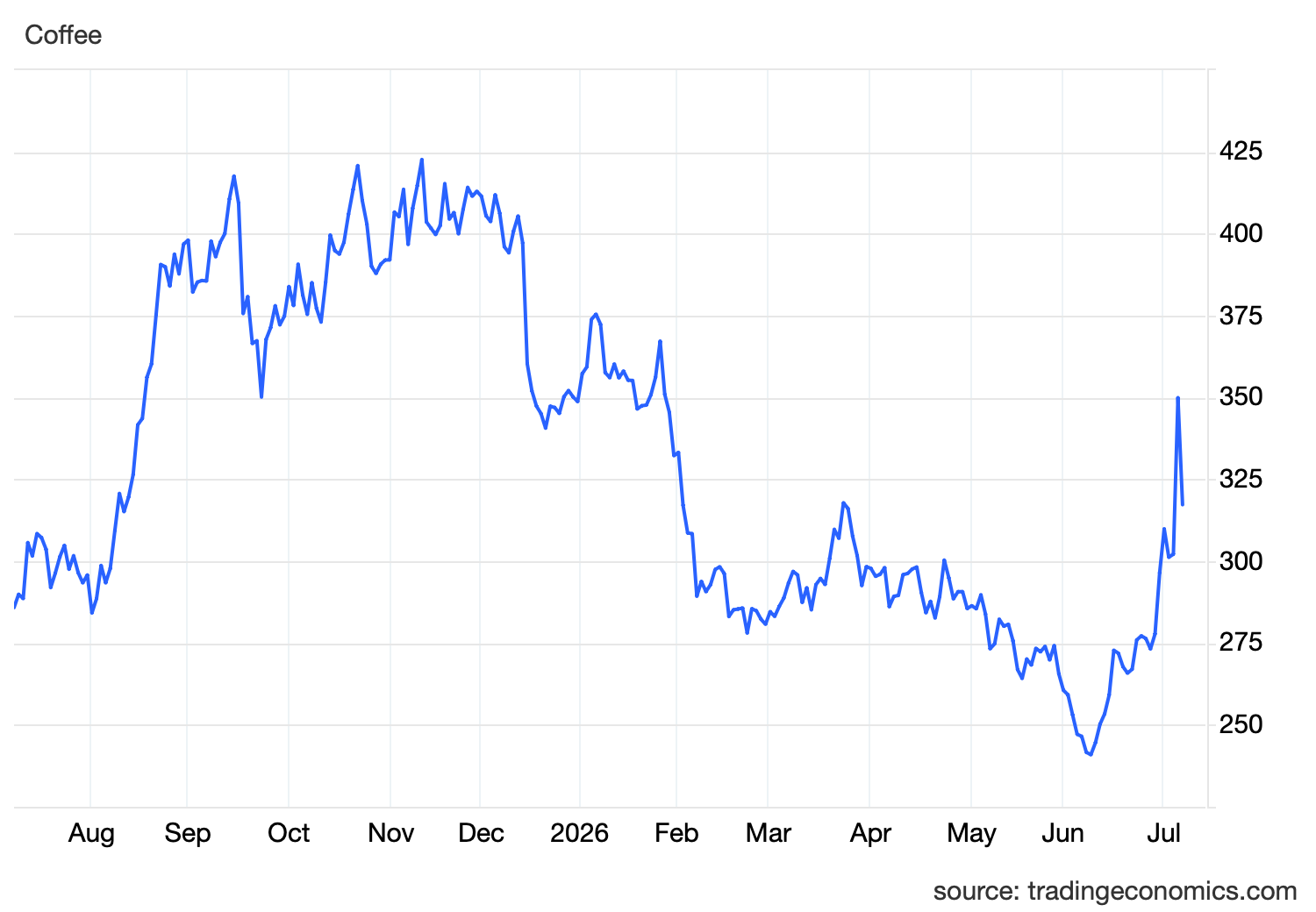
The price of Arabica coffee has sharply fallen mid‑week, wiping out the impressive gains recorded just a few days earlier.
As Michał Stajniak, deputy director of XTB's Analysis Department, explained, the main factor behind the price changes is weather, specifically the June rainfall in Brazil’s Minas Gerais region, which accounts for a significant share of global Arabica production.
“During the week ending June 28, rainfall was almost 2000% above historical norms, completely preventing machines from accessing the fields and severely degrading bean quality, delaying harvests by 52% (vs. 60% the previous year and 55% versus the 5‑year average),” the analyst said.
To make matters worse, a drastic reversal followed shortly thereafter, with an absolute lack of rainfall (about 0 mm) at the start of July.
Coffee crops are highly sensitive to weather variability, so such a 180‑degree reversal can cause, the harvest prospects for this and the next season to change dramatically,” he warned.
Data cited by Michał Stajniak show that on Monday, July 6, September contracts for Arabica rose by almost 18%, ultimately ending the session with a 15% gain.
The 350‑cent‑per‑pound barrier was broken for the first time since January, and the one‑day price move was dubbed the largest since 2000.
The cheaper variety, Robusta, also rose by 8%, surpassing USD 4,100 per ton.
As XTB analyst notes, market turmoil shows no sign of ending, and forecasters currently rate the probability of a destructive “Super El Niño” event at 67%.
This scenario could threaten the healthy growth of coffee trees and affect future supply.
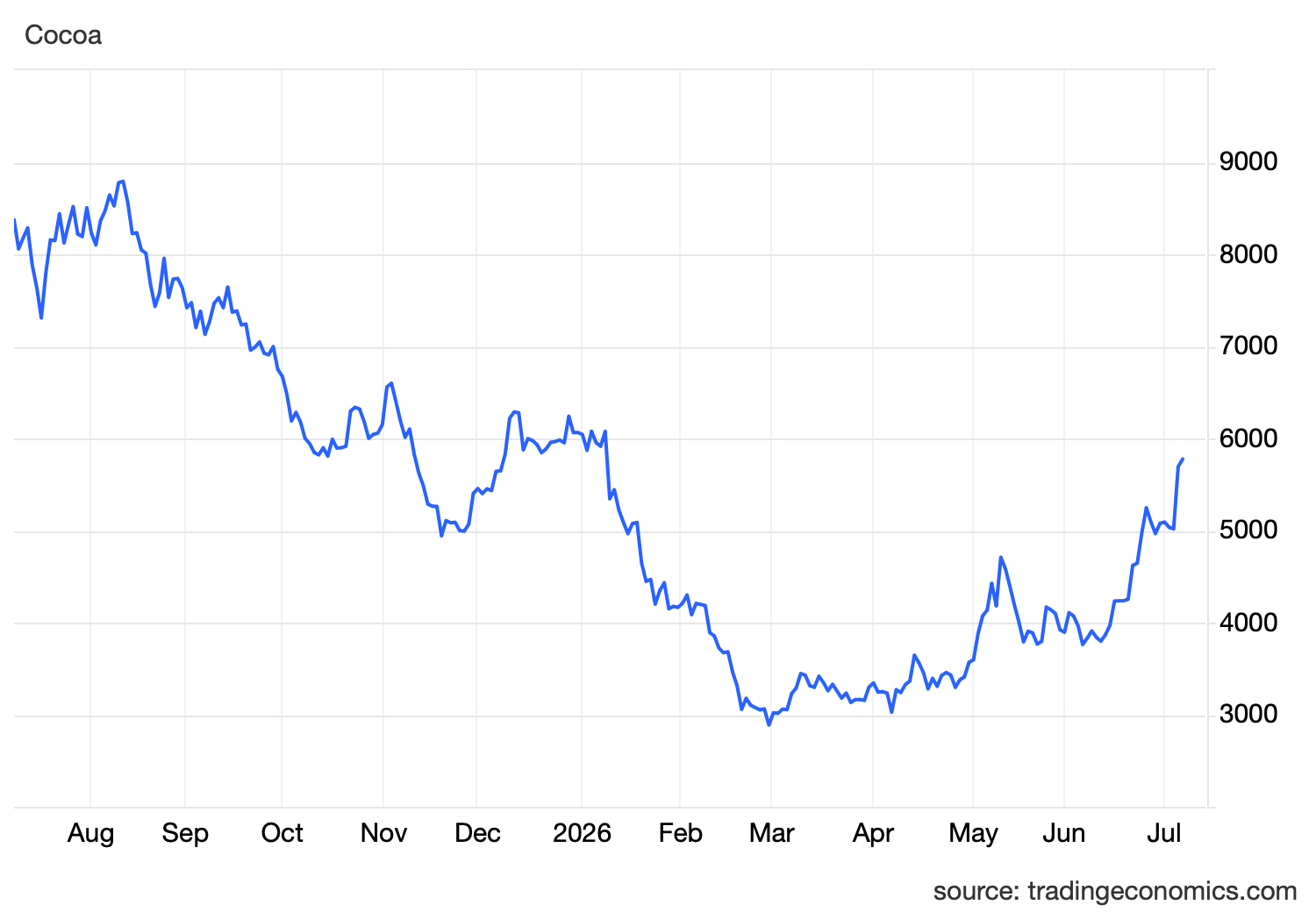
A similar situation is unfolding in the chocolate market, as cocoa prices spiked at the turn of June and July, hitting their highest levels since January.
On Monday, July 6, the September New York cocoa contract rose by about 13–14%, breaking the 6‑month high of USD 5,700 per ton.
“The reason? Almost twin: excessive rain in West Africa, which flooded transport routes and triggered tree disease epidemics, and also negatively impacted previously unsold cocoa that may now be unsuitable for any supply,” Michał Stajniak said.
The key question remains the scale of the potential problem, which could soon translate into coffee prices visible on store shelves.
It seems that after a brief spring break, consumers must prepare for a return of inflation.
The combination of unpredictable El Niño‑related weather anomalies, relentless pressure on production costs (expensive fertilizers, fuel, labor), and sharply shrinking inventories means that our daily pleasure of a cup of favorite drink may soon become a luxury item.
“It’s time to accept that we will have to pay much more in the coming months for the morning wake‑up,” the expert summed up.
See also: Gold price fell 12%, will there be further discount? Expert: “With possible de‑escalation there is a chance to make up losses”
Arabica at double‑digit discount. Cocoa rises again
Arabica futures contracts fell on Wednesday, July 8 by 9.3% to 3.17 USD per pound.
Chart. Arabica futures contract price
Source: Trading Economics.
Cocoa futures contracts reached USD 5,776 per ton (+1.45%).
Chart. Cocoa futures contract price
Source: Trading Economics.
Read also: Gold price will fall by several percent. Banks revise forecasts. There is a risk of further XAU/USD correction
See also: Fuel prices in Poland will rise, will there be shortages at stations? Expert: “It won’t be a one‑off sharp move that will affect drivers”
Source: XTB.