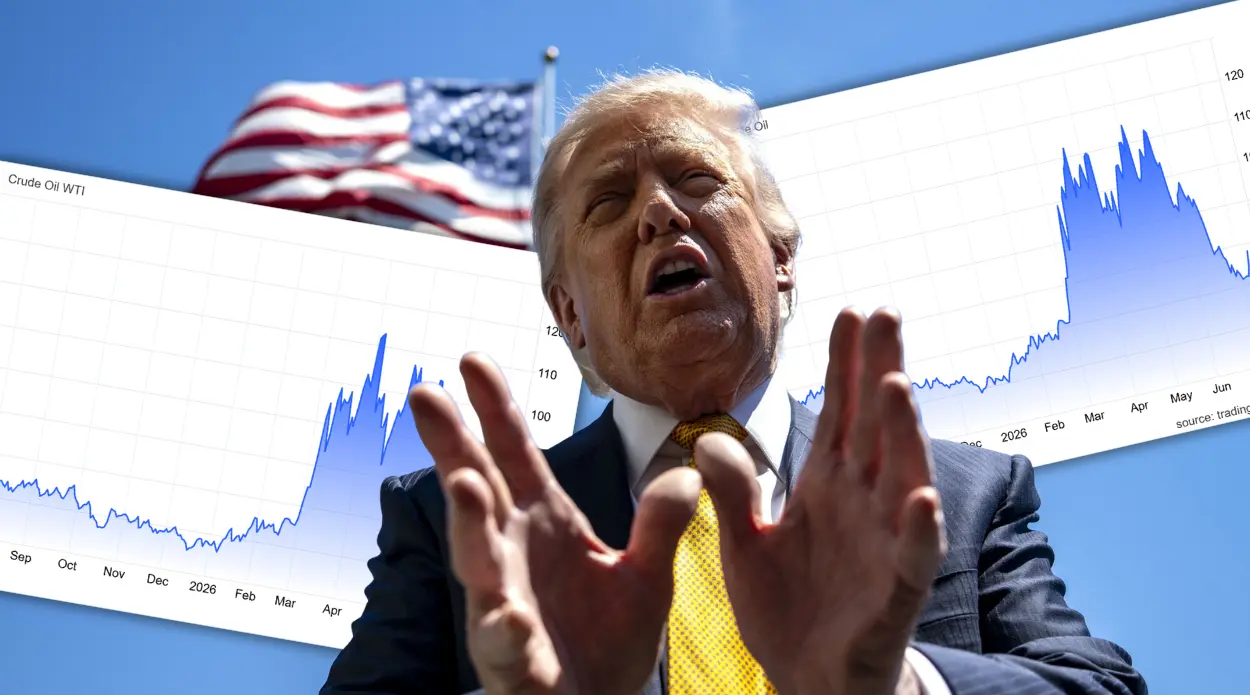
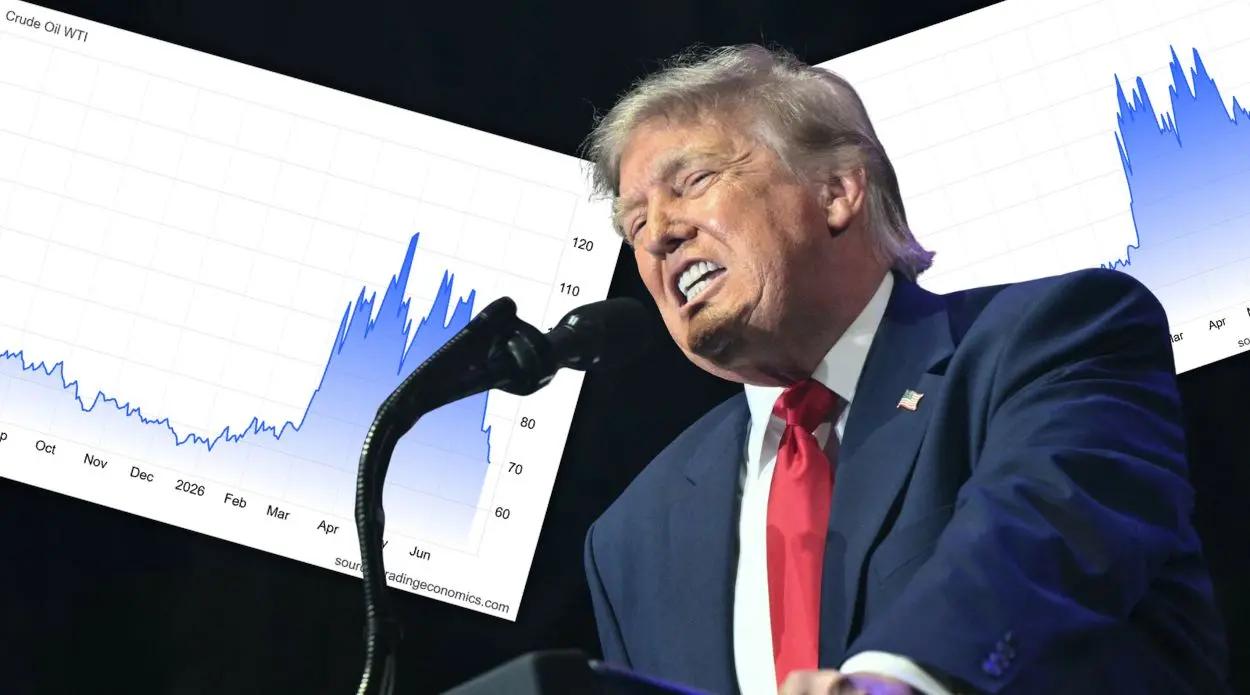
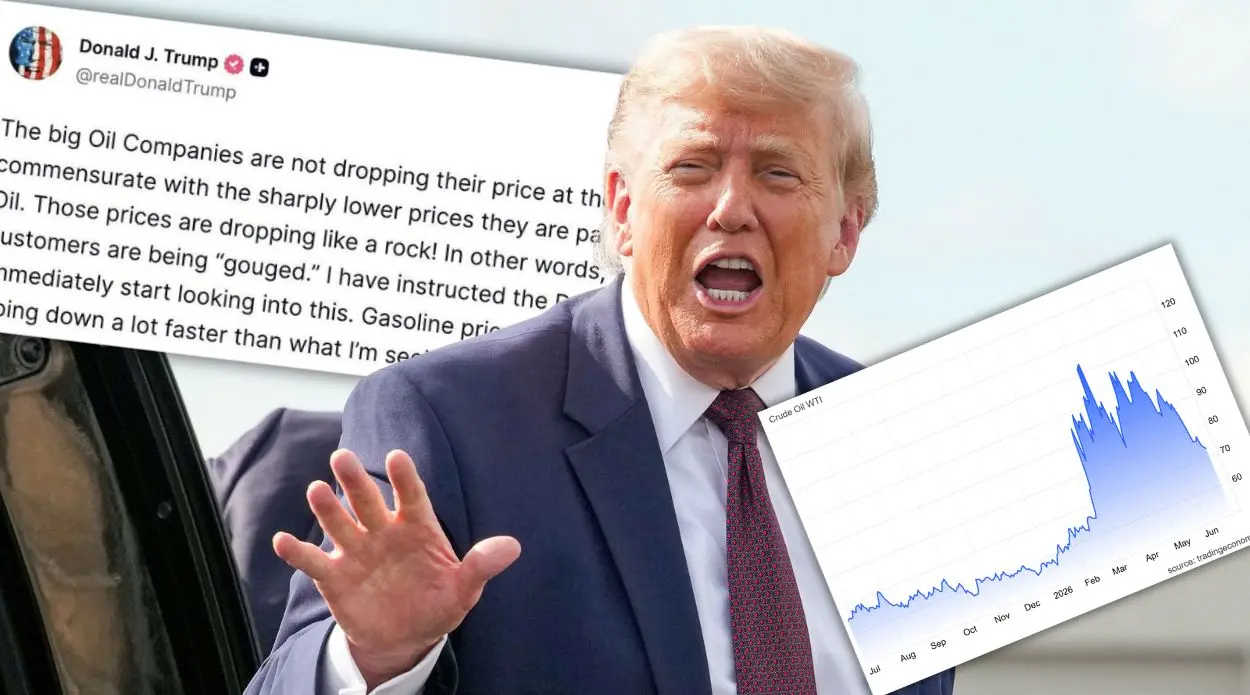
When, at the end of March, the escalation of the conflict in the Middle East suddenly pushed global oil prices, the government was not saved by modern AI-based forecasting systems, but by classic, manual macro‑economic intervention.
A Brief History of Artificial Market Suppression
Thus was born the "Lower Fuel Prices" package, abbreviated LFP. It was a direct, defensive response to the drastic increases on commodity exchanges.
In the week preceding the launch of the LFP program, the average price of 95 octane gasoline was as high as 7.16 PLN/l (compared to 5.73 PLN/l a month earlier), 98 octane gasoline – 7.85 PLN/l (vs. 6.48 PLN/l), and diesel cost a staggering 8.75 PLN/l (vs. 5.98 PLN/l).
The implementation of protective caps immediately lowered the difficulty level for citizens’ wallets, artificially freezing market mechanisms.
By March 31, on the first day of the limits, the maximum price of popular 95 octane gasoline fell to 6.16 PLN, 98 octane to 6.76 PLN, and diesel to 7.60 PLN.
On Tuesday, June 30, these limits were respectively: 6,00 PLN, 6,68 PLN and 6,19 PLN. The state cut the cash flow to the budget, reducing VAT to 8% from 23% and lowering the excise by 29 groszy on gasoline and 28 groszy on diesel.
From the perspective of a seasoned market investor, this was only an illusion and a delay of the inevitable price crash.
See also: Oil above $150 per barrel. Experts paint bleak forecasts. Fuel prices enter a "radical scenario"
Algorithms Capitulate Before the Tax Reality
Tuesday was the final deadline by which the finance minister could extend the financial drip for shocked drivers.
The decision to revive the project did not materialize. Although on June 12 the lower VAT was extended until the end of the month, the preferential excise expired on June 15. From July 1, maximum prices ceased to apply, and the free market brutally reclaimed its dues.
Reflex Analysts forecasted in a Friday comment that restoring the basic 23% VAT rate would raise prices by about 40‑60 gr per liter. Experts claimed that the rise in retail prices is absolutely inevitable, even with the complete abandonment of station owners of their own commercial margin.
The reality showed, however, that the mathematics of analytical models and predictive algorithms do not always keep pace with the real, predatory market, which, once freed from constraints, reacts with double force.
See also: Shock in the oil market. UAE leave OPEC and OPEC+. Reuters warns of "chaos"
Grochowski Reality Without Anesthesia
When the clocks struck midnight, the time for market speculation ended, and a harsh, ruthless reality began. On the internet, moments after nighttime photos from pylons of fuel stations spread, creating a shockwave effect on social media.
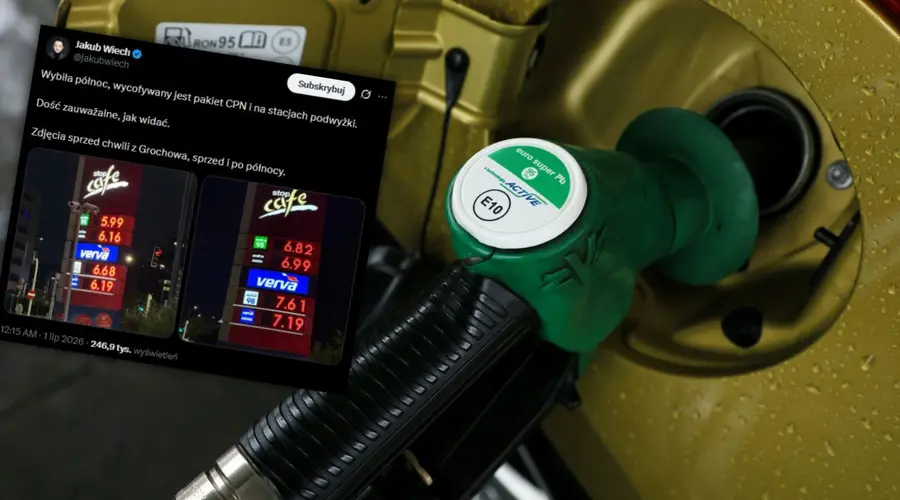
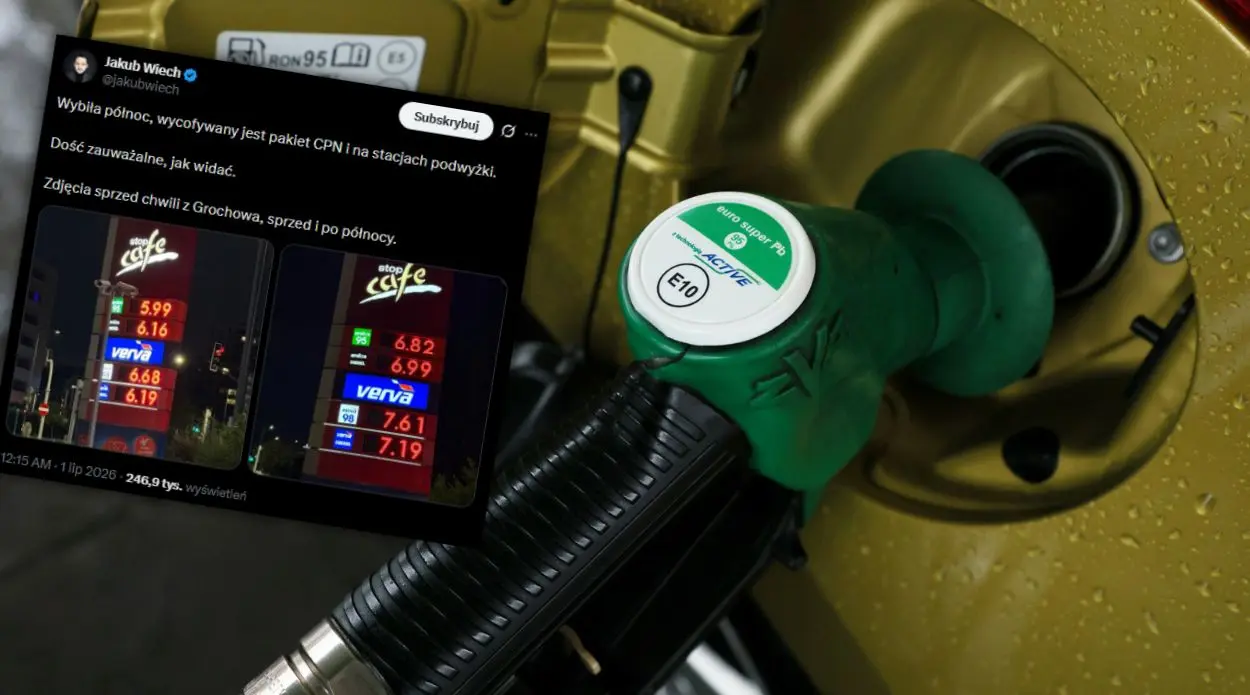
These were not delicate, algorithmic price adjustments. Well‑known energy expert Jakub Wiech published striking photos from one of the stations in Warsaw's Grochów, where the price of 95 octane gasoline Pb95 instantly jumped from 5.99 PLN to 6.82 PLN per liter. The increase was therefore 83 groszy, dramatically surpassing all market consensus.
For traders, institutional investors, and ordinary consumers, this is a clear signal: the market immediately discounted not only the return of old taxes but also incorporated margins and the risk of future geopolitical fluctuations.
The end of the LFP program is an excellent textbook case study showing that artificial suppression of price trends always ends in a sharp capital rebound.
See also: Oil prices react to the attack in the UAE. Do maximum fuel prices save Poland?