Nvidia returns to tech trade shows with a banner. After early‑year controversies, the Santa Clara company reveals concrete details about DLSS 5 at the SIGGRAPH 2026 conference. Instead of rigid, imposed rules and visual glitches, the giant offers full flexibility for developers, zero latency, and 4K photorealism powered by a single GPU chip.
The debut of DLSS 5 in the early months of 2026 caused a stir in the industry, including accusations of typical AI Slop.
DLSS 5 returns, but with concrete fixes
On one hand, a breakthrough was promised, but on the other, the technology raised legitimate concerns among game developers (and players) about losing control over a unique visual style. At the SIGGRAPH 2026 conference, Jensen Huang and NVIDIA engineers proved they can listen to market feedback.
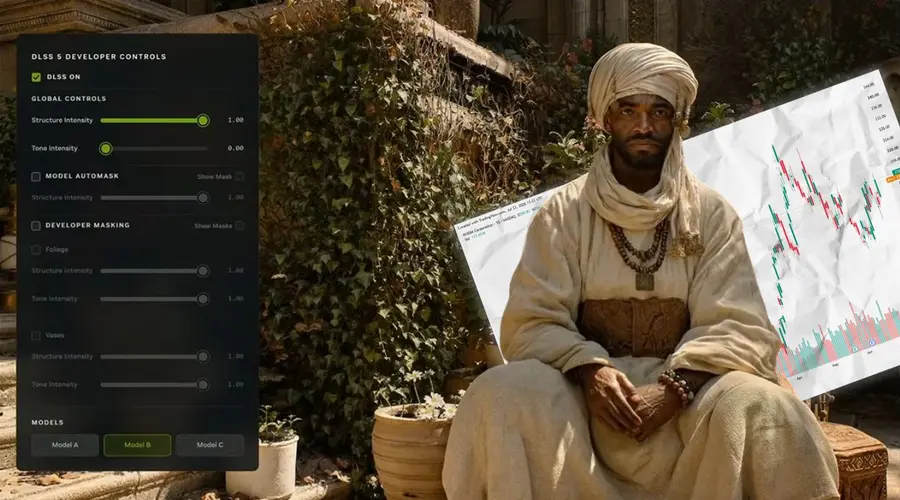
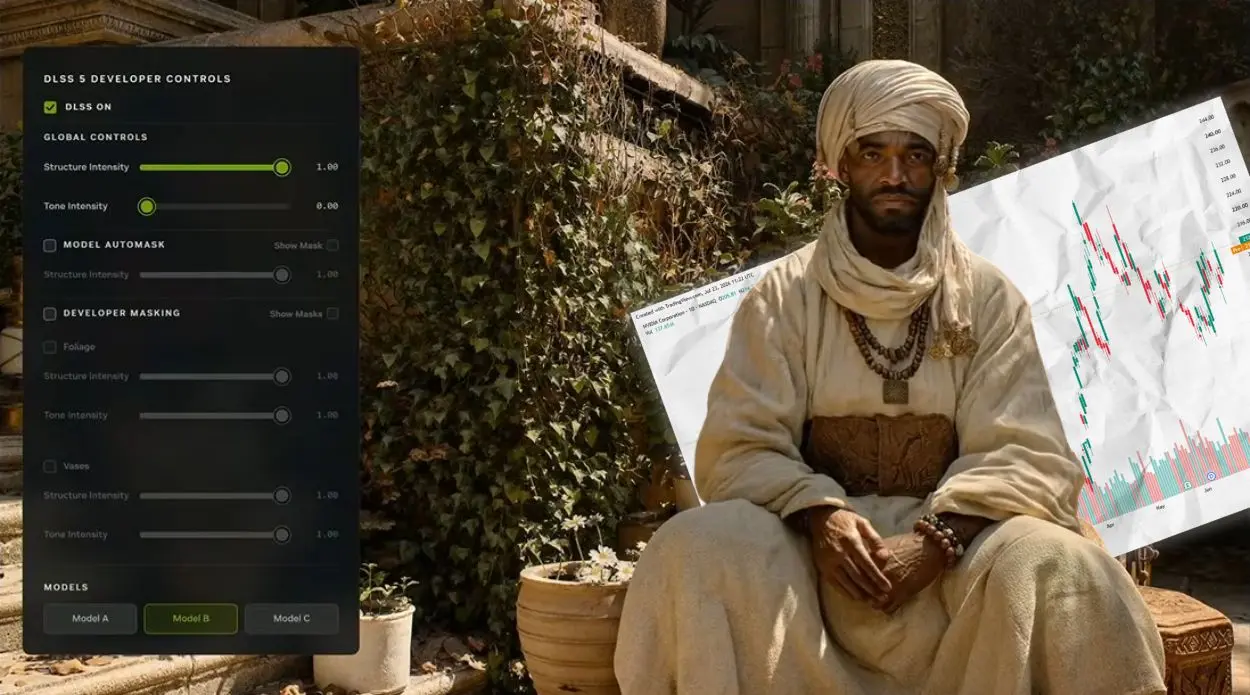
A key element of the refined DLSS 5 version is the introduction of three distinct AI models. They differ in the intensity of generated texture and lighting details, and developers can switch between them in real time. Importantly, creators decide in which specific game sequences the algorithm will be applied.
For players, the most important decision concerns the controversial generative filters. New announcements clearly indicate that they are now fully optional. Community test results spoke for themselves: while Starfield players were delighted by the extra detail, in the dark Resident Evil: Requiem the effect drastically ruined the intended atmosphere.
There were also voices claiming that DLSS 5 would actually kill the stylistic uniqueness of specific developers, making all games look identical with an AI filter applied. Now it’s the development studio that sets the limits, so the future feared by players at the start of the year is unlikely to threaten the electronic entertainment industry.
Advertising
See also: Nvidia, Intel and AMD stocks teetering? AI devours the familiar industry
DLSS 5 is more than classic upscaling
Until now, DLSS series technologies were mainly associated with image reconstruction—rendering a frame at a lower resolution (e.g., 1280 × 720) and intelligently scaling it to the monitor’s native resolution (e.g., 1920 × 1080) while minimizing latency.
Meanwhile, DLSS 5 builds on that foundation but takes a step further. NVIDIA added new filters and AI‑generated effects that are applied to the previously upscaled animation frame. It’s worth noting that the biggest optimization issue has also been solved. Earlier demos required a powerful setup of two RTX 5090 cards for smooth operation.
The current compressed architecture handles the full process on a single GPU, reducing resource usage and offering a very reasonable VRAM appetite. The official market launch of DLSS 5 is scheduled for the third quarter of this year.
Advertising
See also: Nvidia shares crashed! Jensen Huang encourages buying. “Everyone should be very excited.”
The market responded enthusiastically
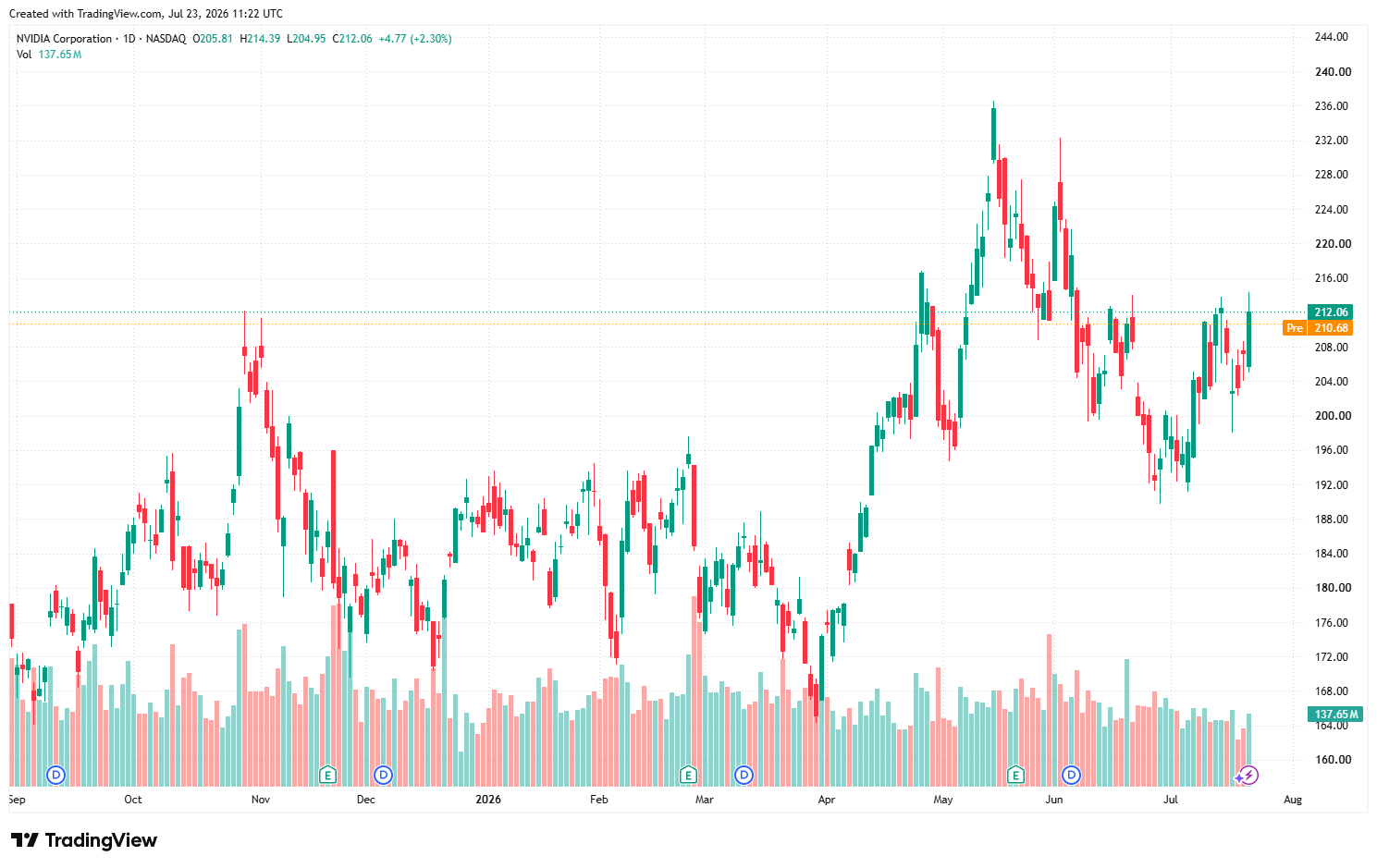
Financial markets immediately seized the successful turnaround (by name). Investors who had been cautiously watching the valuation of the tech giant for months now strongly bet on the Greens. After the announcements at SIGGRAPH 2026, NVIDIA shares on the NASDAQ jumped by 2.30%, reaching 212 USD. The Greens’ market cap is already heading toward an astronomical level of 5.1 billion USD.
If the promises of low VRAM demand and full 4K fluidity prove true during the fall game debuts, NVIDIA will once again prove that in the race for dominance in the graphics and AI market, competitors must be content to watch from the sidelines.
Chart. NVIDIA stock price
✕
Source: TradingView
Advertising
See also: Trump in Beijing. Will NVIDIA stocks avoid a rally? The giant’s CEO counts on a US‑China agreement
FXMAG’s editorial team creates high-quality content on financial markets, investing, and the global economy. We provide timely analysis and clear insights to help our audience navigate complex market dynamics.