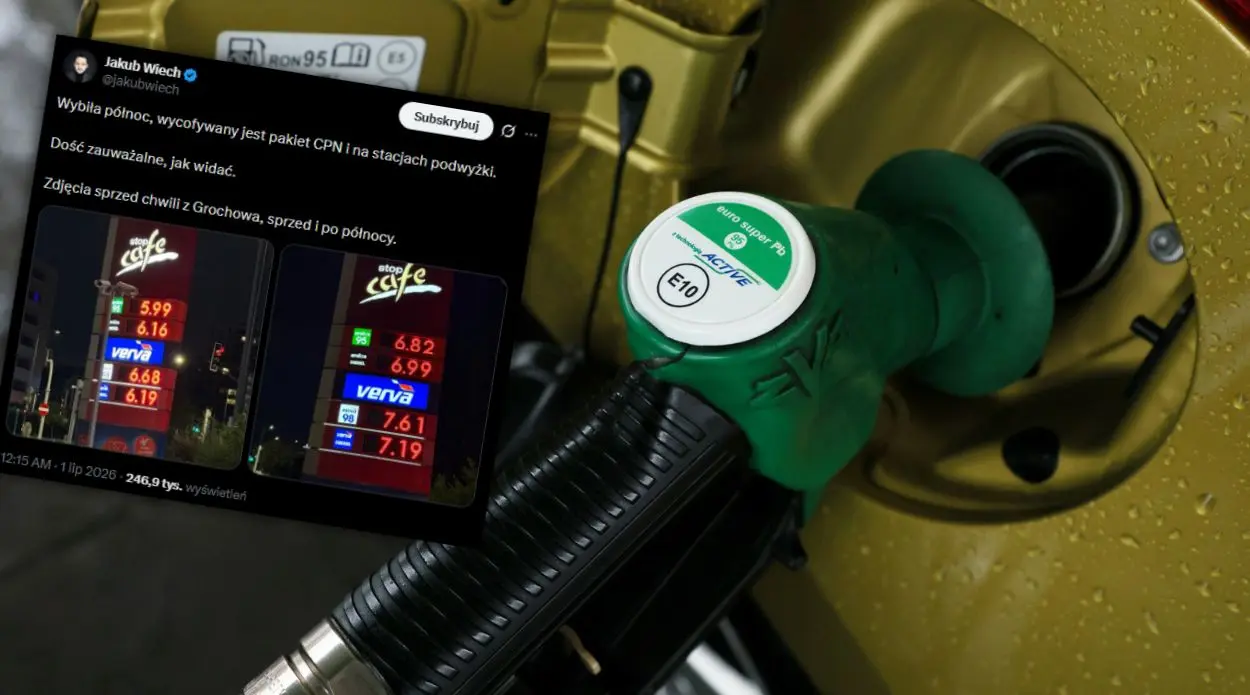
This week, the average fuel price at Polish petrol stations was the highest since the government introduced the regulation, namely the so‑called CPN package (Lower Fuel Prices), which reduced the excise tax to the minimum set by the European Union, and also VAT from 23% to 8%. The average price of 95 octane petrol at Polish fuel stations was 6.46 PLN per litre, which represents an increase of 12 groszy compared to the previous week – according to BM Reflex data. Diesel was also more expensive. The average price for diesel was 6.90 PLN per litre, an increase of 5 gr compared to the price 7 days earlier. Gasoline was cheaper, averaging 3.68 PLN per litre, which is 4 gr lower than the previous week. Remember that LPG is not covered by the CPN package, meaning it is still subject to a 23% VAT.
Looking at the statistics, in the past week fuel was the most expensive in retail sales since the introduction of the CPN package, and also much more expensive than a year ago. For 95 octane petrol, the average increase was 69 gr, and for diesel it was 1.15 PLN year‑on‑year.
If not for CPN, drivers would pay significantly more
Although fuel prices rose in most cases last week, they are still much lower than what drivers would have to pay if the government regulation had not come into force. Recall that the CPN package was introduced on the night of March 28–29. For now, the reductions are to be maintained until the end of May. What will happen next? It is not yet known. The law currently allows reductions until the end of June. Government representatives, including Energy Minister Miłosz Motyka, announce that as long as fuel remains as expensive as it is now, the government aid in the form of the CPN package will be maintained so that Poles can pay less for fuel.
If the CPN package had not existed, one litre of 95 octane petrol would cost about 7.5 PLN, and diesel would be close to 8 PLN.
Opportunities for fuel price reductions are visible on global exchanges
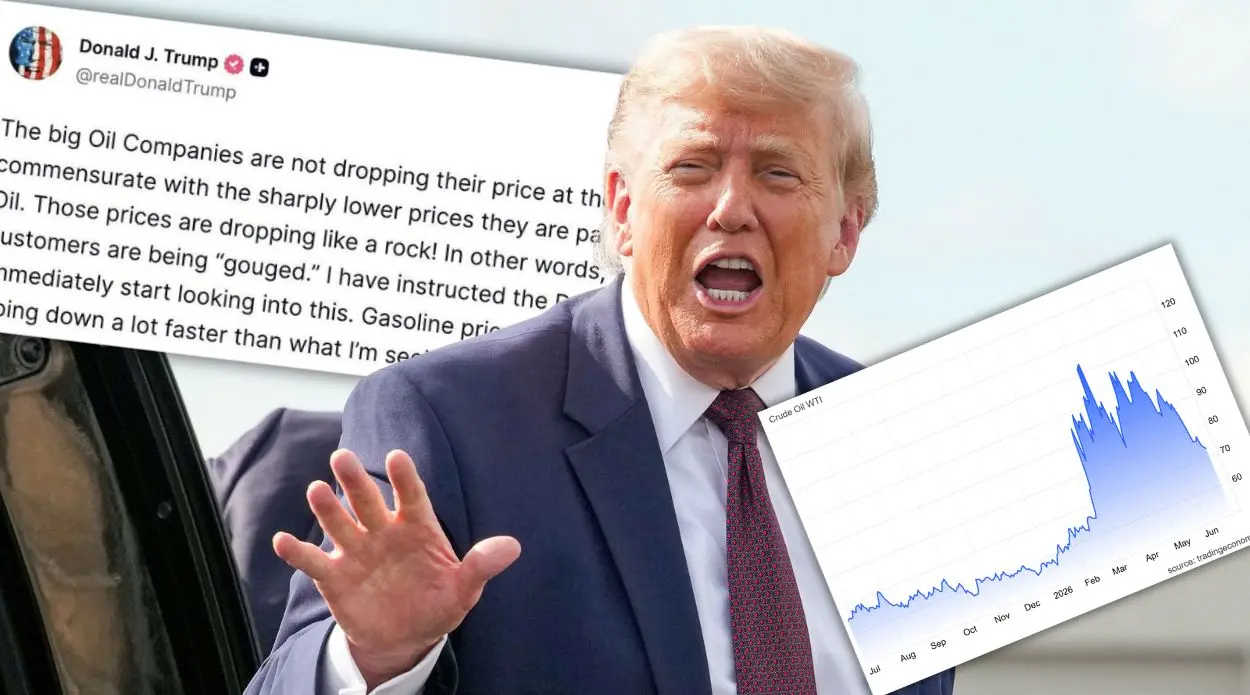
For now, the trade route through which nearly 20% of the world’s oil demand flows, including finished fuels, remains congested. Despite this, signals on global exchanges indicate that the situation regarding fuel prices will improve in the near future. These are prices that have not risen for three weeks. A gallon of gasoline on the New York exchange on Friday cost 3.45 dollars. This is less than earlier in the week when the price was 3.78 dollars, which was the highest indicator since July 2022.
Positive signs are also seen for diesel. Diesel was priced at 1,133 dollars per tonne on the London exchange. This is less than at the end of April, when the price for the same quantity was 1,400 dollars.
What happens on global exchanges translates into refinery prices. This can be seen, for example, in the case of Orlen, which on May 15 offered eco‑diesel at 6,051 PLN per cubic metre, which is about 6.54 PLN per litre after adding VAT at the current rate of 8%. 95 octane petrol was sold at 5,683 PLN per cubic metre, which was about 6.14 PLN per litre with VAT.
See also: MPs are being driven by taxpayers’ money. Some collect money for kilometre allowances without owning cars