The war in the Middle East has pushed the global economy away from its key artery.
The geopolitical shock brutally cuts off the key artery
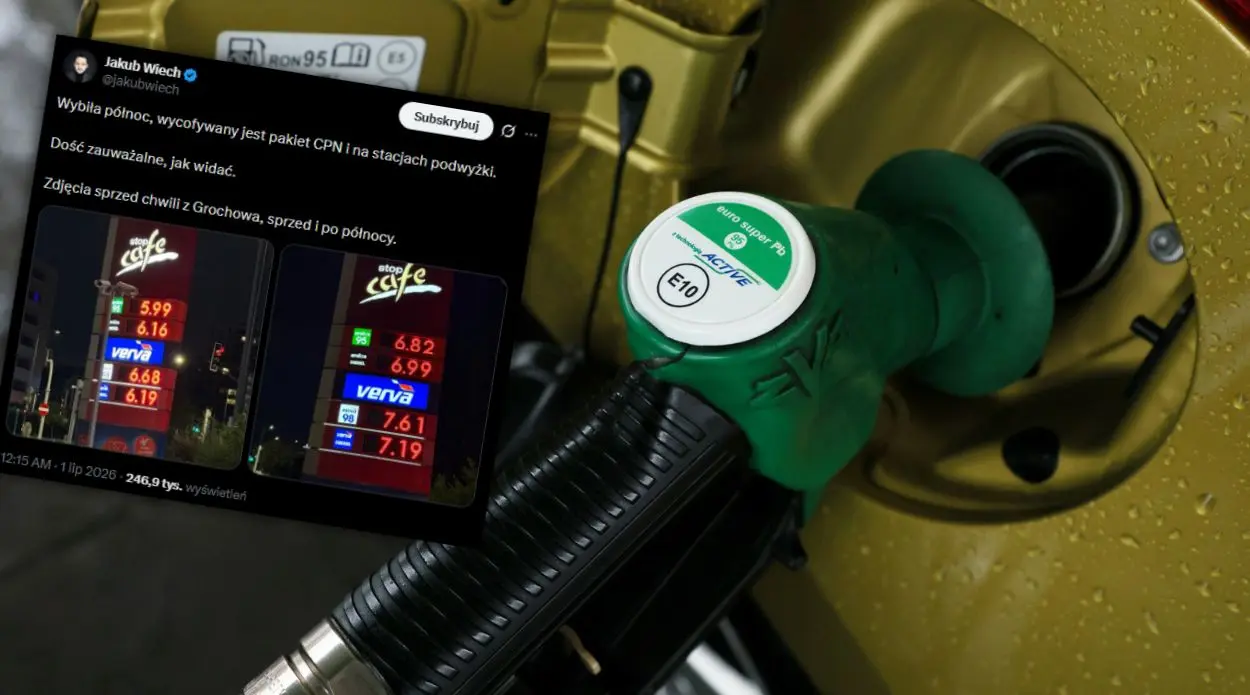
The complete blockade of the strategic Strait of Hormuz has caused sharp and powerful price spikes on commodity exchanges and painful fuel shortages in many strategic regions of the world.
MAE head, Fatih Birol, makes the case clear: due to the ongoing war, the world is currently losing as much as 14 million barrels of oil per day. The situation has become so dramatic that the agency’s member countries decided in March to take an absolutely unprecedented and historic step.
A joint decision was made to immediately release 400 million barrels of oil from emergency reserves onto the market, and MAE openly declares full readiness to undertake further aggressive stabilizing interventions.
This ruthless supply shock forces markets and international corporations to completely reset their existing strategies.
Instead of pumping billions of funds into uncertain, volatile regions, global players quickly shift their attention to alternative, much safer trade routes and diversified energy sources.
See also: The world on the brink of a nuclear pact. Donald Trump threatens Iran, and oil prices exceed 105 USD
The great capital flight. Green return on the stock market
The annual flagship report World Energy Investment 2026 published on Thursday clearly demonstrates that previous financing schemes for the fuel sector are irreversibly going downhill.
Although high oil prices should theoretically lure investors strongly, global spending on oil projects will fall below the psychological threshold of 500 billion USD in 2026.
This is already the third year of large declines in a row, which in the world of finance means a lasting, structural downward trend. These gigantic sums do not evaporate from the markets; they simply change their target address almost instantly.
Fatih Birol emphasizes that we are in the very middle of the greatest energy security crisis the world has ever faced. This phenomenon will permanently and deeply reshape global investments for the coming decades.
Total spending on broadly defined energy will rise in 2026 to the level of 3,4 bln USD, but the main stream of these funds is already flowing in a completely different direction than to the Middle East.
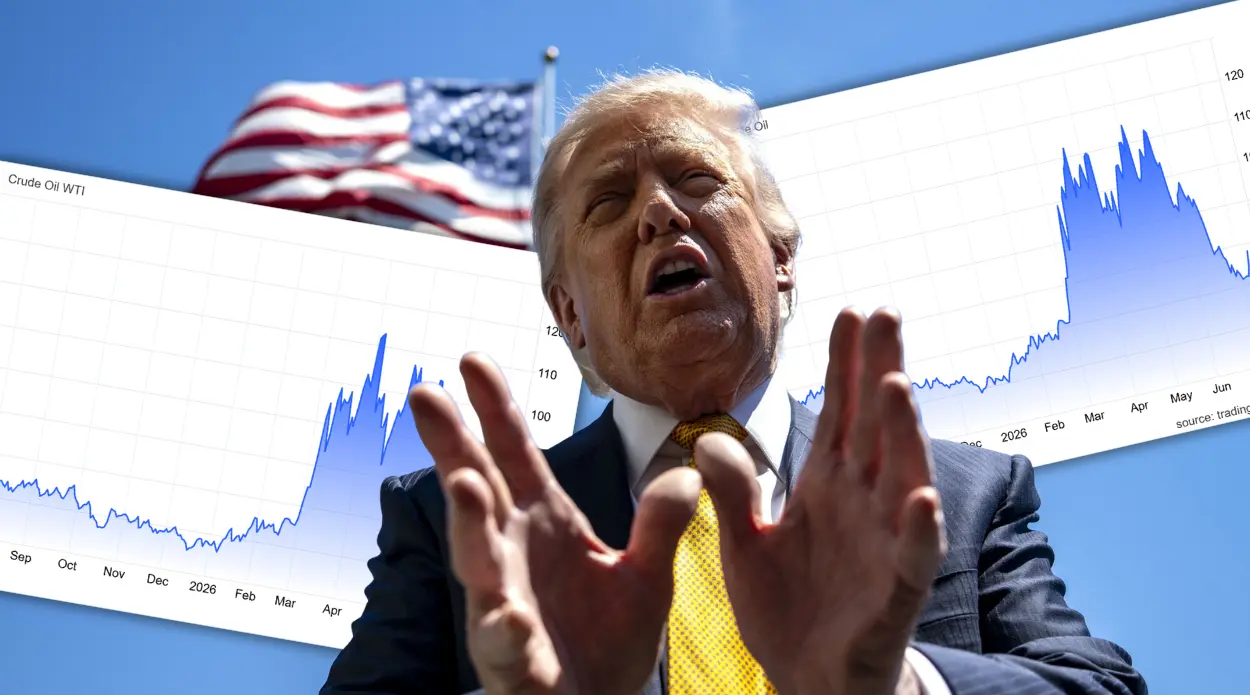
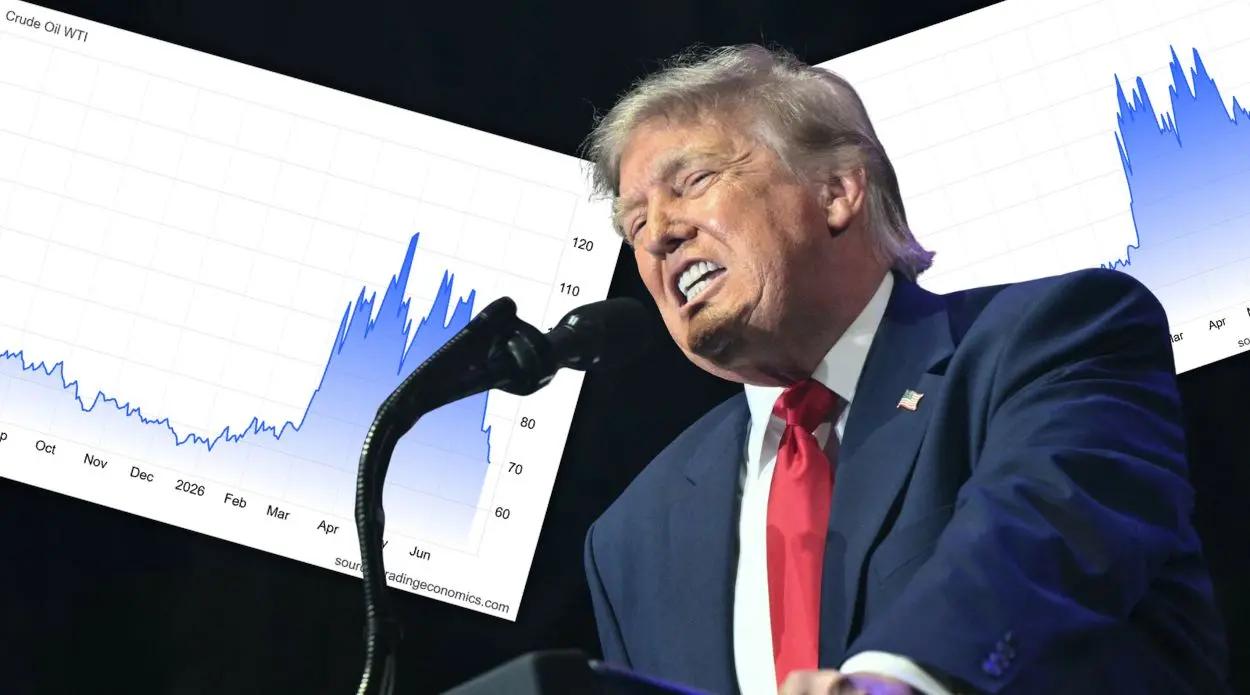
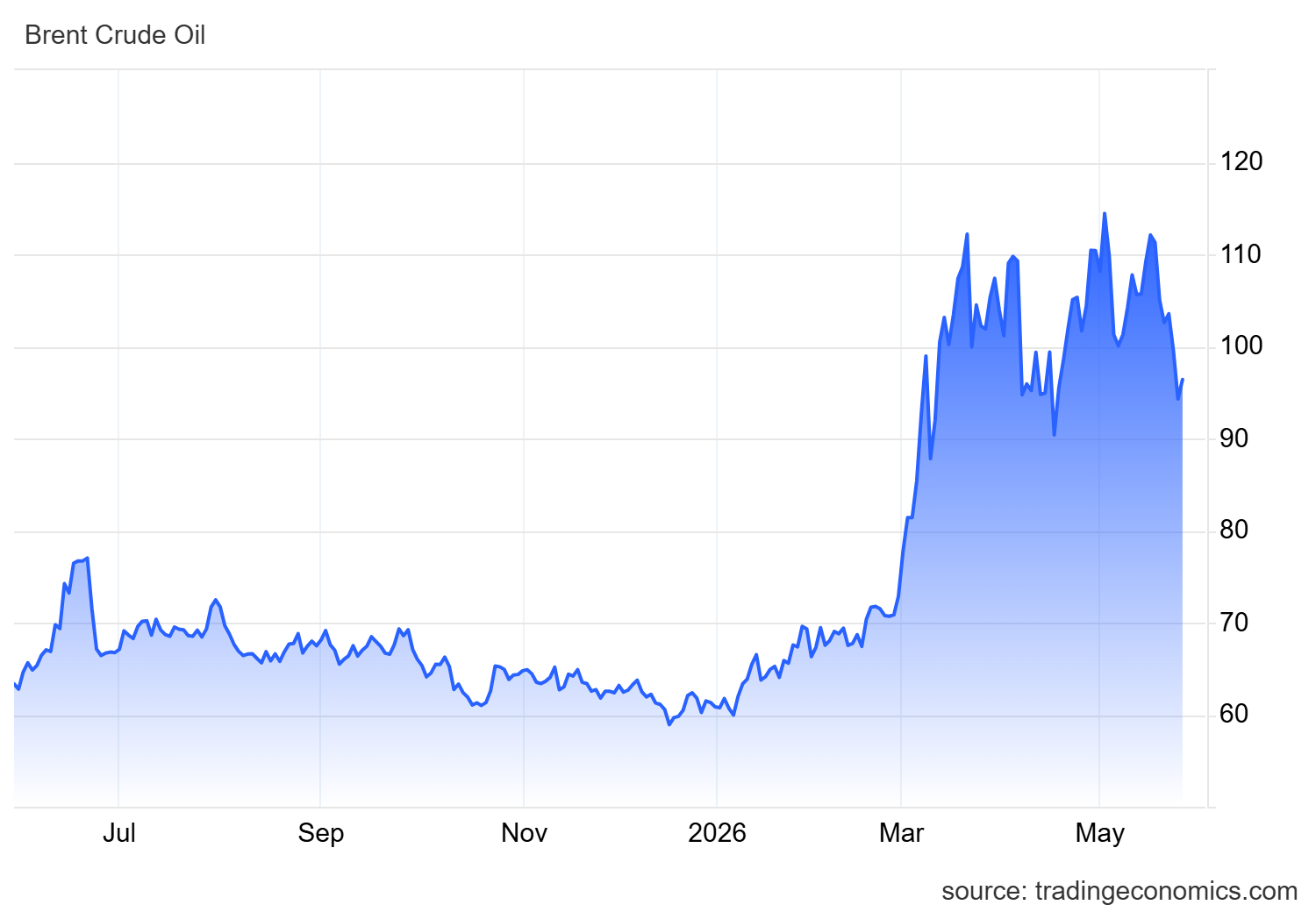
Brent oil price rises on Thursday, May 28 by 2,16% and reaches the level of 96 USD per barrel.
Chart. Futures contract price for Brent oil
Source: Trading Economics.
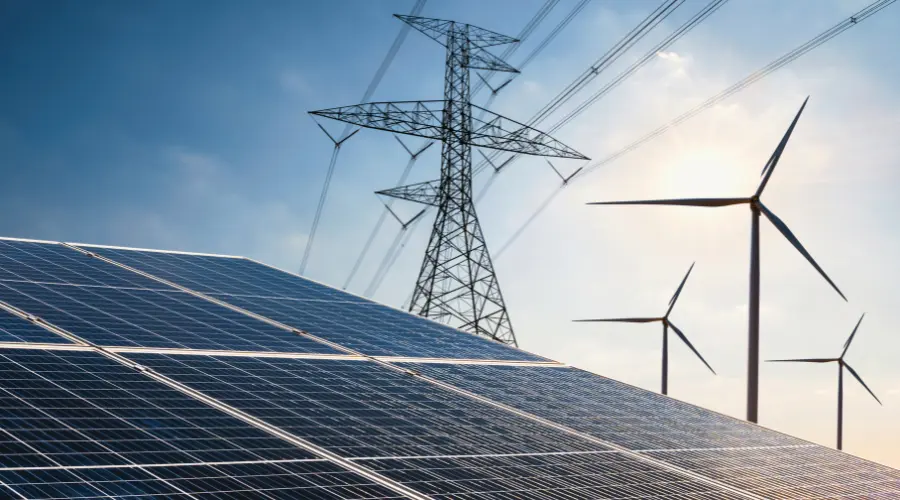
Financial capital today mainly fuels modern power grids, large-scale energy storage, low-emission fuels, nuclear energy and renewable energy sources.
The world’s largest importers, shaken by the geopolitical price swing, seek independence and intensively build resources at home, mainly focusing on renewables, nuclear, and locally even on coal returning to favor.
Traditional oil is clearly losing its former shine on the exchanges, and the wave is surfed by blue fuel.
According to MAE forecasts, spending on gas projects will surge in the coming quarters of 2026 even to the level of 300 billion USD, reaching the highest level in decades.
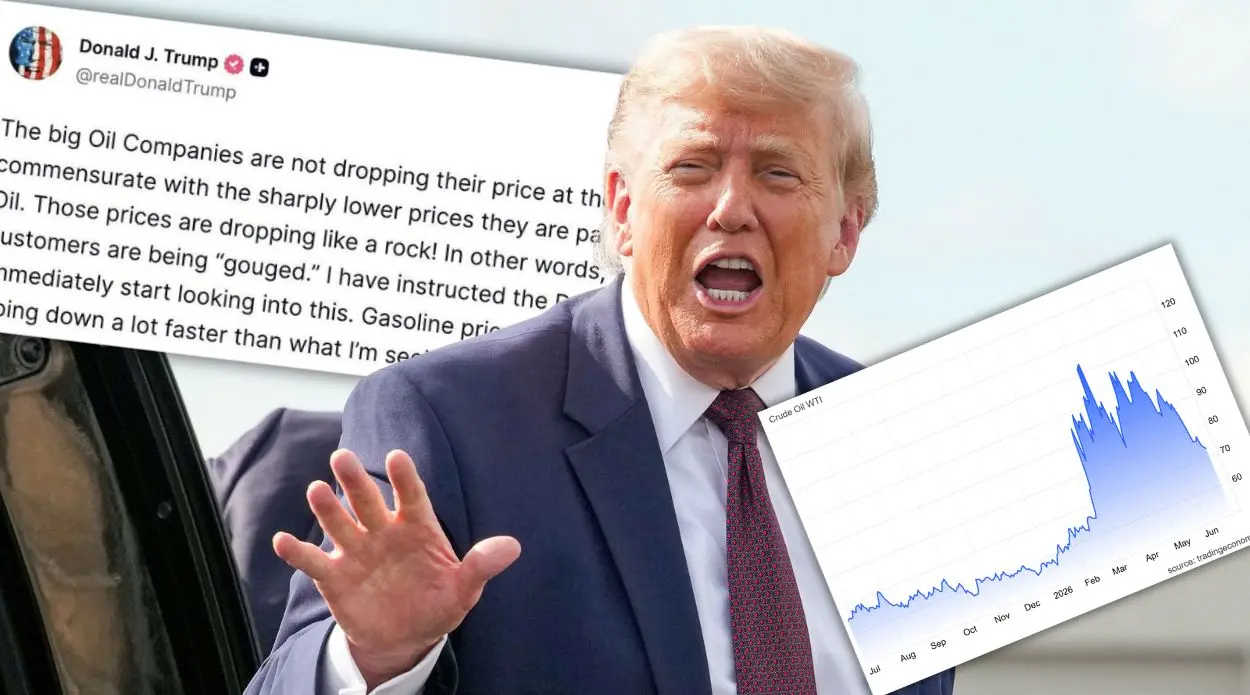
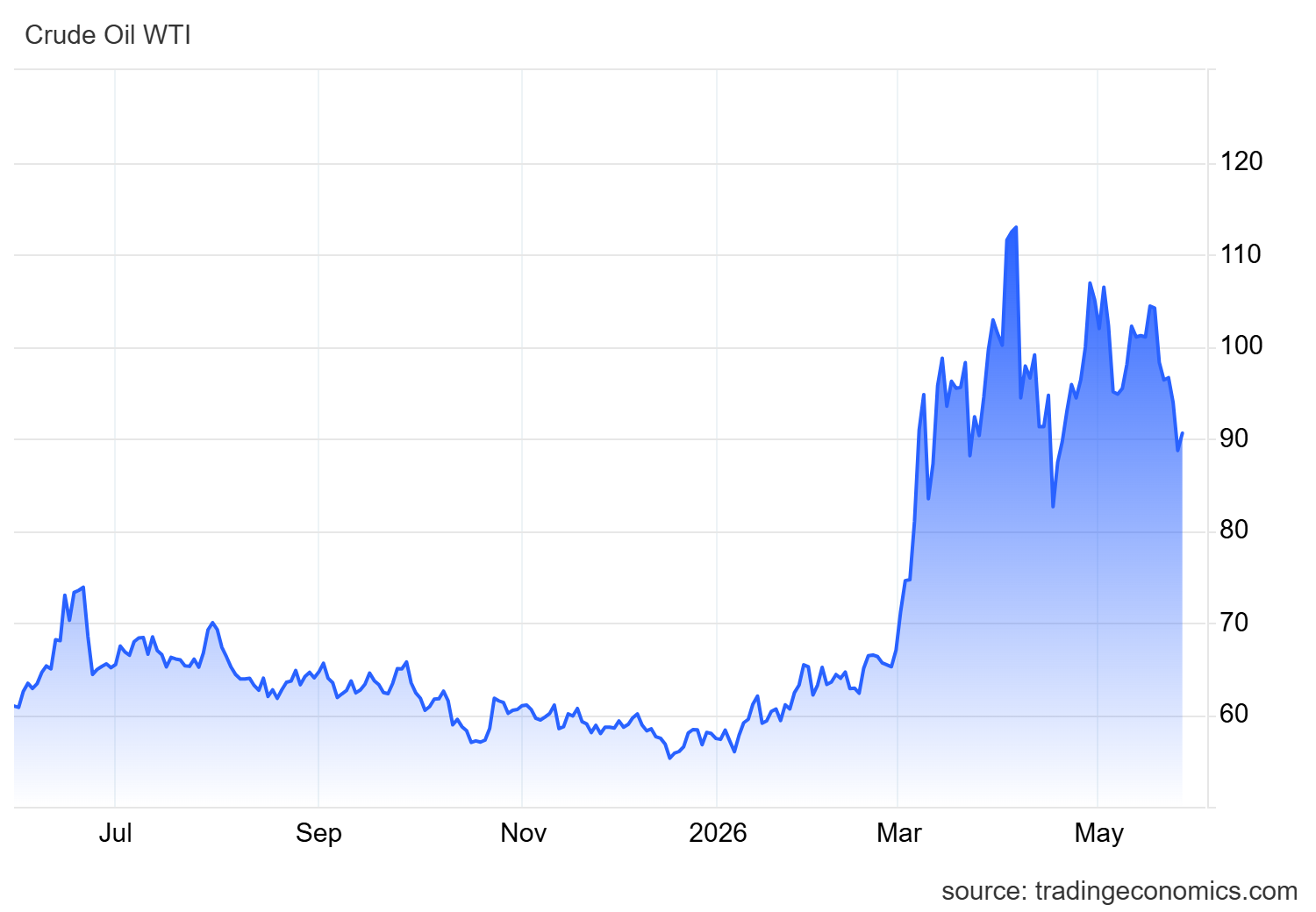
WTI oil price on May 28 rises by 2,14% to 90 USD per barrel.
Chart. Futures contract price for WTI (West Texas Intermediate)
Source: Trading Economics.
See also: Fuel price blast. Gas price in Europe exploded! Double-digit rises are the beginning for investors?
Source: Bloomberg.