The White House under Donald Trump has just reset the global balance of power in the fuel market.
Trump shuffles cards on Truth Social
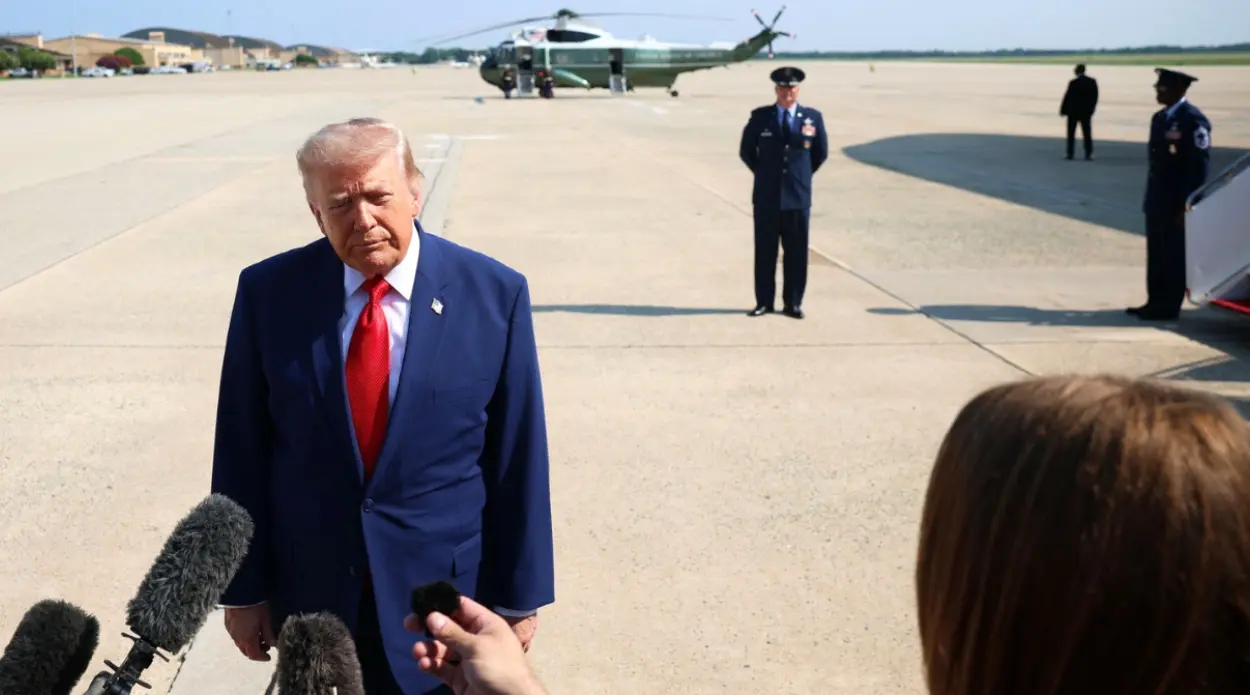
Through the social media platform Truth Social, the President of the United States announced the finalization of a deal with the Islamic Republic of Iran.
The purpose of this agreement is the immediate and unconditional unlocking of the Strait of Hormuz. The key route is to operate without any transit fees, and Americans have pledged to fully lift the maritime blockade imposed on Tehran.
Trump commented on the matter in his classic and characteristic style: “Ships of the world, start your engines. Let the oil flow!”
The official signing of the peace treaty is scheduled for next Friday, June 19, in Switzerland. That is when the mine‑clearing operation will begin, allowing free flow of the commodity from both sides of the region.
It is worth noting that this is a so‑called Memorandum of Understanding, a protocol of agreements for a 60‑day period.
Importantly, Tehran has not yet responded to the information announced by Trump. Nevertheless, for stock market investors, especially those basing their strategies on advanced AI models analyzing geopolitical risk, this is an absolute turn of events.
Political games are rarely so clearly readable by large fund algorithms.
See also: Oil above $150 per barrel. Experts paint bleak forecasts. Fuel prices enter a “radical scenario.”
End of the historic supply shock?
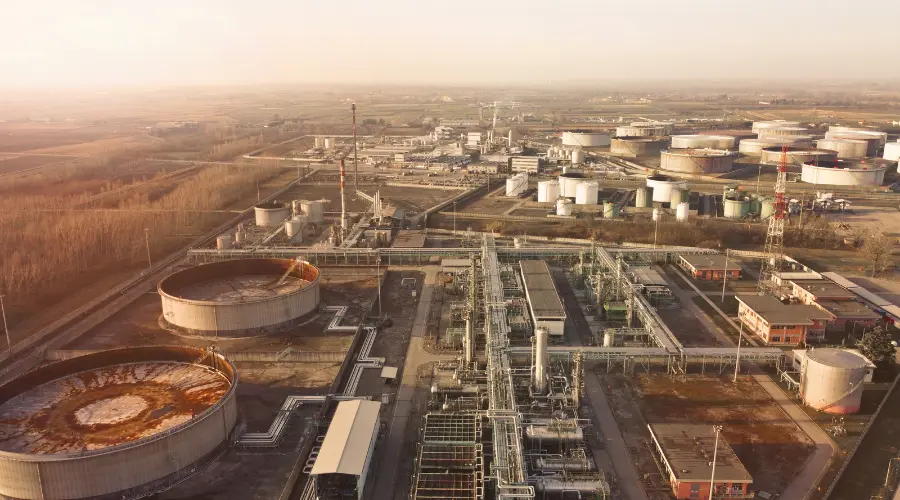
The Strait of Hormuz is the key artery of the global economy. Before the March crisis, triggered by a series of Iranian attacks on tankers, about 20% of global oil supplies flowed through this narrow strait.
The drastic restriction of movement in this area led to the biggest supply shock in the history of the energy sector. It’s no wonder that commodity market reactions to the cease‑fire news were immediate and brutal for holders of long positions.
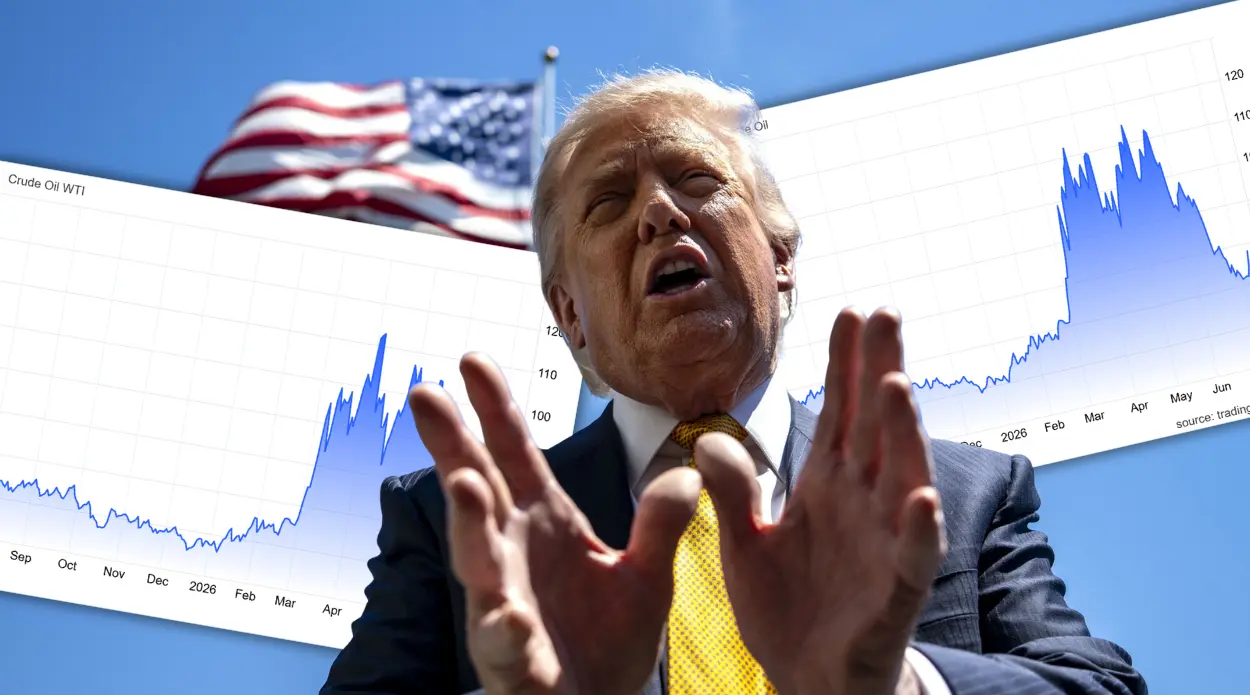
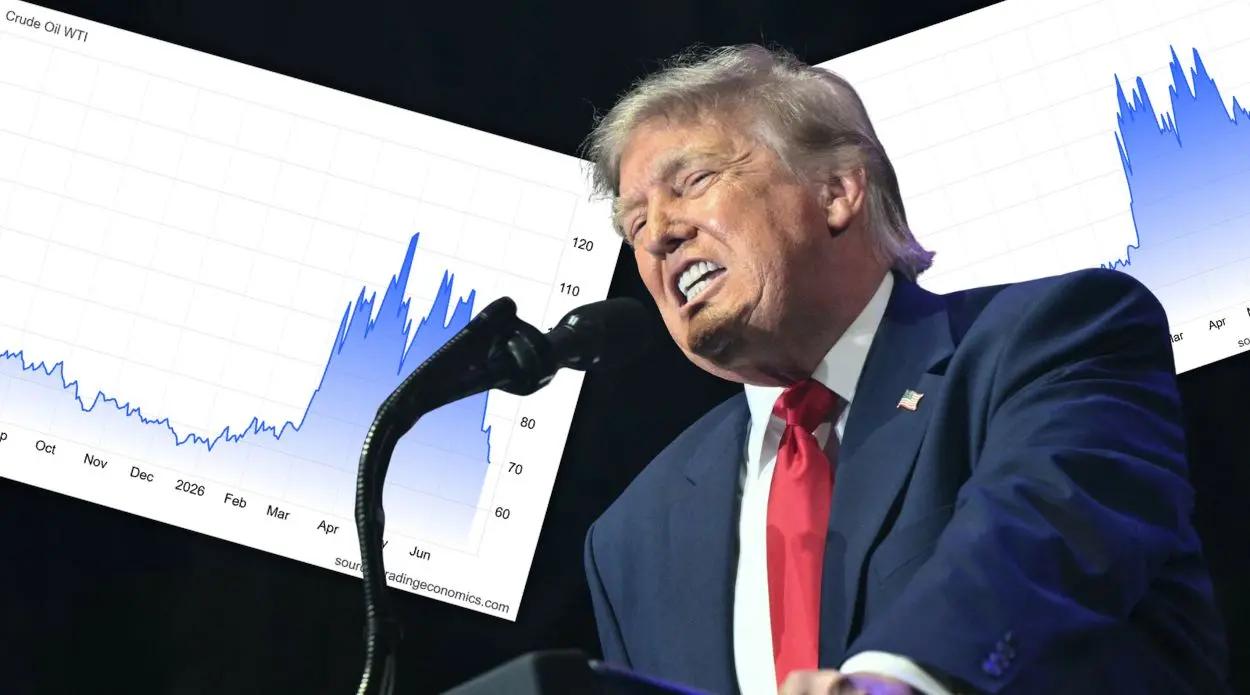
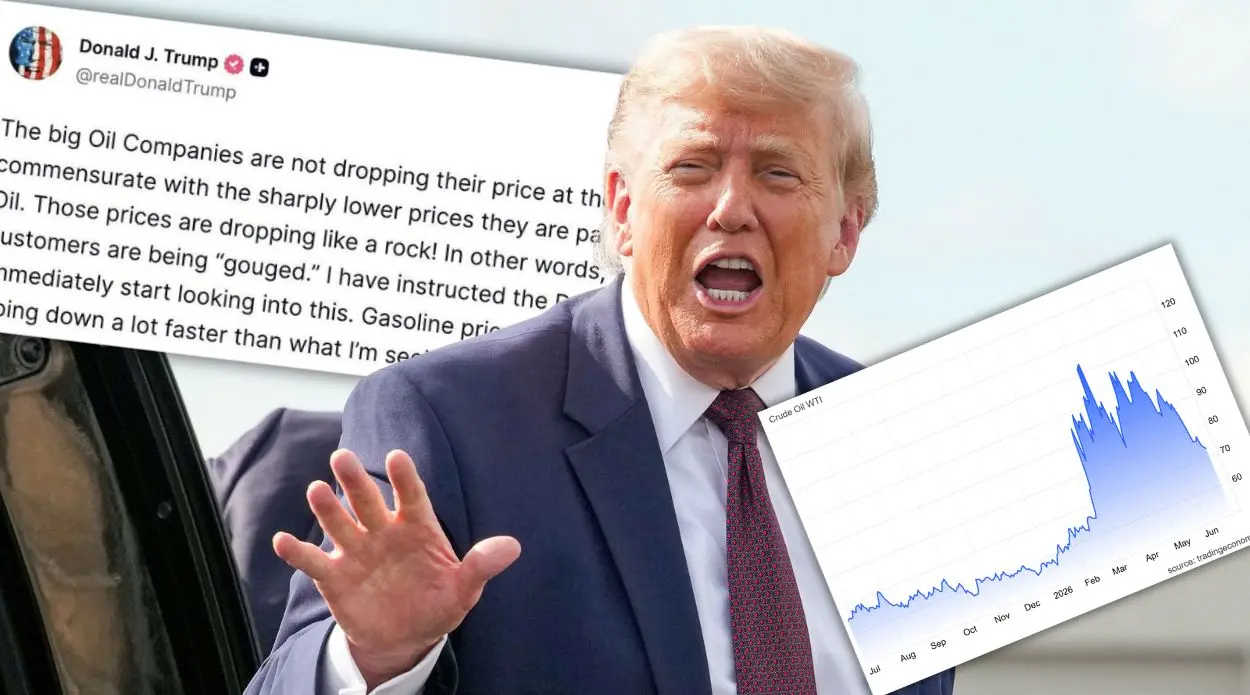
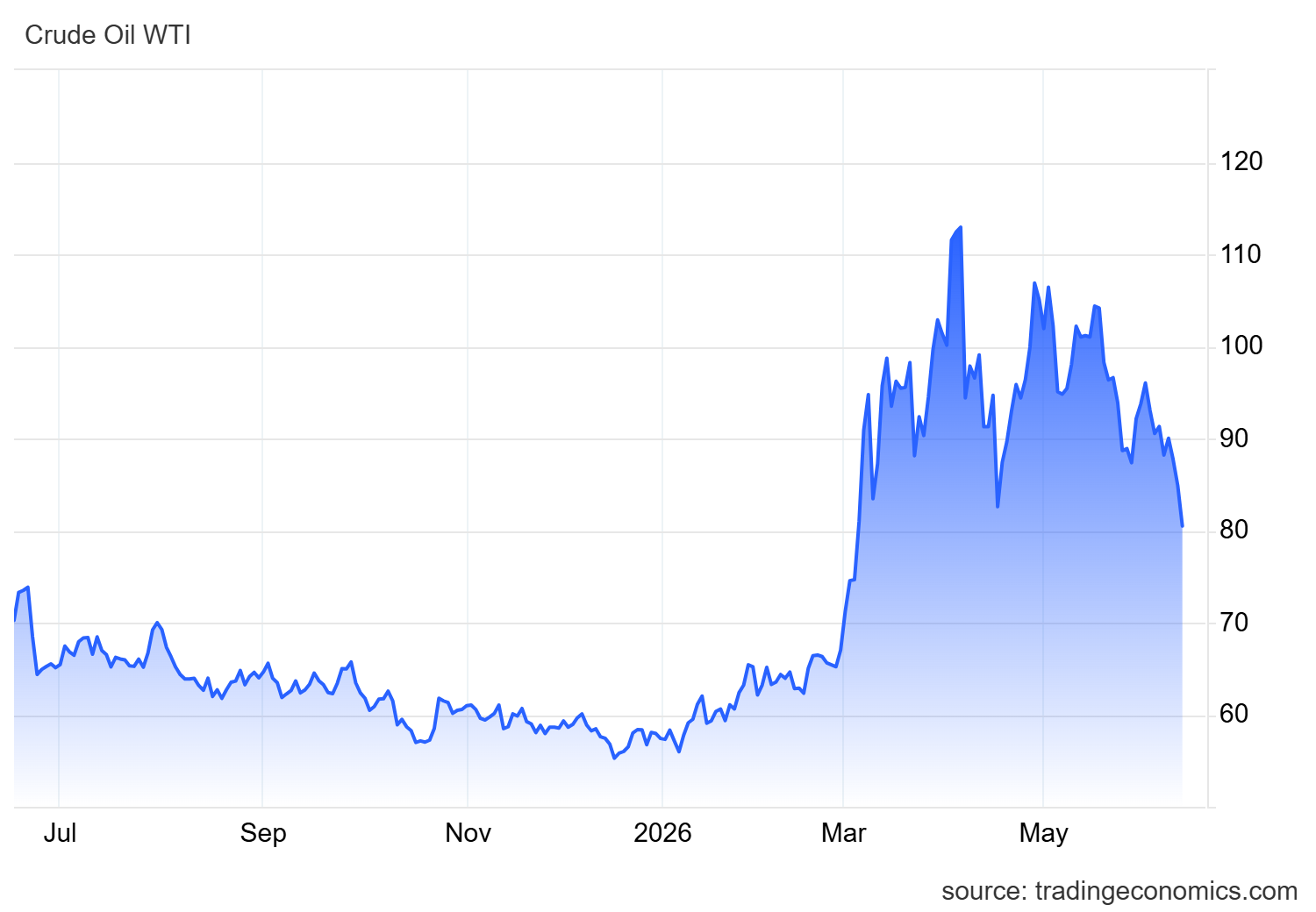
WTI crude futures with July delivery plunged over 5%, reaching a level of 80.25 USD per barrel. This is the lowest level since March 10.
Chart. WTI crude futures prices
Source: Trading Economics.
The international benchmark, i.e., August Brent contracts, fell 4.26% to a level of 83.31 USD per barrel.
For commodity markets, this is a true earthquake that redefines valuations of energy companies worldwide and forces hedge funds to quickly adjust asset portfolios.
Chart. Brent crude futures prices

Source: Trading Economics.
See also; Trump in Beijing. Nvidia shares may not escape the rally? The giant’s CEO counts on a US‑China agreement.
Pakistani connector and logistical optimism
The diplomatic success did not arise in a vacuum. The key mediator was Pakistan’s Prime Minister, Shahbaz Sharif, who on Sunday officially confirmed the immediate and permanent end of military operations on all fronts, including the territory of Lebanon.
Sharif thanked both powers for their involvement in seeking diplomatic solutions and announced that special mediators will facilitate meetings this week aimed at preparing the ground for technical talks.
From a maritime logistics perspective, the situation looks exceptionally promising. Lars Barstad, CEO of transport giant Frontline, previously in an interview with CNBC indicated that traffic in the strait could return to normal almost immediately after a credible agreement is reached.
The market reacts to the peace pigeon’s news with genuine euphoria. Futures on U.S. indices surged.
Dow Jones Industrial Average gained 0.7%, S&P 500 rose by 0.9%, and the tech Nasdaq 100 exploded by 1.4%.
True mania, however, swept Asian markets during Monday’s session. South Korea’s KOSPI jumped as much as 5.1%, Japan’s Nikkei 225 rose by 3.6%, and the broader Topix gained 2.6%.
See also: Oil market shock. UAE leave OPEC and OPEC+. Reuters warns of “chaos.”
Source: CNBC.