Oil price moves toward stabilization
Investors hope that the meeting between the presidents of the USA and China in Beijing may bring a positive impulse for the peace process in the Middle East, fueled by statements from D. Trump that China declared assistance in clearing the Strait of Hormuz, supporting Thursday’s stabilization of oil price quotations.
>> Also read: Dollar rate before the shock? Big changes coming in the Fed
Zloty benefits from USD/PLN, EUR/PLN
This slightly lowered inflation expectations, which resulted in a decline in government bond yields on FI markets, and globally improved risk appetite among investors, with the PLN benefiting in the European part of the session.
GDP favorable for PLN
During this period the zloty was also supported by the preliminary reading of Poland’s GDP for 1Q26, which matched our expectations and positively highlighted the domestic economy against Europe.
Dollar appreciation against PLN
In the American part of the quotes the zloty began to feel the global appreciation of the dollar, supported by rising market valuations of a possible Fed rate hike in recent days after U.S. macro data indicated increasing inflationary pressure.
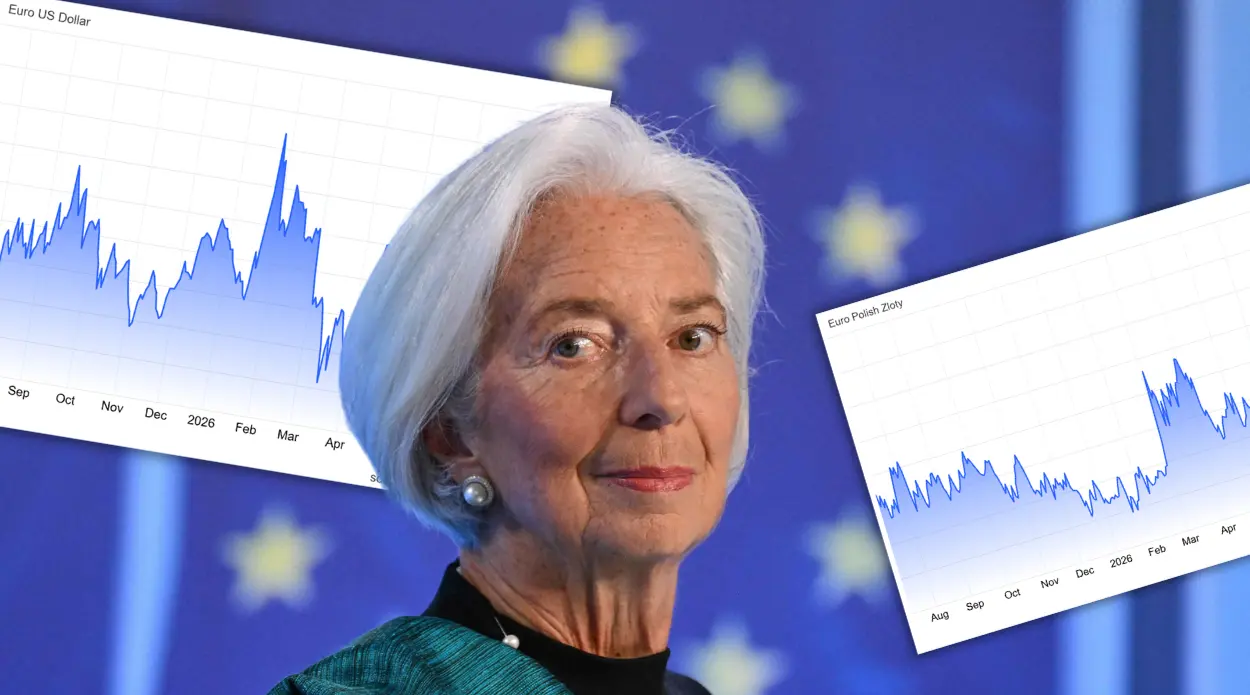
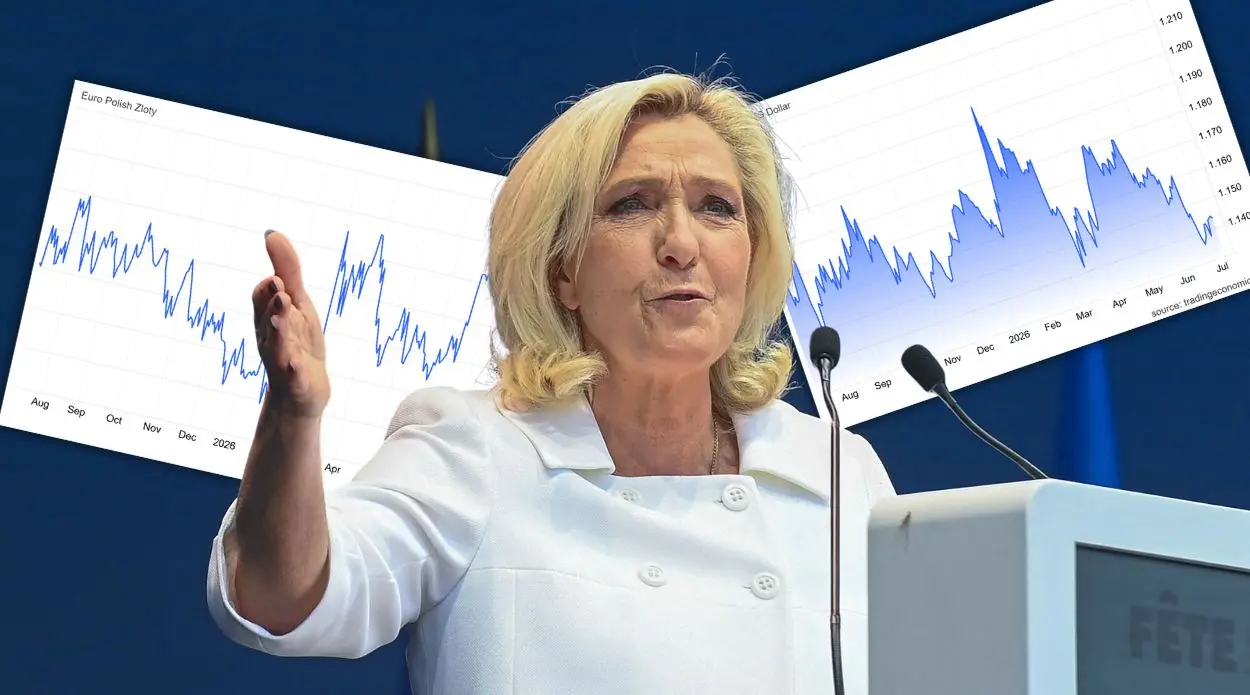
Regarding short‑term trends of EURPLN and USDPLN, they did not change, staying in local consolidations, respectively in the ranges 4.23–4.26 and 3.58–3.64, while investors awaited new impulses.
Euro and dollar rates – forecast for the coming days (EUR/PLN, USD/PLN)
In our opinion these impulses may come mainly from geopolitics. Most likely in the near future we will see whether the talks between the presidents of the USA and China have created space for a breakthrough in the Middle East, especially for clearing the Strait of Hormuz.
We believe it could happen no earlier than the beginning of next week, so until then we assume the EURPLN will remain in the above consolidation, with a risk of the USDPLN moving toward the 3.66–3.68 zone.
On Thursday national government bond yields fell by 1–6bp. In the 10‑year segment yields fell by 6bp to 5.78%, while on base markets U.S. Treasuries and German Bunds fell by 2–6bp to 4.46% and 3.05% respectively.
Trump in Beijing – what’s new?
President D. Trump’s visit to Beijing, along with statements from the Chinese leader emphasizing cooperation over confrontation, improved market sentiment. Although lacking specifics, the constructive atmosphere of the meetings supported equity markets and helped stabilize oil prices. This translated into a positive trading atmosphere in the FI market, where Thursday saw falling yields.
Strong U.S. retail sales data limited the scale of the downward movement of short‑end yields on the U.S. yield curve. 30‑year Treasuries, which reached a yearly high of about 5.05% on Wednesday, returned on Thursday near the psychological 5% barrier. The domestic SPW market also enjoyed increased investor demand.
Alongside the directional impulse from base markets, domestic economic data also supported it. The preliminary GDP reading for the first quarter at 3.4% was weaker than market consensus. Signals of a gradual slowdown in growth partially ease the risk of rate hikes by the RPP, related to rising inflation pressure from high oil prices.
U.S. bond yield return will remain high
On Friday we expect yields to oscillate around current, elevated levels. The conflict in the Middle East remains a source of upward pressure on yields, and at the current stage there are no signals indicating a permanent unlocking of the key oil transport Strait of Hormuz.
GDP – POLAND
GDP growth in 1Q26 was 3.4% YoY, in line with our forecast and slightly below consensus (3.6% YoY), versus a 4.1% YoY increase in 4Q25. After seasonal adjustments, GDP dynamics also amounted to 3.4% YoY. In q/q terms, GDP grew by 0.5% (sa), indicating a continuation of an uninterrupted growth trend that has lasted six quarters. More in the Macro Flash: “GDP is growing and will keep growing”.
Drought will affect food prices
April 2026 was the third driest April since 1951, and in the vast majority of synoptic stations total precipitation did not exceed 30% of the long‑term norm. The ongoing drought generates a risk of lower harvests, and consequently higher food price paths.
In our current CPI inflation forecast for 2026 (3.3% annual average) we already account for the weather factor (drought and frosts).
Inflation
H. Majszczyk (MF) informed that MF did not include the effects of the war in the Middle East in the base forecast scenario (in the long‑term macroeconomic assumptions), because with high uncertainty, overestimated indicators could affect the construction and implementation of the 2027 budget.
She also informed that the macroeconomic scenario for the 2027 budget law is only now being prepared and may differ from the one presented in the assumptions.
MF adopted a 2026 GDP dynamic of 3.6% (PKOe.: 3.5%) and CPI inflation of 2.5% (PKOe.: 3.3%).