Both the stock exchange and commodity markets have recently shown almost brazen optimism.
The war of nerves in the Middle East and the geopolitical paralysis of markets
Although movement in the strategic Strait of Hormuz has nearly stopped, and the USA struck Iranian infrastructure for the first time since April, investors act as if everything is under control. The Brent oil barrel, after a brief jump to 80 USD, quickly fell to around 76 USD.
Yields on 2‑year USD swaps erased half of the recent rise, and December expectations price US rate cuts at 35 basis points. Paradoxically, the USD does not discount this risk.
Investors prefer to focus on the interest‑rate differential, which briefly supported the euro. A total Hormuz blockade and nonlinear oil price spikes present a real scenario. When the market shakes off the current boredom with repetitive headlines, the risk balance will abruptly tilt in favor of the USD.
See also: Will the dollar still surprise? The expert issued a forecast for USD/PLN and EUR/USD. “It’s hard for me to believe there won’t be more fires.”
EUR/USD: Why analysts forecast declines?
Although a temporary weakening of the USD gave breathing room to the common currency and raised hawkish expectations for a September rate hike by the ECB, the fundamentals of EUR/USD remain extremely fragile. The path is extremely narrow for the euro to emerge from this Middle Eastern re‑scaling as the ultimate winner.
The two‑year interest‑rate differential widened by about 10 basis points. That is still 50 basis points wider than at the April peak, when markets massively bet on ECB hawks alongside Fed inaction.
Currently analysts openly warn against excessive underestimation of downside risk. If geopolitical turmoil escalates over the weekend, the Monday opening could brutally confirm market optimists.
Technical forecasts clearly indicate that the market is awaiting another painful test of the psychological barrier 1,140. Ignoring this fact is like entering the market without a basic risk‑management algorithm.
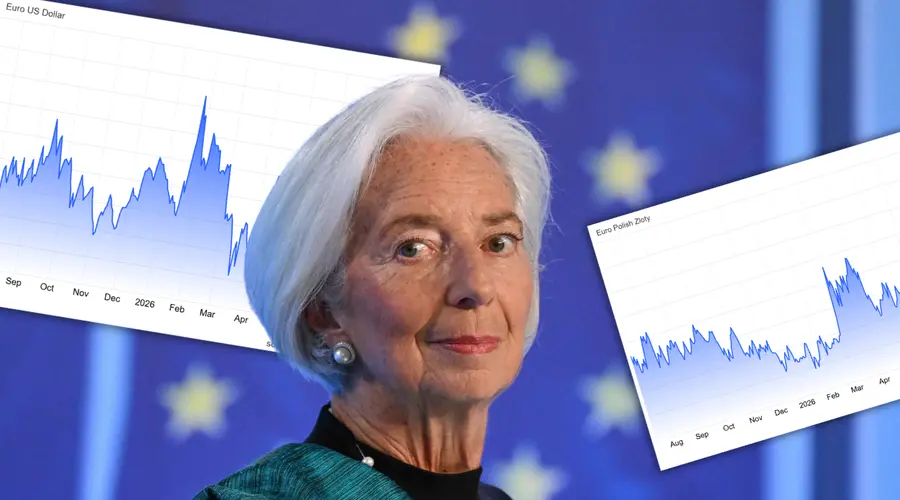
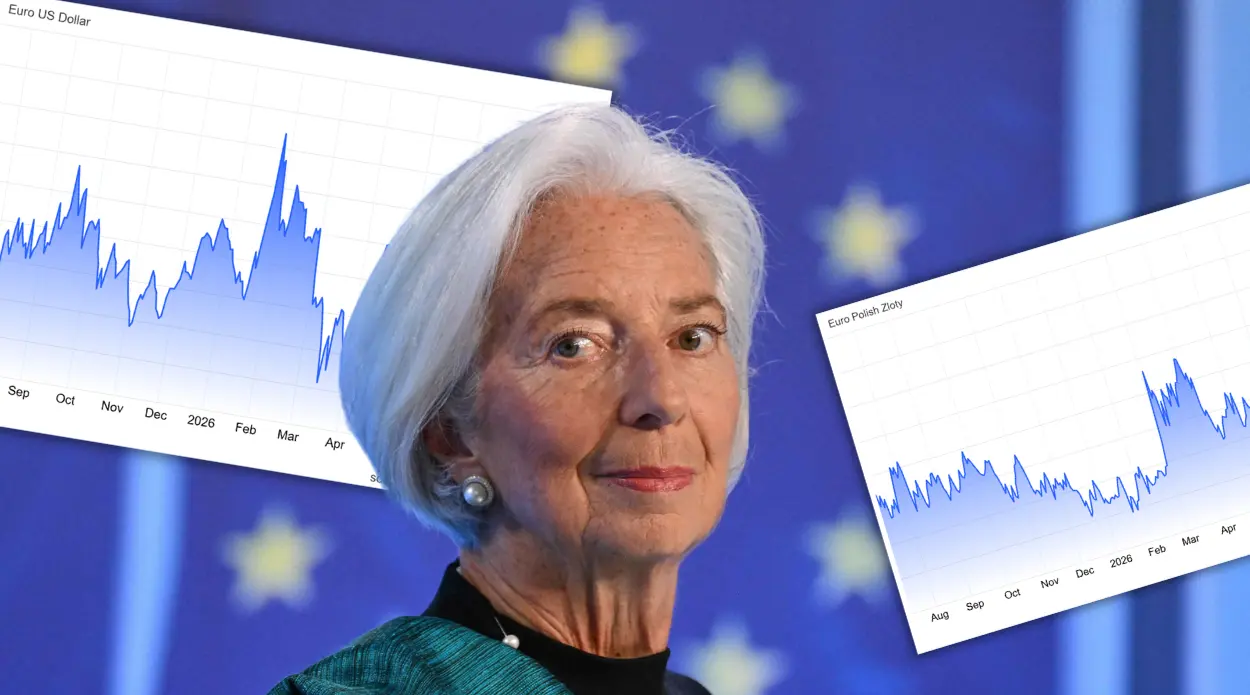
Chart. Euro to dollar (EUR/USD)

Source: Trading Economics.
See also: Is the dollar on a long road to 4 PLN? The expert issued forecasts for USD/PLN and EUR/USD. “The dollar could gain.”
What does this mean for EUR/PLN?
Translating global tremors to the domestic backyard would be ruthless. In recent days the EUR/PLN has risen dynamically, breaking out of previous stagnation and hovering around 4,35.
The zloty, as an emerging‑market currency, is hit hard every time global risk aversion rises.
As experts at ING Think emphasize, a temporary revival of global risk‑seeking sentiment allowed a slight rebound of high‑yield EM currencies after earlier dismantling of carry trade positions, but it is only a temporary bandage on an open wound.
EUR/USD decline, driven by capital flight to the safe haven that is the USD, will automatically exert strong depreciation pressure on the zloty. In the world of big finance, capital does not ask for sentiment, it simply flees where liquidity is greatest.
For EUR/PLN this means that a return to full stability is unlikely, and the risk of further zloty weakening against major currencies rises sharply.
It is worth noting that NBP President Adam Glapiński during yesterday’s conference did not rule out that post‑holiday rate cuts could enter the game.
Chart. Euro to zloty (EUR/PLN)

Source: Trading Economics.
See also: Dollar before breakout chance? Expert: “Capital will flow back to USD.”
Source: ING Think.