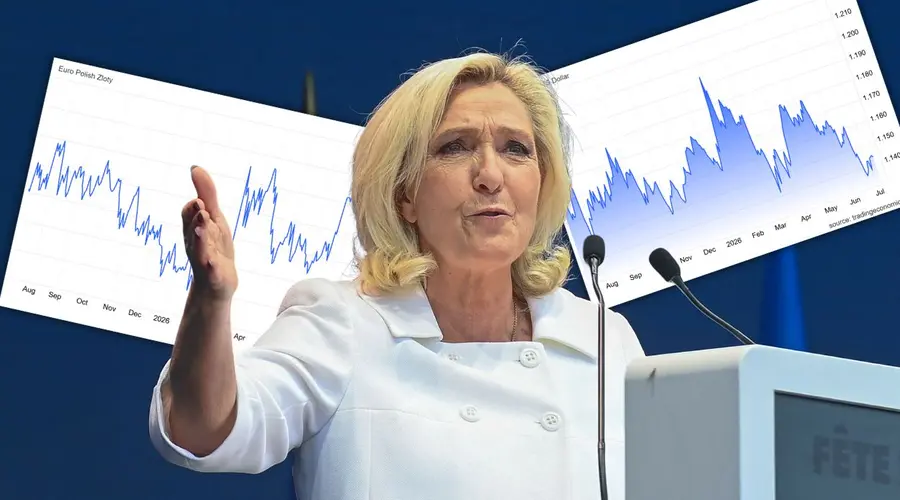
Currency investors anxiously eye Paris, where the appellate court decides the fate of Marine Le Pen and her accusations of embezzlement.
Why Paris Won’t Ignite the Common Currency
The stake is maintaining the ban on holding public office, which could ultimately eliminate her from the race for the presidential seat in 2027. If the ban remains in force, the leadership of the National Rally would be taken over by Jordan Bardella.
The markets have already fully priced the scenario in which the right-wing takes power in France. Both Le Pen and Bardella are clearly leading in polls, and their potential governments, modeled after Giorgia Meloni in Italy, will likely be characterized by pragmatism and fiscal prudence.
The real black swan that could destabilize French bond yields and weaken the euro would be a sudden surge in support for the far left under Jean-Luc Mélenchon.
Currently, polls indicate that right-wing candidates would easily defeat the left, and in a second round they would face market-neutral players like Edouard Philippe or Gabriel Attal. The Paris verdict is a political spectacle for the masses, not a real spark for a collapse of the common currency.
See also: Dollar and euro rates before the change. Will the Warsh raise rates? Expert: “Straight path to disaster”
EUR/USD, or Carry Trade and the Shadow of the Japanese Crisis
The EUR/USD pair enjoys relative stability. Recent US economic data turned out to be very consistent with market consensus. Even the hawkish remarks of Chris Waller from the Fed, who criticized the ban on “forward guidance” and pointed to inflation risks, failed to pull the market out of lethargy.
Investors currently have no strong argument to play against the high-yielding USD in an environment conducive to carry trade strategy.
Unless tomorrow’s FOMC minutes deliver a surprise, the DXY dollar index will stay closer to 101 than 100. The euro against the USD shows a willingness to retest around 1.140, but the lack of macro impulses pushes the pair into a sideways trend.
The biggest threat to dollar stability is not Europe, but Tokyo.
The USD/JPY rate oscillates around 162 JPY. The absence of intervention by the Bank of Japan below 163 could spark speculation that the new “line in the sand” has moved to 165, causing nervousness.
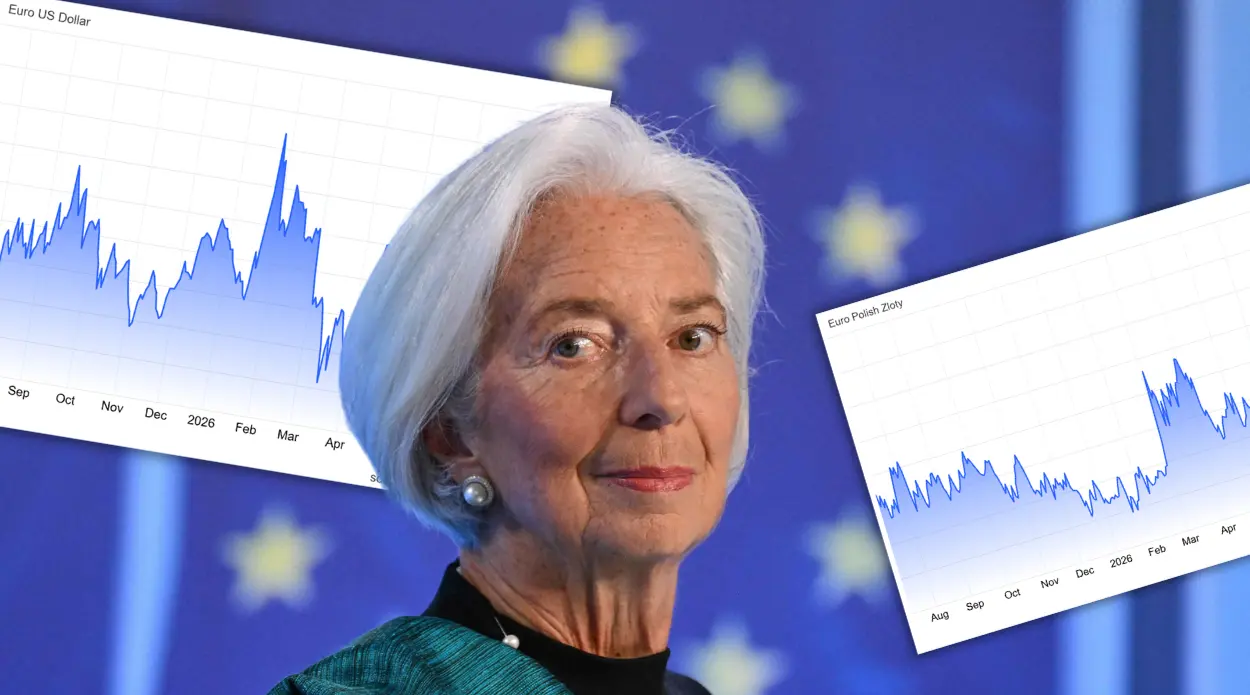
The euro to dollar rate on Tuesday is, however, at 1,14 USD.
Chart. Euro to dollar rate (EUR/USD)

Source: Trading Economics.
See also: Dollar rate before a drop or rise? There is a breakthrough in the Fed. Expert issued forecasts for USD/PLN and EUR/USD
EUR/PLN – The Zloty Benefits from Global Quiet and Capital Flow
In this global power structure, the Polish zloty is performing exceptionally stable. EUR/PLN draws heavily from low volatility in the broad financial market. Since the euro is not receiving strong stimuli from the French political scene, and the Fed does not intend to sharply cut rates, capital readily drifts toward emerging market currencies with solid fundamentals. Exactly like the PLN.
The lack of domestic impulses means EUR/PLN follows global sentiment. However, it is worth looking at other markets that may indirectly influence European capital flows.
As experts at ING Think point out, in the UK the Bank of England publishes a financial stability report.
If it decides to exclude government bonds from the leverage ratio for banks, demand for UK debt will rise, and government borrowing costs will fall by 10-20 basis points. A strong pound could pressure EUR/GBP, pushing the rate below 0.8545, which would in turn affect the euro’s position across the region.
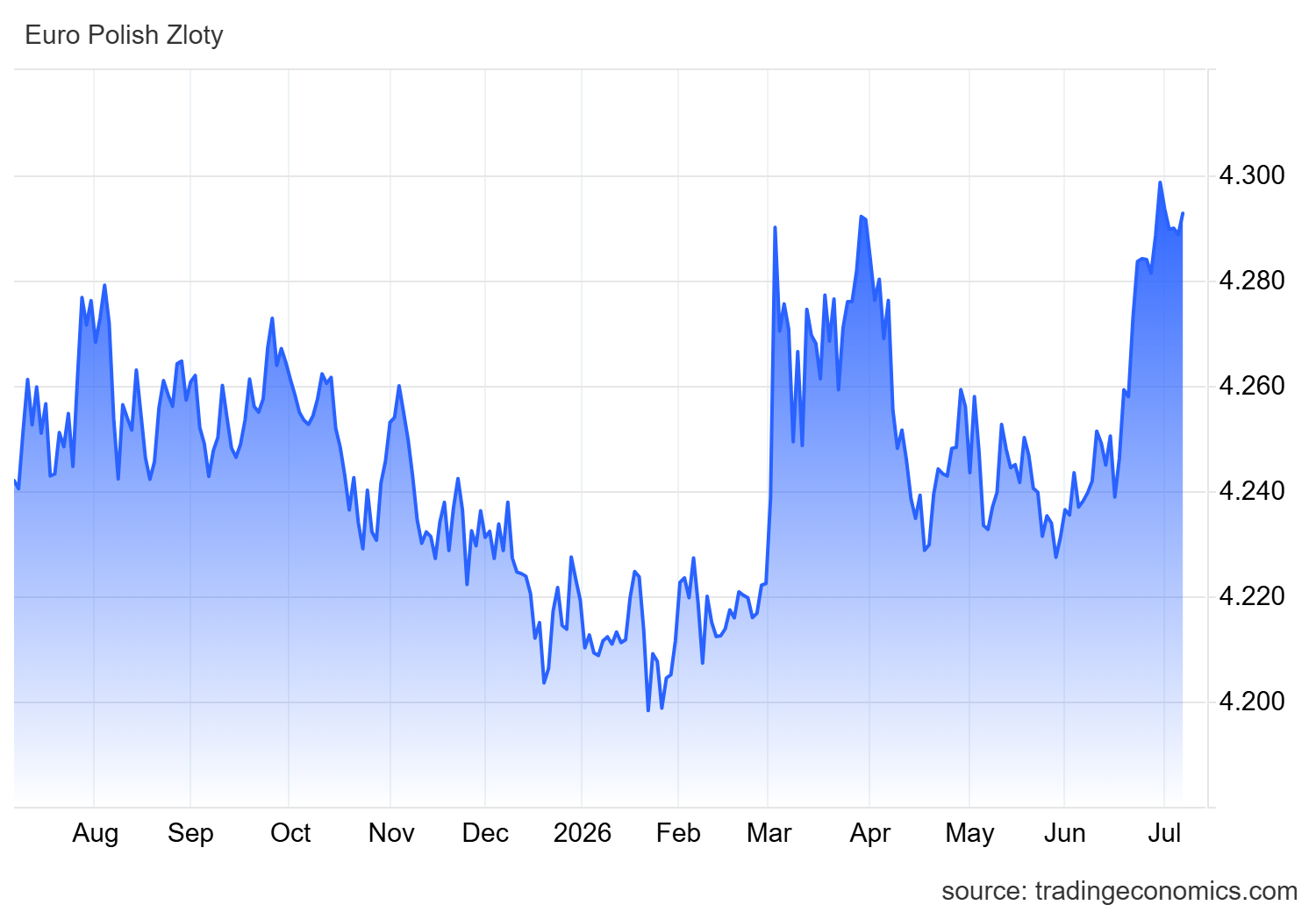
For EUR/PLN, the most important factor remains that as long as Paris does not burn, the zloty sleeps peacefully.
The rate reaches 4,29 PLN.
Chart. Euro to zloty rate (EUR/PLN)
Source: Trading Economics.
See also: Dollar rate on a long road to 4 PLN? Expert issued forecasts for USD/PLN and EUR/USD. “Dollar could gain”
Source: ING Think.