USA Revoked Iran’s Permission to Sell Oil on the Open Market
The deterioration of global risk appetite, mainly visible in equity markets where heavily “crowded” positions in AI-related stocks were being unwound, also put pressure on emerging market currencies. Additionally, after further Iranian attacks on ships passing through the Strait of Hormuz, the USA revoked Iran’s permission to sell oil on the open market and conducted large airstrikes on Iranian targets in the late Polish evening hours.
This heightened investors’ concerns about the durability of the agreement with the USA, and oil prices rose sharply, hurting the currencies of net oil-importing countries.
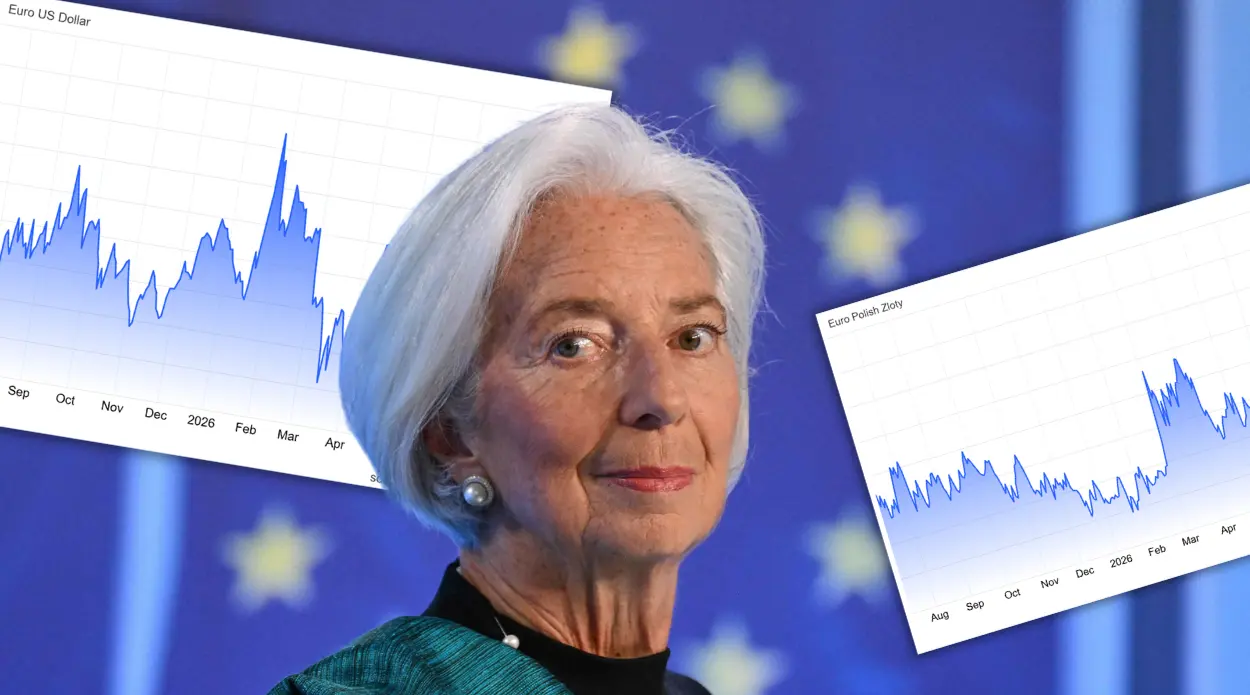
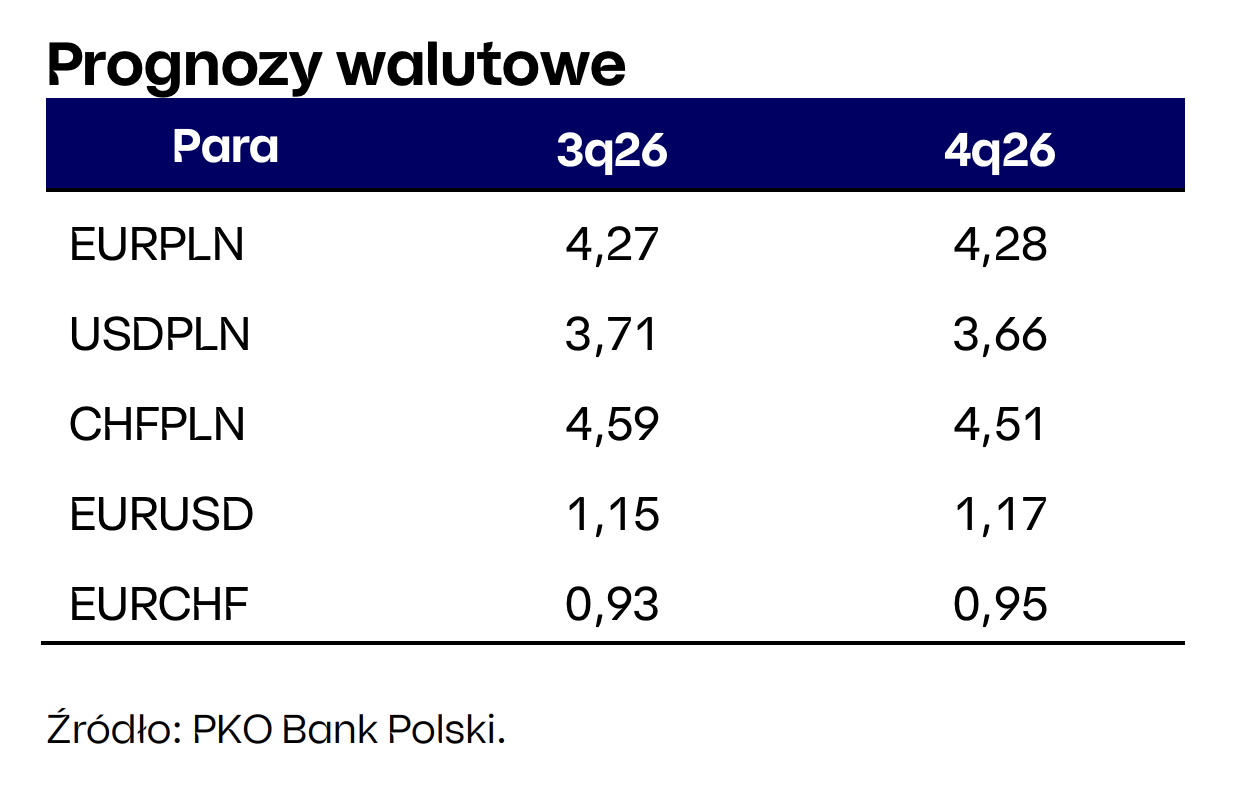
In such an environment the zloty, like other CEE‑3 currencies, was weaker, and the EURPLN and USDPLN rates were close to key technical levels, located near 4.3050 and 3.79 respectively.
Wednesday May Bring Escalation of Geopolitical Tension
Wednesday may bring an escalation of geopolitical tension, although much will depend on Iran’s stance. Investors will also focus on central banks and the prospects for NBP and Fed rates. We do not expect changes in domestic interest rates, but we will monitor the RPP statement, especially the Thursday conference of A. Glapiński, assessing the balance between hawkish and dovish tones.
The dominance of the latter, through compression of the priced rate differential, could weigh on the zloty.
The evening release of the June FOMC meeting minutes will instead show the sources and prospects of a hawkish turnaround among committee members, and it is hard to expect dovish tones. Indirectly this may support USD appreciation.
Euro Rate – Forecast for the Coming Days
Thus, on Wednesday the environment for the zloty will be at most neutral, and the risk of testing the key levels for EURPLN and USDPLN, 4.3050 and 3.79 respectively, is significant in our view.
On the domestic interest rate market, Tuesday brought a rise in bond yields. The negative impact on securities valuations was due to rising oil prices on global markets, prompting further profit-taking.
At the same time, noticeably lower-than-expected inflation readings in the Czech Republic and Hungary had little impact on overall market sentiment across the CEE region.
Wednesday Under the Sign of Central Banks. RPP Will Shift Tone, Wall Street Awaits FOMC
The key event on Wednesday will be the RPP meeting. Both economists and the market do not expect interest rate changes in 2026. In this context, the tone of the statement justifying the monetary authorities’ decision will have the greatest impact on debt instrument prices.
Given the lower-than-expected inflation dynamics in recent months, as well as falling oil prices and global inflation expectations, the market expects a slight softening of the Council’s rhetoric.
The document may slightly tone down warnings about heightened price pressure, while sharpening signals indicating a slowing economic growth.
The statement will also present the main assumptions of the latest NBP inflation projection.
It is worth noting that in the February edition, GDP growth in 2026 was estimated at 3.9%, while the current consensus has shifted to 3.5%.
In our baseline scenario, we expect Wednesday to see stabilization of treasury bond prices in the 2‑year sector below 4.05% and 10‑year bonds below 5.3%. Meanwhile, on primary markets, global investors will focus on the release of the minutes from the last U.S. FOMC meeting.
Given the Fed officials’ previous communications, it is hard to expect a radical shift in the Council’s stance, although the probability of a policy turnaround will gradually increase.