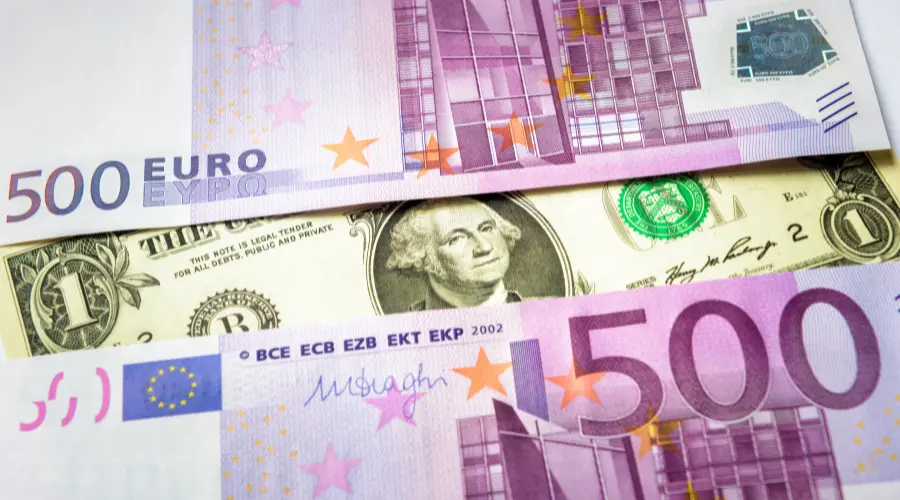
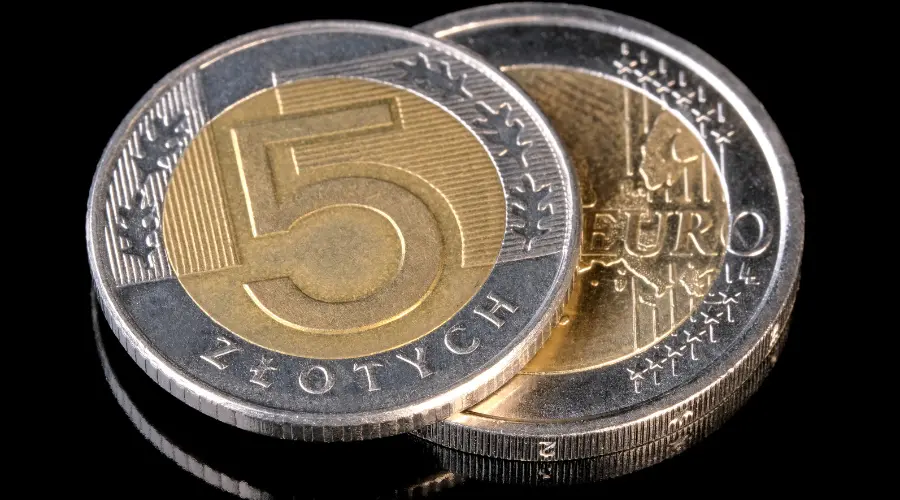
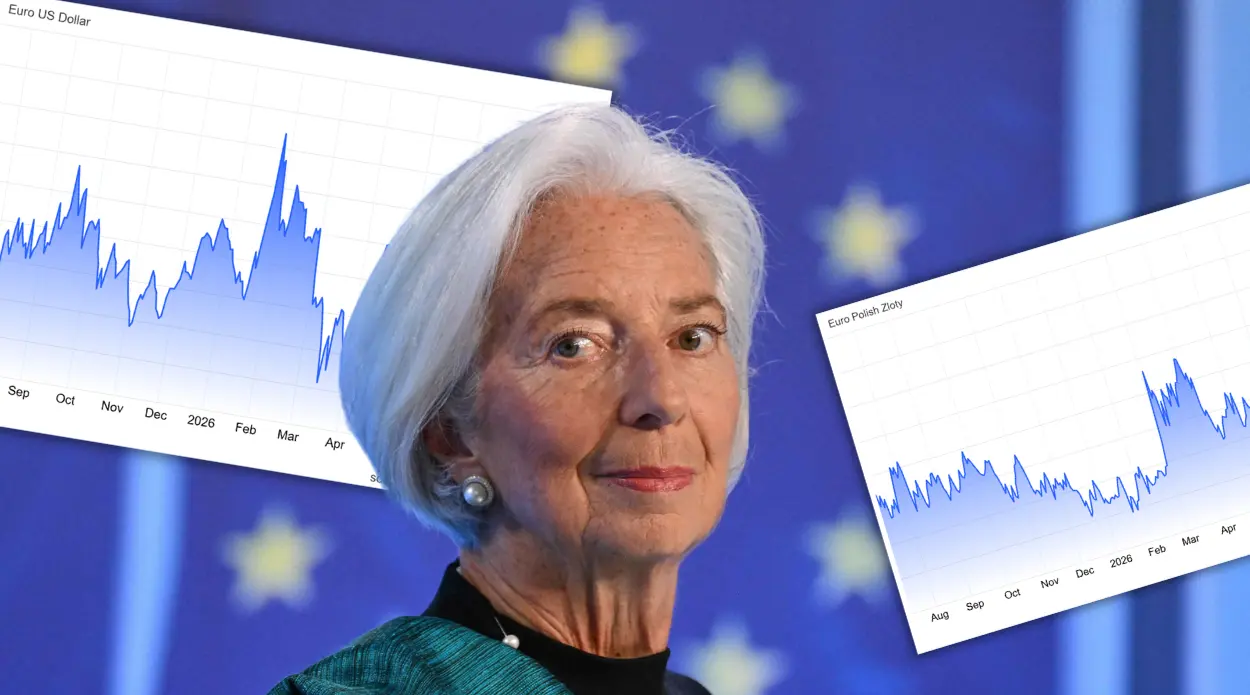
Clear weakening of the U.S. dollar, negatively correlated with emerging market currencies, and increased risk appetite in capital markets were the main factors supporting the PLN.
Globally the dollar was losing ground because the market slightly lowered its valuation of the Fed rate hike scale after weaker-than-expected monthly U.S. labor market data.
This trend was also more "technically" supported by the global strengthening of the yen, which has about a 14% share in the dollar index (DXY). It is worth adding that the dollar index ended the week in the zone of important technical supports (100.5–100.9 points), and thus the coming days will be crucial for the direction of its future trend.
Dollar rate - forecast for the coming days
In our opinion, the balance of factors in the current week indicates a higher probability of a slightly stronger global dollar. Such a scenario could support the growing chance of a corrective rebound in oil prices, where investors price a very rapid return to full traffic in the Strait of Hormuz. Rising oil prices could raise inflation expectations and again increase investors’ positioning for a more hawkish Fed.
Similarly, the Fed rate path may be influenced by the release of the minutes from the last June FOMC meeting, which will be published on Wednesday. If the above assumptions hold, the USDPLN rate could move closer to the 3.79–3.80 zone in the coming days.
For EURPLN we assume that it will remain in the range 4.28–4.30 over the current week, perhaps closer to its upper limit, especially if the dollar were globally stronger.

Bond yields - forecast for the coming weeks and months
In the domestic interest rate market, the yield curve is expected to decline slightly next week by about 5–10 basis points. For Polish 2‑year bonds this would mean a yield drop to around 3.95%, and for 10‑year bonds to about 5.15%.
This scenario supports, among other things, the Wednesday RPP meeting. Although we assume the Council will not change rates, a moderation of rhetoric and the possibility of easing monetary policy in 2027 are likely.
Derivative pricing indicates a 50% probability of one rate cut in Poland by 25 basis points next year. In our view, the space for a softer RPP stance has increased after recent, clearly lower-than-expected inflation releases in Europe, including Poland, and in conditions of strong global inflation expectation declines, lower geopolitical uncertainty, and falling oil prices.
A certain impact on the markets may also come from the publication of the updated NBP macroeconomic projection, especially if GDP growth forecasts are revised downward. In March, the NBP projected Polish economic growth in 2026 at 3.9%.
For comparison, in the latest macroeconomic survey of the central bank, market expectations shifted toward 3.5%.

Does the RPP change priorities? The market is already preparing for rate cuts in Poland
A lesser focus of the RPP on inflation, combined with a stronger emphasis on the risk of slower economic growth, would favor a full NBP rate cut next year. Conversely, the domestic minutes from the last Council meeting and the treasury bond auction should not have a significant impact on Polish government bond prices.
We also see a high probability of a scenario where, following falling global inflation expectations, the market begins to price a more dovish Fed policy. This would support a decline in U.S. bond yields, and indirectly also Polish treasury securities.