Billions for Polish defence, changes in tourism and the latest export data
The value of the tourism sector in Poland in 2024 was 173.2 bn PLN, accounting for 4.8% of the country’s GDP, including the direct and indirect impact of the industry on the economy – the OECD Tourism Trends and Policies 2026 report states.
On Monday at a press conference, government representatives presented further proposals on deregulation, including in tax law and digitalisation of services. The government plans to adopt them by the end of 2026.
Exports from Poland in May 2026 fell 1.6% month‑over‑month to 30.109 bn euros, the National Chamber of Commerce economists’ analysis shows. By 5 July, 29.112 EU‑funded project agreements were signed, using 66.7% of the available EU cohesion policy pool for 2021‑2027 – the Ministry of Funds and Regional Policy website reports.
Local authorities and enterprises can already apply for funding for investments that strengthen the country’s security and resilience under the Security and Defence Fund (FBiO) – BGK announced.
The fund pool is about 23 bn PLN from the KPO for new investments, including in population protection, dual‑use infrastructure and development of Polish defence sector firms. After April, the current account deficit in the fiscal year rose to 0.9% of GDP, the Ministry of Finance reported.
German industry above expectations, slight slowdown in US services
German industrial orders rose 1.9% month‑over‑month in May, the Federal Statistical Office said in a statement.
The investor confidence index in the euro area in July was –3.1 points versus –13.4 points a month earlier, Sentix research group said in a release.
Analysts had expected –10.0 points.
Producer price index (PPI) in the euro area rose 0.2% in May month‑over‑month and 5.9% year‑over‑year, Eurostat said. Analysts estimated 0.2% m/m and +5.8% r/r.
Retail sales in the euro area rose 0.2% month‑over‑month in May, after a 0.3% decline a month earlier, corrected from –0.4%, Eurostat said.
Analysts had expected +0.3% m/m. The US composite PMI, prepared by S&P Global, was 51.9 points in June versus 52.2 points in May.
Preliminary estimates were 52.2 points. The ISM services activity index in the US was 54.0 points in June versus 54.5 in May, the Institute for Supply Management said. Analysts expected 54.0 points.
Stable trade amid ongoing cost pressure: the euro area situation
Euro‑area consumers are returning to growth. May retail sales data in the euro area brought a slight improvement after a weak April. Retail sales rose 1.6% year‑over‑year versus 0.9% a month earlier, and month‑over‑month increased 0.2% after a 0.3% decline in April.
The data suggest that the European consumer remains relatively resilient despite earlier sentiment deterioration and economic uncertainty. Moreover, the improvement is fairly broad.
Year‑on‑year growth was seen in both food (+2.4% r/r) and non‑food goods (+2.3% r/r). The reading does not indicate a strong acceleration of consumption, but also does not confirm a scenario of clear household demand weakening suggested by April trade results and earlier business‑confidence surveys.
Thus May data fit a picture of moderately stable consumption in the euro area. Consumers are not currently the engine of strong economic revival, but remain resilient enough to limit the risk of a deeper slowdown in the coming months.
May producer price data indicate ongoing cost pressure in the euro area, though its sources are gradually changing. PPI inflation rose to 5.9% r/r from 5.0% a month earlier, and month‑over‑month producer prices increased 0.2% after a 0.7% rise in April.
Energy still accounts for much of the high annual growth (+14.0% r/r), but in May its prices fell 1.0% m/m.
US services sector remains strong. Labour market pleasantly surprises
Meanwhile, producer prices excluding energy rose 0.7% m/m and 2.8% r/r, indicating sustained cost pressure in other sectors of the economy.
The data suggest that although the energy shock’s impact is gradually weakening, price pressure is becoming more dispersed, which may slow the deflation process in the euro area in subsequent months. The US services sector remains resilient.
US services activity remains positive, though June growth slowed slightly.
The ISM services index fell to 54.0 from 54.5 in May, still clearly signalling expansion.
At the same time, cost pressure remains elevated, though the price component fell to 67.7 from 71.3 a month earlier.
The report structure is mixed. Firm activity and new order inflows remain solid, but both indicators fell compared to May.
Labour market pleasantly surprised. The employment component rose to 51.2 and for the first time in four months was above the neutral level (50). Overall, the data indicate a still resilient services sector, though with signs of gradual demand cooling amid persistent but falling inflationary pressure.
EUR‑USD steady
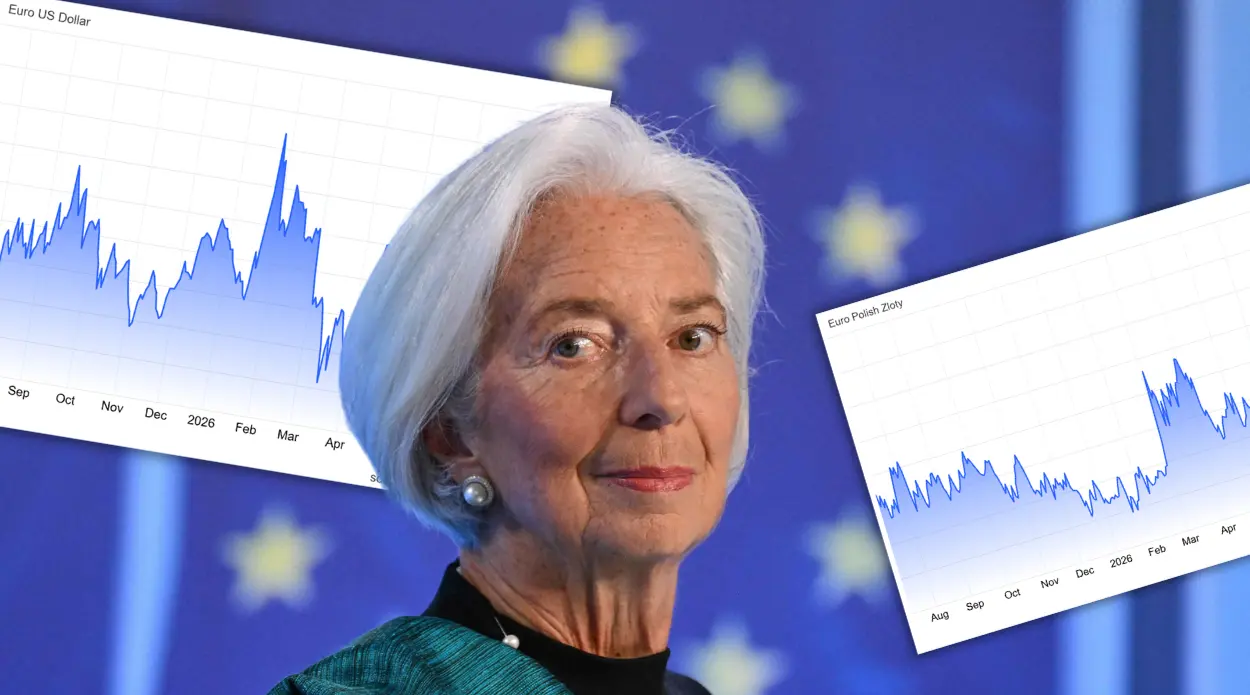
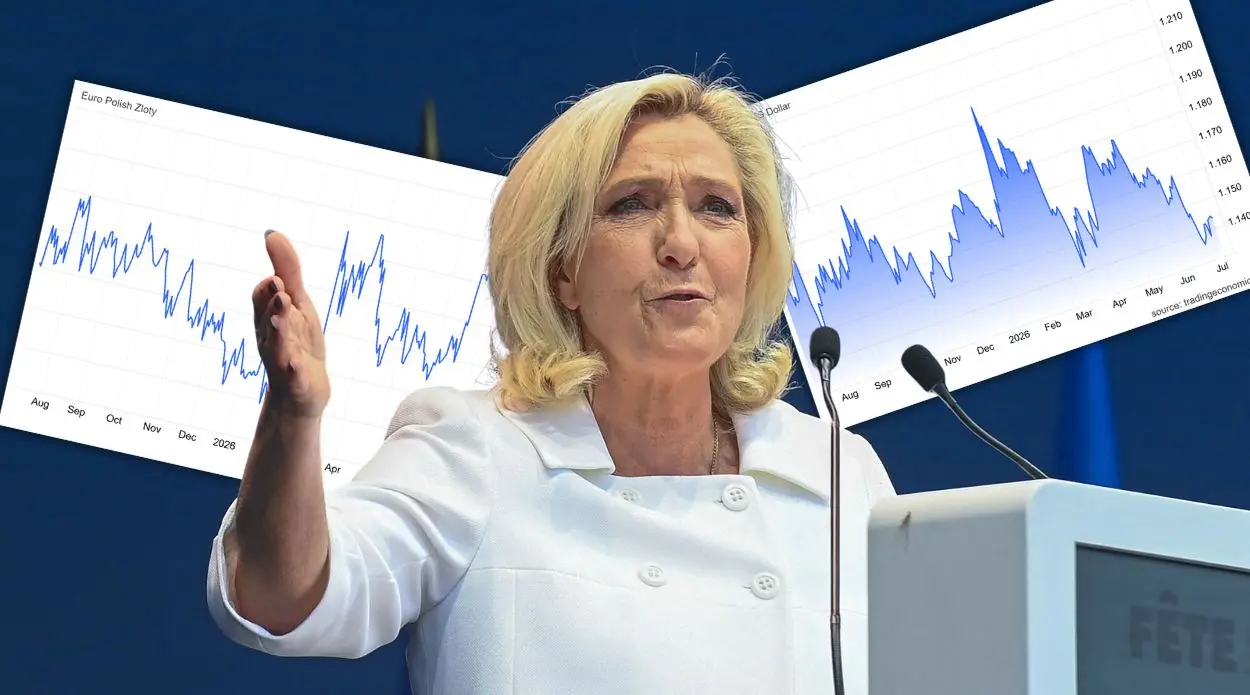
Yesterday the EUR‑USD rate stayed near 1.14. Euro is supported by better European industrial data and higher producer inflation.
EUR‑PLN unchanged
The steady dollar and anticipation of the RPP decision translate into the zloty. Yesterday the EUR‑PLN rate remained close to 4.29 at day‑end.
Minor debt weakening. After last week’s decline in domestic bond yields, yesterday saw a slight correction.
The Polish government bond yield curve shifted up about 3‑4 basis points. German Bunds moved less, 1‑2 basis points up.
US Treasuries fell 1‑3 basis points. Today the RPP decision meeting begins.
From abroad we will learn about German industrial production for May and US May foreign trade data.