







Report from a year that never was
Author’s note: The text is a speculative essay in the economic fiction genre. Numerical data about Poland after the hypothetical adoption of the euro in 2028 are part of the author’s scenario. Footnotes document real mechanisms, institutions, and experiences of countries that have adopted the euro.
I’ll start where no one has a problem with the euro. The production hall under Września, a plastic pressing plant, 140 people on three shifts, 70 percent of turnover exported to Germany and the Netherlands. The finance director shows me a table: in 2027 the company spent on currency hedging the equivalent of the salaries of four engineers. In 2028 – zero [6]. – For us the euro is simply the disappearance of a cost that the client never wanted to finance – he says, shrugging as if it were a lightbulb replacement. Exporters are the obvious beneficiaries. And that’s why they are little media. Who will write about someone stopping losing money.
Ten kilometres further I meet a residential developer. He also complains, but for a slightly different reason. He had taken an investment loan in euros in 2026. Today that loan is no longer "currency‑based" – it simply is. The bank’s margin fell, the ECB rate in January 2029 is 2.25 percent and is as predictable as the ICE timetable. Problem? The same mechanism works for everyone. Land in the Tricity and under Kraków has risen since January 2028 by eleven percent above inflation. Capital from southern Europe seeks yield and found us. The developer smiles with that particular smile of a man who remembers the Spanish bubble of 2003‑2008. Satisfaction mixes with mild panic. Economists from the former NBP, who recently sounded the alarm about losing monetary autonomy, now speak more diplomatically. The Monetary Policy Council was dissolved. Its former members fed supervisory boards or think‑tanks.
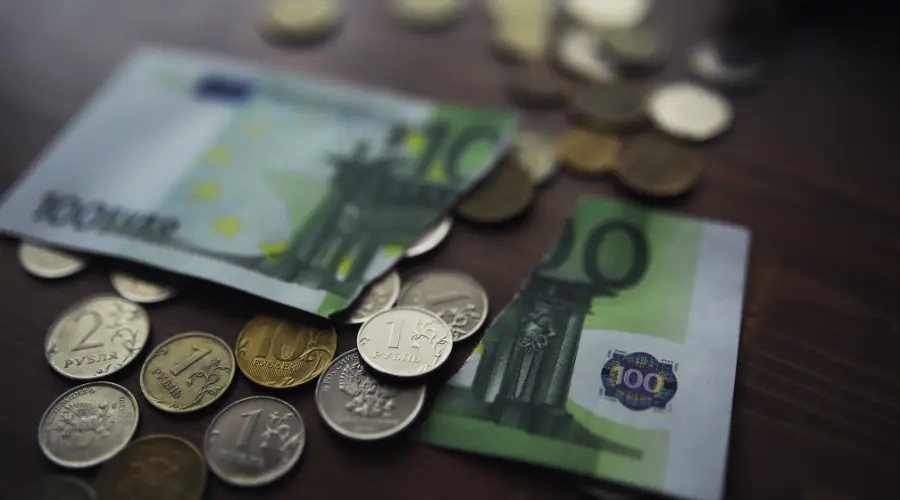
And now the other side. The receipts. In March 2029 GUS reported that the annual HICP inflation in Poland was 3.4 percent versus 2.1 in the euro zone. A small difference, one might say. Yet in the basket "restaurants, hotels and small trade" the jump reached seven percent. And social memory works right there. – Coffee for 19 zloty was inconvenient. Coffee for 4.50 euros already sounds abstract – the café owner in Prague tells me. She rounded prices up "for roundness," because "4.30 looked odd." Croatians call it cijene zaokruživanja – price‑rounding inflation. In 2023 their government ordered double pricing for a year after adopting the euro [2]. Our order lasted a year and a half. The effect was similar at least in social reception: even if the currency change itself had a limited impact on overall inflation, the most visible price categories were enough to sustain the suspicion of price‑inflation [3]. We have no supermarket boycotts yet. We have viral receipt photos on X. A sociologist from PAN called it already a "post‑zloty phantom": we see prices in euros, we feel the harm in a non‑existent currency.
At electronics importers something exactly opposite happens. The manager of a Polish branch of a Scandinavian RTV chain shows me two price lists – a wholesale catalogue from December 2027 and the current one.
– We had prices in Poland six, eight percent higher than in Germany. Every importer added a premium for currency risk and short‑run logistics. After entering the zone the client compares euro to euro, and Allegro shows him three offers from Berlin, two from Amsterdam and one from Vilnius. Margins flattened faster than we could update our pricing strategy. This is the classic law of one price [4]. It sounds cold in textbooks. Polish consumers feel it as a one‑off discount when swapping a fridge. Slovaks experienced it after 2009 [5]. Croatians after 2023 – with the pandemic and war eating the effect. In ours, it is simply visible so far.
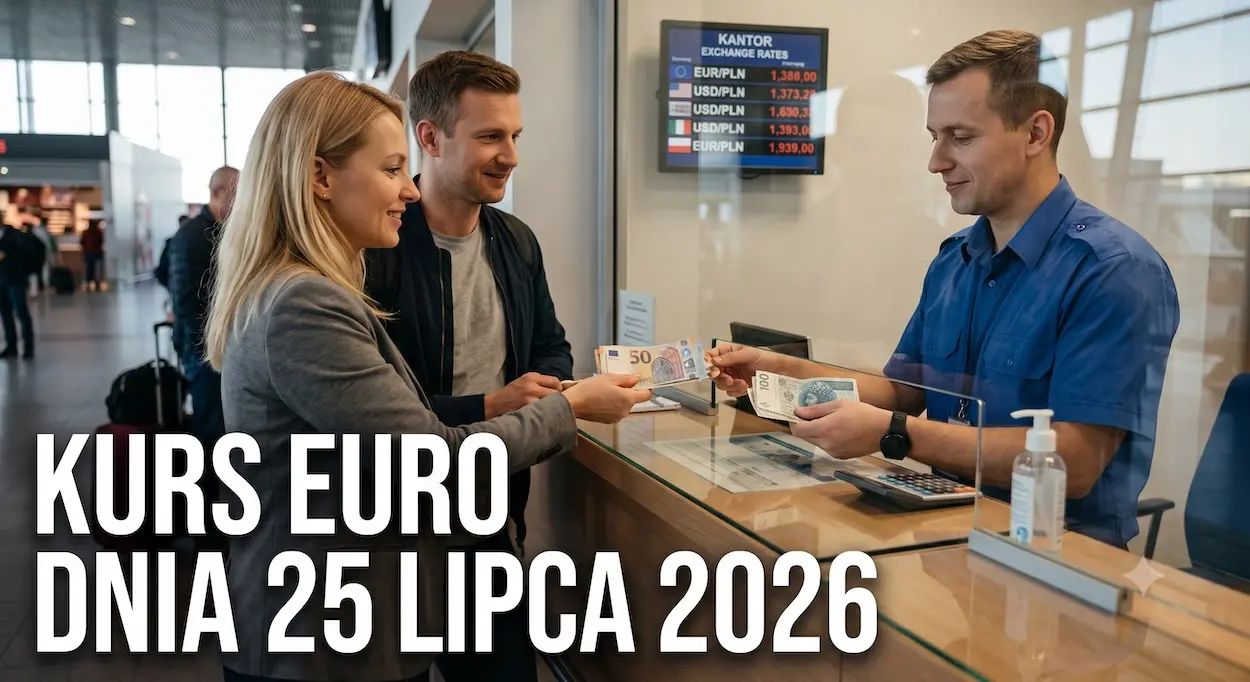
Currency fintechs experienced their own décor change. PLN/EUR disappeared, but customers stopped exchanging currencies: EUR/GBP, EUR/CHF, USD, NOK or the Czech crown quickly took the place of the former number one pair. The Polish online exchange market did not die, it simply stopped being a zloty market.
The strangest paradox I left for the end. It concerns the category the euro was supposed to love – Polish IT freelancers. They were happy once, when the monthly gamble with the rate ended. They worried a second time, when it turned out that competition from Portugal and Bulgaria is now direct. The wage argument of a Polish programmer – "I am twenty percent cheaper than Germans, and in euros that is still nine thousand zloty at the old rate" – ceased to be an argument. Because there is no longer an old rate. Wages flattened. A few large software houses quietly opened branches in Vilnius. There you can still hire a junior developer for less per euro.
What does this imply? A banal thing that Polish debate for twenty years tried to avoid. The euro is not a technical decision about a note’s inscription. It is a social contract about who absorbs economic shocks. In the zloty regime it was the rate. It lost foreign‑exchange value but protected jobs. In the euro regime it is wages, prices and unemployment [6]. More visible. More political. Less tolerated in the evening news. The Polish economy after a year is more efficient in trade, more expensive in services, more attractive to investors and more exposed to its own weaknesses. Whether this is a good interest will be decided not in 2029 but in the first serious crisis that catches us without our own monetary policy. The café owner in Prague gave me the bill and summed it up better than I did:
– The zloty left circulation, but not the mind yet. Give us one more slowdown and we will see.
Adam Drożdżyński - Laureate of the "Words worth the weight of gold, even gold",
Footnotes
[1] European Central Bank, Convergence Criteria, accessed: 14.05.2026. The ECB indicates that a country applying to the euro zone should participate in ERM II for at least two years before assessment, without serious exchange‑rate tensions and without unilateral devaluation of the central rate against the euro. [2] European Central Bank, Croatia — since 1 January 2023, accessed: 14.05.2026. Croatia adopted the euro 1 January 2023 at a rate of 7.53450 kunas per euro; prices in euros and kunas were to be displayed side by side until 31 December 2023. [3] M. Falagiarda, C. Gartner, I. Mužić, A. Pufnik, Has the euro changeover really caused extra inflation in Croatia?, The ECB Blog, 7.03.2023, accessed: 14.05.2026. The authors indicate that the currency change itself had a relatively small impact on consumer prices in Croatia. [4] P.R. Krugman, M. Obstfeld, M.J. Melitz, International Economics: Theory and Policy, 12th ed., Pearson, 2023. See discussion of the law of one price and price‑arbitrage mechanisms in international trade. [5] European Central Bank, Slovakia — since 1 January 2009, accessed: 14.05.2026. Slovakia adopted the euro 1 January 2009; the irrevocable exchange rate was set at 1 euro = 30.1260 Slovak koruna. [6] National Bank of Poland, Report on the full participation of the Republic of Poland in the third stage of the Economic and Monetary Union, Warsaw 2009, especially chapters 3.1.1, 3.1.3 and 3.2, regarding reduction of currency risk, transaction costs, interest rates and trade.