EURPLN broke out of the medium‑term sideways trend
The main reason for the zloty's depreciation, in our view, was the narrowing of the market‑priced interest‑rate spread between Poland and the euro zone and the US. This stemmed from a growing divergence in expectations regarding monetary policy between the NBP and the ECB and Fed over the next year. As a result, the zloty's attractiveness in carry strategies declined.
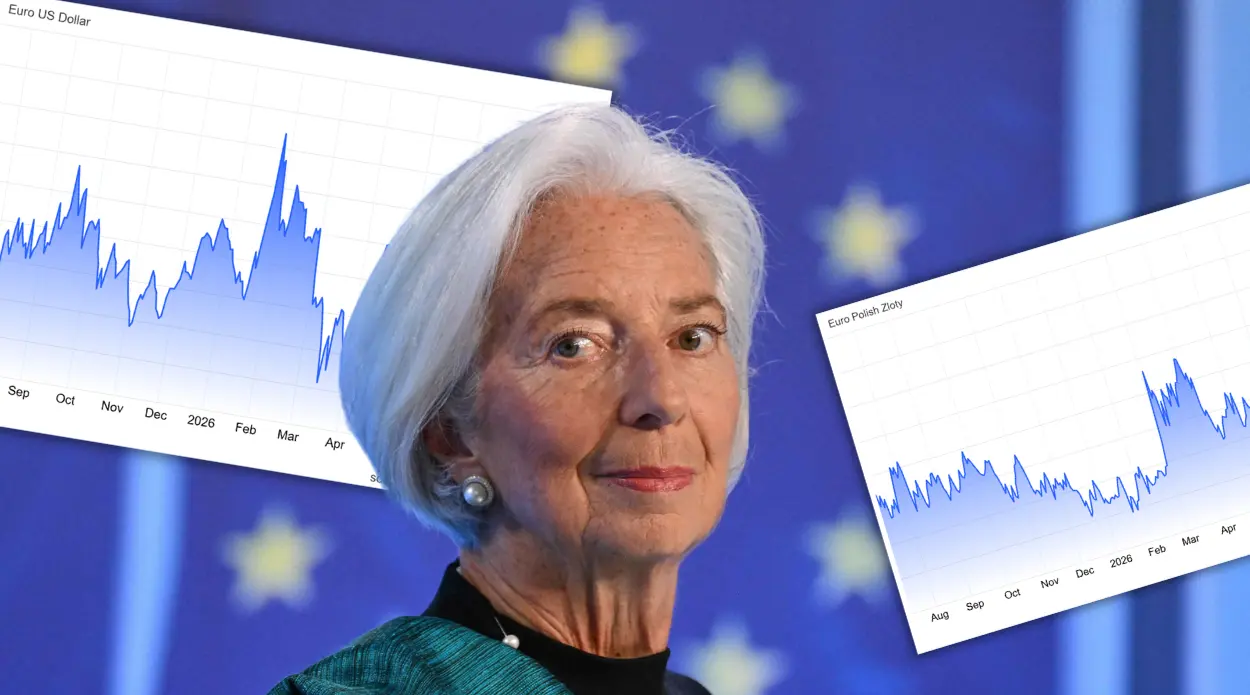
This trend was reinforced by the NBP Governor’s conference, after which EURPLN broke out of the medium‑term sideways trend, and USDPLN out of local consolidation. In the base markets, rates (the dollar index, EURUSD) moved within a narrow range, reacting mainly to geopolitics and oil prices, while expectations for further inflation signals and future policy of the main central banks remained.
Euro rate – forecast for the coming days
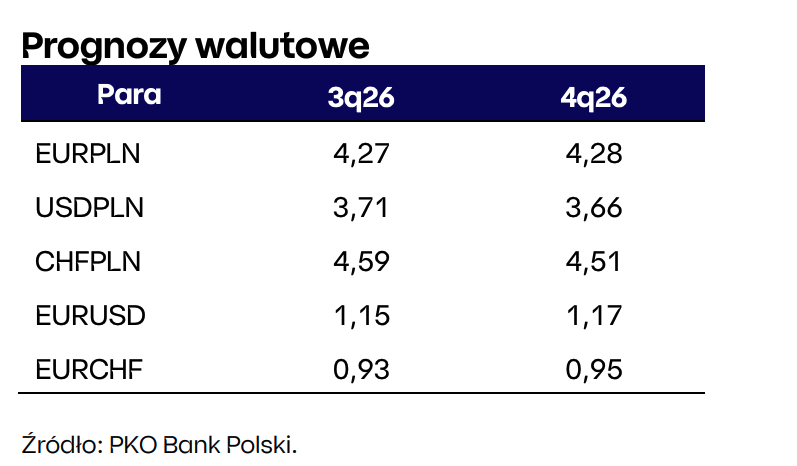
Without lowering expectations for ECB and Fed rate hikes (their decline is our baseline scenario for the current quarter) or withdrawing the market from pricing a reduction in NBP rates this year, it is difficult to expect a lasting reversal of the upward trends on EURPLN and USDPLN. In this context, the June US inflation releases scheduled for Tuesday and Wednesday will be important. It is worth noting that the main PLN pairs have not yet reached key trend levels, which we see closer to 4.38 for EURPLN and above 3.85 for USDPLN.
In our opinion, however, the most dynamic phase of the short‑term upward trend for EURPLN is already behind us, and in the first half of the week we see a chance for a correction towards 4.30–4.31 if the situation in the Middle East does not intensify. We do not rule out that a local peak for EURPLN will form above the levels from last Friday. For USDPLN, over the week we see a risk of further rate increases, and the nearest technical resistance is at 3.8250.
On the domestic interest‑rate market, the week brought high volatility and a flattening of the yield curves. Short‑term yields fell, and long‑term yields rose. Consequently, the 2Y10Y spread widened by almost 10 basis points.
In the current week we expect 2‑year bond yields to fall to 3.95% and 10‑year yields to 4.25%. This is driven by the prospect of increasing expectations for NBP rate cuts.
This scenario was signaled by NBP Governor A. Glapiński, but it is also supported by improving market conditions. Oil prices fell sharply, followed by inflation and inflation expectations, and global economic growth forecasts are being revised downwards. Taking this into account and assuming the market does not fully price the scale of potential monetary easing, the yield curves have room to fall. Derivatives price a decline in the NBP reference rate in 2026‑2027 by 25 basis points to 3.5%.
In our view, the market may shift towards a 50‑basis‑point rate cut in 2027, and this convergence process should proceed in the coming weeks. The upcoming core inflation release should not have a major impact on the market. The decline in bond yields may hinder the mid‑term MF auction (offering between 7 and 13 billion PLN).
Considering that investors in July will receive nearly 57 billion PLN from bond redemption and interest payments, it is difficult to predict difficulties in placing the issuance in the primary market. Similar to Poland, in the United States we can also observe growing investor confidence that the Fed will adopt a more accommodative stance in monetary policy.
In the coming days, the June US inflation release should help, likely showing a significant decline relative to May. This should support bond valuations in the global market.