The projection has reduced the short‑term buffer for the currency
Subtracting inflation from the nominal rate gives an ex‑post real rate of 1.25 percentage points. That is still a positive figure, especially compared to many episodes in recent years, but it is no longer the sole metric the forex market can look at.
The NBP July CPI projection was prepared assuming unchanged rates. The midpoint of the 50‑percent inflation band, calculated as the average of the lower and upper bounds, is 2.85% for 2026, 2.75% for 2027, and 2.35% for 2028.
At a 3.75% rate this would yield roughly 0.90 pp, 1.00 pp in the near term – less than now. Thus, after revising inflation upward, Poland’s real rate looks less attractive than with the June CPI reading alone.

FRA term curves also show a potential advantage for EUR and USD
On the short end, the FRA zloty still has a positive spread versus the euro. As of the morning of July 9, the PLN‑EUR spread is 1.342 pp for a 1x4 tenor. For 9x12 it falls to 1.070 pp. This trend shows that over time the PLN advantage over EUR will erode.
In practice, such a structure can limit the zloty’s resilience if expectations for a more hawkish European Central Bank help the euro. For EUR/PLN this does not necessarily mean an immediate strong upward move, because Poland still offers a positive spread. A declining FRA spread means the zloty has less room to defend itself solely on the basis of rate differentials.

The dollar has a larger advantage
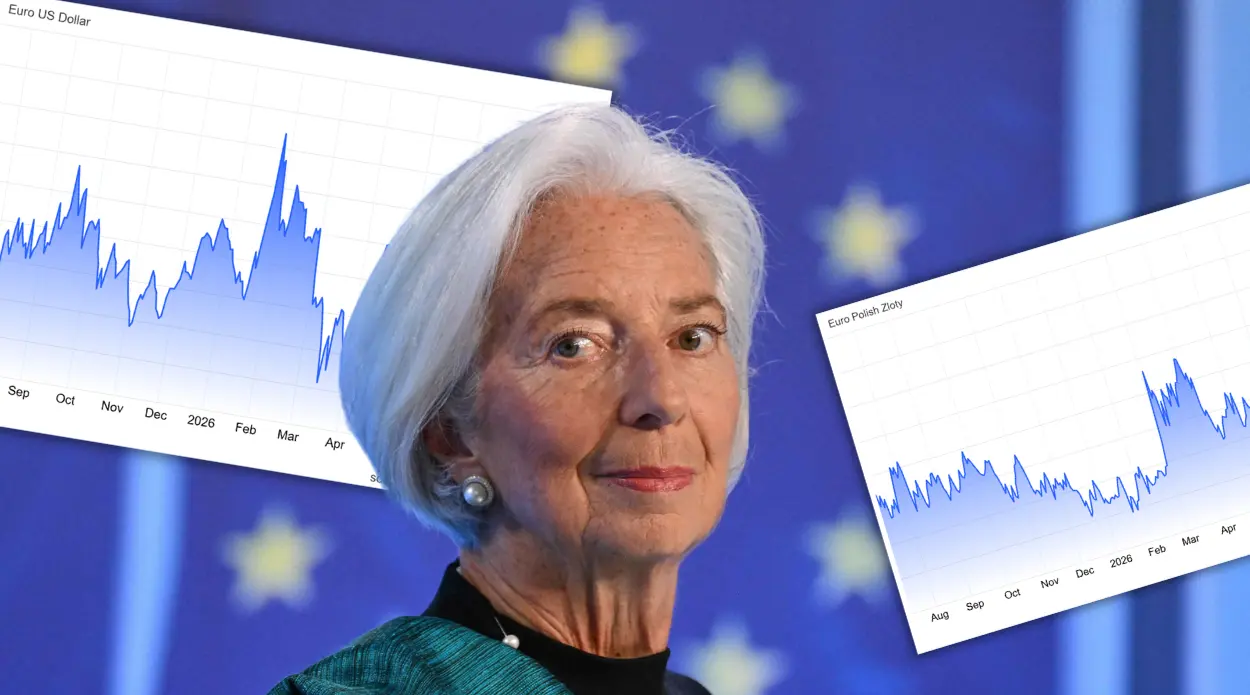
The relationship to the dollar looks more demanding. The FRA spread USD‑PLN rises from 0.282 pp at 1x4 to 0.585 pp at 9x12. This shows that in the longer horizon dollar rates are increasingly priced higher relative to the zloty.
This channel aligns with the US message. Although Fed minutes showed a split among decision makers on the future path of inflation and rates, some FOMC members see a need for hikes until the end of 2026. Moreover, a few Fed representatives already argued for a raise in the June meeting. If that valuation is maintained, USD/PLN could be more sensitive to a decline in Poland’s real attractiveness than EUR/PLN.
The zloty needs lower inflation or a weaker dollar
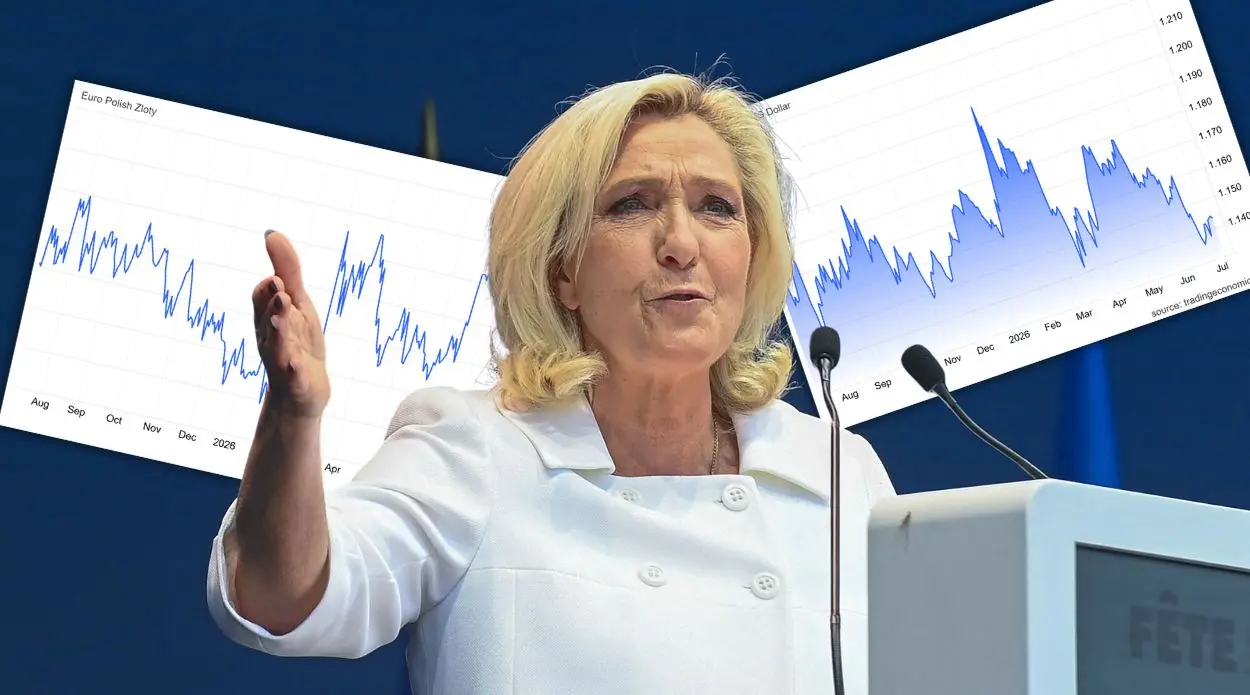
A lower expected real rate in Poland does not doom the zloty. The exchange rate can still depend on risk sentiment, economic data, energy prices, and dollar behaviour. The change is more about the fact that after the July NBP projection the zloty has a less obvious real‑carry argument.
If Polish inflation falls again, e.g. due to lower fuel prices, the real rate could become a stronger support for the PLN. However, if the Fed and ECB remain in the game for higher rates, and the NBP projection is treated as a warning of a CPI rebound, the zloty may face a tougher time, especially against the dollar.