USA demand a statement on opening shipping through the Strait of Hormuz
Responding to these unofficial suggestions, the USA demanded a public statement from the Islamic Republic on opening shipping through the Strait of Hormuz and an agreement to cease shelling commercial vessels (BBC).
On Saturday, a series of diplomatic efforts took place on the GCC‑mediator line and Iran‑mediator line. Additionally, the head of the Iranian Ministry of Foreign Affairs visited Oman that day to discuss the status of the Strait. Later, representatives from Qatar joined the negotiations (Al Jazeera).
However, by the night from Saturday to Sunday a clearer escalation of the conflict occurred. In response to an IRGC attack on a Cypriot container ship, U.S. armed forces carried out a series of strikes on targets in Iran. Central Command also reminded that since the beginning of May the U.S. has supported maintaining shipping in the Strait, enabling, among other things, the passage of 800 commercial vessels and the transport of over 400 million barrels of oil.
UAE and Qatar intercept missiles and drones flying from Iran
On Sunday morning, the UAE and Qatar reported that their air defense systems were intercepting missiles and drones flying from Iran (Sky News). Yesterday Iran and the U.S. exchanged increasingly harsh statements. Washington announced further actions to limit Iran’s ability to attack commercial shipping, while Tehran emphasized that it would maintain control of the Strait of Hormuz and respond to any further U.S. military action.
A further round of kinetic actions occurred last night, when after U.S. strikes on Iran, IRGC missile and drone attacks were recorded in the Persian Gulf region.
Monday morning therefore passes in an escalation atmosphere with limited potential to reduce tension in the coming hours.
It causes, among other things, a 4‑5% rise in oil prices and brings Brent closer to the $80 level. Fuel spreads to the commodity remain elevated (about $35/bar for gasoline and $60‑65/bar for diesel and jet). In the absence of fuel supplies to global markets from Russia, the risk of the scenario we wrote about a week ago increases.
In the coming days the market will mainly analyze signals from the Gulf. In addition to geopolitical impulses, attention should be paid to tomorrow’s CPI reading from overseas. The main focus will be on core inflation dynamics (cons. 0.2% m/m and 2.9% y/y) and the trimmed average (as a proxy for the spread of the commodity impulse after other components of the aggregate).

An interesting context for U.S. price pressure will also be the PPI release on Wednesday. The next day investors will analyze consumer conditions based on June retail sales results.
The week will end with U.S. industrial production readings and American consumer sentiment.
After these releases, the closer to reality estimates should be the GDP for the last quarter (currently 1.6% SAAR according to GDPNow). For domestic NBP data, the May current account balance will be released tomorrow, and on Thursday we will learn how domestic core inflation measures behaved last month.
Relative calm on the base FI
With the passing day, Friday UST quotes brought yield increases. This was especially visible on the short end, likely due to concerns about the possibility of a Middle East conflict escalation over the weekend.
The longer Treasury tenors were less sensitive to these potential impulses. Ultimately, on the main nodes the U.S. curve shifted up by 5, 2 and 1 basis points to 4.21% (2Y), 4.56% (10Y) and 5.06% (30Y).
In the case of Bund, the session was calm across the curve and the yield change did not exceed 1 basis point to 2.65% (2Y), 3.05% (10Y) and 3.61% (30Y).
Oil price rises following increased tension in the Gulf shift the U.S. curve by 2‑3 basis points. The 10‑year tenor again tests the 4.60% level.
The market, again as in previous days, will be sensitive to oil market news. The geopolitical situation in the region does not suggest declines in energy commodity valuations, implying the UST curve will remain near current levels.
Stabilization of longer SPW tenors
After a strong strengthening of domestic debt on Thursday, Friday quotes brought calm to the situation. Apart from a moderate correction on the short end, Polish domestic bonds managed to maintain gains from the previous day.
However, there was a slight widening of the ASW spread – 2 basis points to 99 basis points on the 10Y. Ultimately, on the main nodes the SPW yield change was +5, +1 and +1 basis points to 3.96% (2Y), 4.68% (5Y) and 5.29% (10Y). Today external signals indicate pressure on Polish bond yields.
Higher oil prices and a rise in base FI yields may suggest a shift of long‑end domestic curve quotes to the 5.30‑5.35% range.
EURUSD still without a breakthrough
EURUSD reached daily highs on Friday morning.
However, later UST yield increases pulled the pair toward the opening level, and by the end of the session it even experienced a symbolic depreciation (‑0.1% to 1.1415).
Not much happened on other pairs. Earlier on Friday we wrote about the reasons for the yen’s strengthening (here), but later Japanese currency quotes were already relatively calm.
The trade ended almost flat on EURGBP and EURCHF.
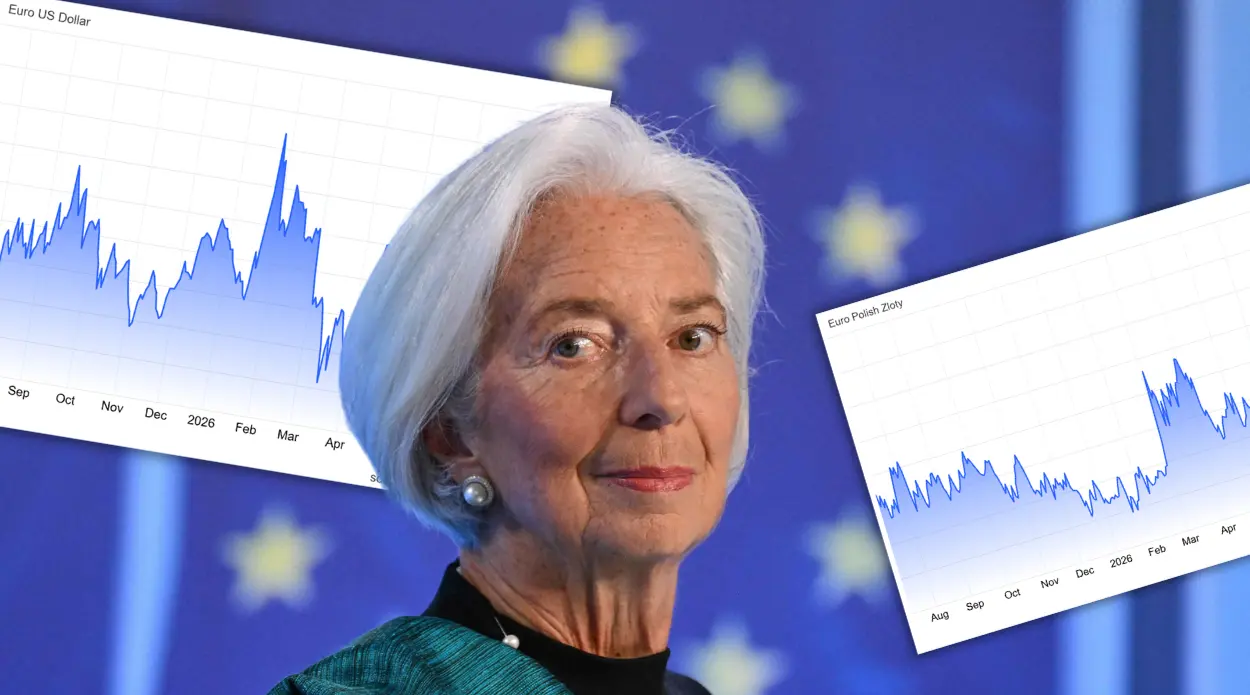
The start of today’s EURUSD trading does not bring a breakthrough. The pair hovers near 1.1400 after a slight depreciation caused by increased risk aversion and higher oil prices. In the base scenario we do not see potential for greater FX volatility.
Attempt to move higher on EURPLN failed
The reasons for the weakening of the zloty against CEE FX and major currencies were described in detail on Friday (here). However, before noon the domestic currency continued to depreciate, clearly exceeding our base scenario for EURPLN.
We did not find a reason for the zloty’s weakening and it should be seen as an overly nervous reaction of part of the market to Thursday’s volatility. In the afternoon the zloty began to recover losses and, as a result, by the end of the day our expectations were met (4.33 PLN per euro – unchanged for the entire session).
In principle we still maintain our Friday position that due to the pigeon return of RPP the equilibrium range on EURPLN moved from 4.20‑4.30 to 4.30‑4.40. Whether the pair will shape near the lower or upper range of fluctuations will probably depend on the situation in the Middle East.
Today we expect euro pricing to stabilize near 4.33 PLN and do not see a risk of a repeat of the volatility spike from the end of last week.