After a series of attacks an agreement was reached for both countries to return to a ceasefire, so the market reaction at the Monday opening is rather minimal. Oil prices rise only slightly, and the dollar loses value, which the Polish zloty, heavily discounted last week, benefits from. What interesting developments can investors expect this week from a currency market perspective?
Oil reacts calmly, Wall Street forgets volatility
Oil prices gained only about 0.5% at the opening last Monday in June, despite fears of a return to full-scale war. Interestingly, the Strait of Hormuz did not close, even when Iran decided to shell one of the ships, to which the Americans reacted. Brent oil is currently just above $73 per barrel, while WTI prices are slightly below $70. Although the movement in the Strait of Hormuz has clearly diminished, it ultimately prevented a renewed geopolitical premium in the oil market.
Calmness is also seen in the broad equity market. Futures on the S&P 500 indicate slight gains before New York trading begins. Wall Street is trying to shake off last week’s sell‑off wave, triggered by strong volatility in the tech sector and rising investor concerns about the scale of AI spending or still high expectations for US rate hikes.
Sintra, inflation and an accelerated NFP report on the horizon
Although today’s session will not bring many major macro readings, this week looks extremely important for a variety of events. An economic forum in Sintra begins, where on Wednesday during a panel discussion the new Fed chief Kevin Warsh will speak. Another volatility factor will be the inflation data for the CPI from key euro‑zone economies published on Tuesday and Wednesday. Forecasts expect the harmonised HICP for the euro zone to fall to 3% on an annual basis, compared to 3.2% recorded in May. Although price pressure weakens, these levels remain above the inflation target, which may keep the ECB hawkish.
The real test for markets will be the US job market report (NFP), which will be published unusually on Thursday this month due to a holiday before the US Independence Day weekend. Market consensus expects a solid reading and a stabilization of the unemployment rate at 4.3%. Interestingly, employment data may receive strong support in the hospitality and entertainment sectors due to the ongoing World Cup. Before we see the key report, investors will face the JOLTS index on Tuesday and the ADP report on Wednesday.
RPP outlook and the hawkish Fed
Polish investors are slowly turning their attention to the next week, when we will learn the Monetary Policy Council’s decision on interest rates. The market strongly believes in stabilising the cost of money due to the lack of prospects for further energy price rises. Nevertheless, with the de‑escalation in the Middle East, authorities will likely abandon the fuel package that lowered station prices in Poland.
This could raise inflation by a few tenths of a percent, potentially moving outside the 2.5% target with a +/- one percentage point range. It is worth noting that in the next 12 months the market no longer prices in rate hikes, but it is still too early to start discussing possible cuts. On the other hand, the Polish economy has caught a breath, so the government would certainly welcome a looser monetary policy with open arms.
The situation across the ocean looks very different. Despite a temporary calm, expectations for potential Fed rate hikes remain alive, and another very strong job market report could amplify them. This fundamental divergence may weigh on the Polish currency in the medium term, but today’s global return of risk appetite gives it clear, though perhaps temporary, support.
The zloty recovers losses in the broad currency market
A clear risk‑off decline after last weekend reduces the dollar’s last strength.
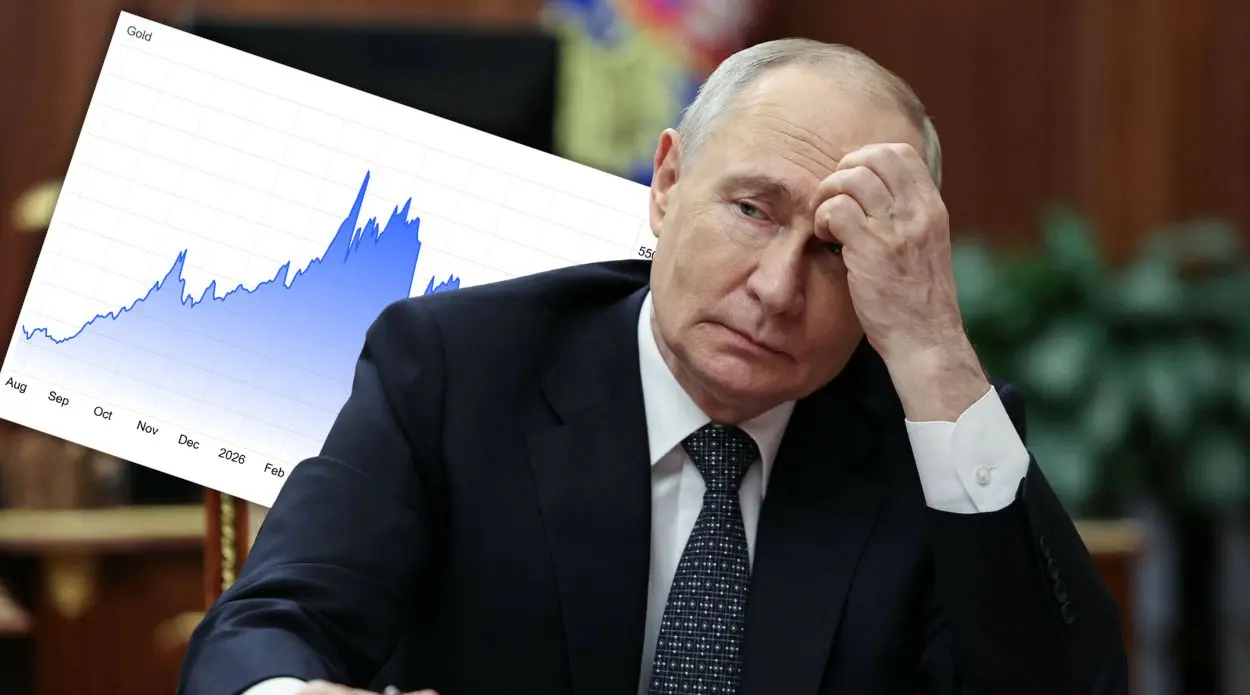
We also see a pullback in gold prices. On the USDPLN pair a clear downward move is visible today.
Reduced geopolitical tensions combined with a weak dollar pushed the rate to 3.75, though it is still near this year’s highs and about 8% above the local low at the end of January.
Today’s session shows that in conditions of returning risk appetite the zloty can dynamically regain ground, though the long‑term balance of forces will depend on whether tomorrow’s negotiations bring a lasting breakthrough and whether the Fed truly pushes toward rate hikes.
At 10:00 the dollar costs 3.7563 zloty, the euro 4.2835 zloty, the franc 4.6439 zloty, and the pound 4.9642 zloty.