EUR/PLN rate falls to 4.2345
The main indicator of sentiment remains geopolitical events and reports from the Middle East.
The start of the week brought positive news about ongoing talks between the US and Iran, giving hope for an agreement on opening the Strait of Hormuz.
Good start to Monday’s session
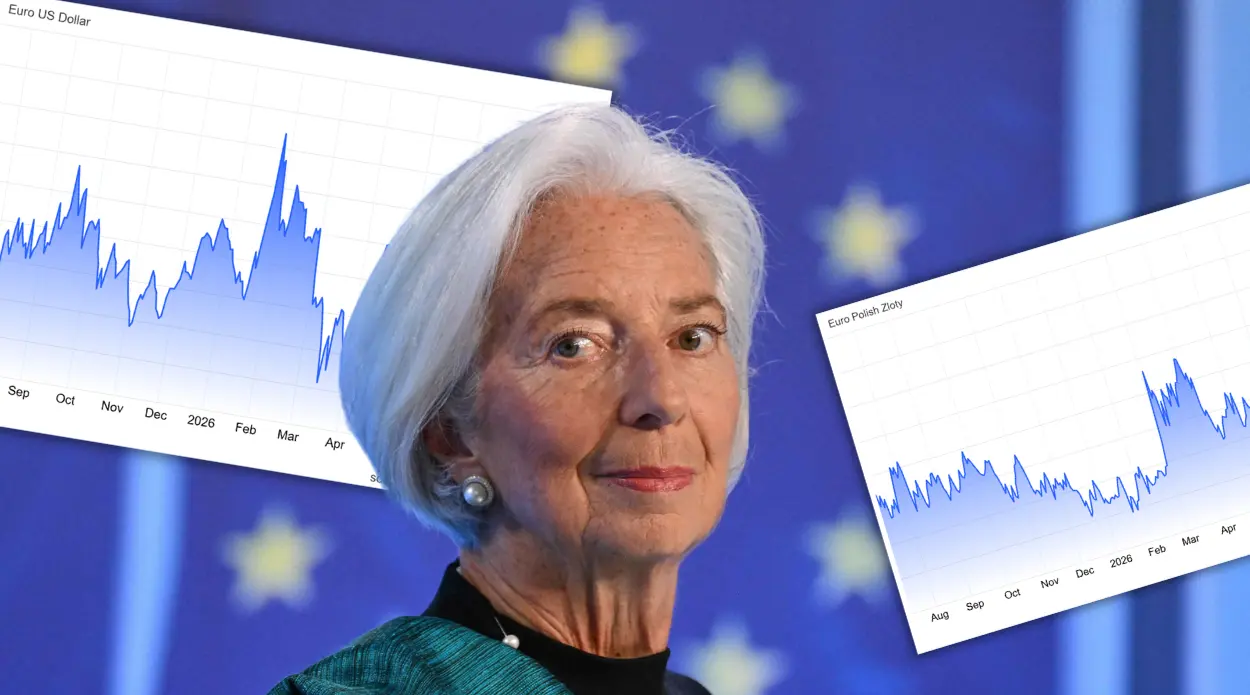
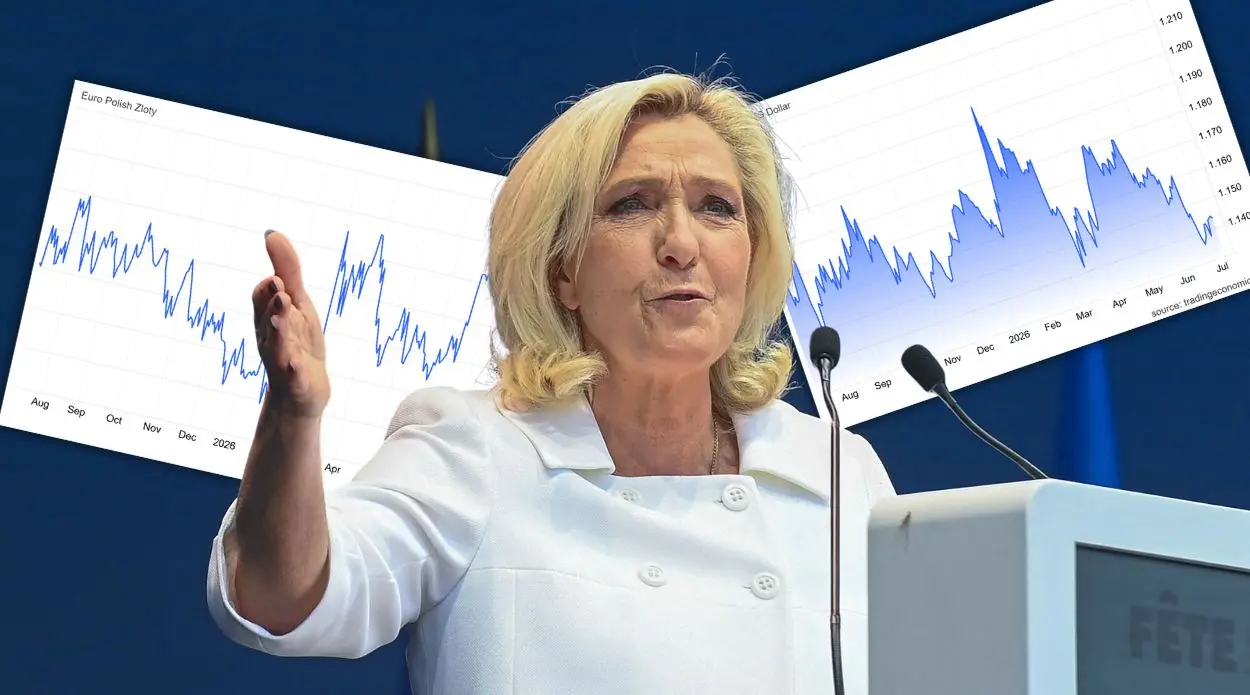
This helped improve sentiment at the opening of today’s session. The EUR/PLN rate fell to 4.2345, and the EUR/USD rate rose to 1.1640.
Due to the proximity of technical resistance, the room for further strengthening of the zloty is not significant (4.2260).
Brent crude fell to about 98 USD per barrel. This should be helped by a decline in yields later in the day.
In global equity markets the Friday session was dominated by green. Domestic equity indices recorded gains of about 1‑1.5% for all major indices.
The EUR/PLN rate slightly rose at the opening, and only fell at the session close to about 4.236, close to support levels set by troughs from the last two weeks.
The strengthening of the zloty occurred despite a modest strengthening of the dollar against the euro.
On the domestic interest rate market the swap curve fell by about 6‑8 basis points in the early part of the session, and later market rates slightly rose. The decline in bond yields was somewhat smaller.
The strengthening of bonds was aided by a decline in yields on the German market. At the end of the day the yield on 10‑year bonds fell to about 5.88%.
According to a statement on the NBP website, the Monetary Policy Council rejected in April J. Tyrowicz’s request to raise rates by 100 basis points, against the opposition of other RPP members. At the end of last week the Ministry of Finance valued three tranches of benchmark bonds in Swiss francs at 885 million CHF.
The buyers of Swiss franc bonds were mainly investment funds, primarily from Switzerland.
Rises in European markets
Index gains were noted on European exchanges. Futures contracts on US indices also rose, and later US equity indices as well. These may have been helped by, among other things, falling yields. Gains reached about 0.3‑1%. The focus remains on the Middle East. Saudi broadcaster Al Arabiya announced that a US‑Iran agreement will be announced on Friday. US sanctions on Iran are expected to be gradually lifted in exchange for Iran’s commitment to abide by the agreement terms.
Negotiations on unresolved issues are expected to begin in a few days. In addition, Iran published a map of the Strait of Hormuz. It shows that it plans to control the waters of the UAE and Oman.
According to the Washington think‑tank ISW, while Iranian officials are divided on nuclear concessions, they have united around formalizing control over the strait, which could mean expanding the country’s territorial claims to the waters of Oman and the United Arab Emirates. German Foreign Minister J. Wadephul said on Friday that he does not see a possibility for NATO to conduct a classic military mission in the Strait of Hormuz in the near future. German bond yields fell by about 7 basis points. At the end of the day the yield on 10‑year German bonds was about 3.03%. This may have been helped by, among other things, information that the European Union decided to temporarily suspend tariffs on selected nitrogen fertilizers, including urea and ammonia, to mitigate the effects of the Hormuz crisis on the agricultural sector.
The decline in yields was not hindered by a better‑than‑expected reading of the German Ifo (up to 84.9 points from 84.2 points). In the US debt market, yields fell in the first part of the session. This was helped by US data and the German market. The Michigan Consumer Sentiment Index fell in May to about 44.8 points from 49.8 points in the previous month, against an early estimate of 48.2 points.
On the other hand, the Conference Board’s leading economic indicator rose by 0.1% in April against an expected decline of 0.1%. At the end of the day US debt weakened again to near opening levels.
This may have been helped by comments from Fed Governor C. Waller, who until recently advocated for rate cuts. Waller said the Fed should remove the phrase “tendency to ease policy” from its monetary policy statement. In his view inflation is not moving in a good direction.
The EUR/USD rate oscillated in a narrow range and after an initial drop to about 1.159, the rate returned higher toward 1.161.
It’s already the fourth month of war in the Middle East
We are slowly entering the fourth month since Israel and the US attacked Iran, which blocked the Strait of Hormuz. A ceasefire is in place and talks between the US and Iran are ongoing, but an agreement resulting in full opening of the strait does not seem close. This week is mainly about inflation data releases. On Thursday we will see US PCE inflation for April, and on Friday preliminary data for Poland for May.
We estimate that the CPI index rose to 3.7% YoY from 3.2% YoY in April, exceeding the upper limit of acceptable deviations from the inflation target. However, this does not change our expectations of rate stabilization at least until the end of the year. Friday will also bring preliminary inflation data from Germany and France, which will support expectations of a rate hike by the European Central Bank in June.
Retail sales data
Today at 9:30 AM the GUS will publish data on April retail sales, which will complete the April economic picture and indicate whether and how consumer goods consumption reacted to the energy shock triggered by the US and Israel’s attack on Iran. According to our estimates, the real retail sales dynamic slowed to 5.0% YoY from 8.7% YoY a month earlier, against a consensus of +3.0% YoY.
Expectations of a slightly better retail sales result are supported by improved consumer sentiment, including a decline in job‑loss fears. A factor that may have reduced spending willingness in April could be slower wage growth. Nevertheless, it seems that the Middle East situation has a limited impact on household consumption behavior.
Money supply for April
PL: At 2:00 PM we will learn about the money supply for April. We expect the M3 aggregate to have risen by 11.2% YoY, similarly j
PL: The composite business sentiment indicator for Poland, a synthetic picture of firm sentiment, was 96.0 points in April, the same as the month before. This means that economic growth is stabilizing at a slightly lower level than the long‑term average. This contrasts with euro‑area data, which indicate a tightening of economic activity.