A recurring sense of unease on the climate and policy front
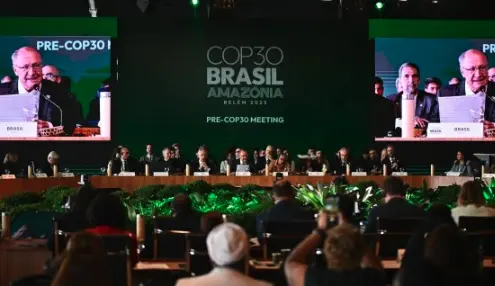
This year’s COP30 meeting, held in Belém, Brazil, marks a milestone for us as the fifth COP we have jointly covered. Each year, as we approach the event, it’s difficult not to feel overwhelmed by the sobering updates on the state of the climate – and this year is no exception.
This year’s COP focuses on updating the five-year climate action plans from participating countries, known as Nationally Determined Contributions (NDCs). The United Nations was only able to analyse 64 updated NDCs, representing just 30% of global emissions, as many major emitters have yet to submit their new plans. If these countries fully implement their updated NDCs, their collective emissions would be approximately 17% lower in 2035 compared to 2019 levels. While this represents progress over previous commitments, it still falls far short of the 60% reduction needed by 2035 to keep the 1.5°C goal within reach.
Compounding the concern, the World Meteorological Organisation has highlighted that the ability of our oceans and forests to absorb CO2 is diminishing. This underscores the critical importance of adaptation, especially for developing nations. However, funding for adaptation efforts remains woefully inadequate, as noted in the latest UN Adaptation Finance Gap Report.
While COP30 centres on updated climate action plans, the process has been anything but smooth
A key focus at this year's COP is the submission of updated Nationally Determined Contributions (NDCs) by countries, as required every five years under the Paris Agreement, marking the second official update cycle since 2015. However, this process has been anything but smooth.
- China, the world’s largest emitter, recently announced its first-ever absolute emissions reduction target, pledging to cut net greenhouse gas emissions by 7-10% from peak levels by 2035. While this move marks a step forward and demonstrates some progress, experts cited in CarbonBrief and Nature contend that the target remains overly cautious. They argue that, given China’s commitment to reach net-zero by 2060 and its outsized influence on global emissions trends, its pace of progress will be a decisive factor in the world’s ability to achieve the Paris Agreement’s goal of limiting global warming to well below 2°C.
- Meanwhile, the US federal delegation – representing the world’s second-largest emitter – will be absent after withdrawing from the Paris Agreement.
- Finally, the European Union, the third-largest emitter, is also facing significant internal disputes over climate targets. Major member states such as France, Germany, Poland, and Italy have formed a blocking minority against the European Commission’s proposal for a 90% emissions cut by 2040. As a result, the EU missed the deadline to deliver an updated NDC, arriving at the UN General Assembly with only a statement of intent. At present, only about one-fifth of the 195 participating countries have submitted updated versions of their NDCs.
What's more, developed nations are still $100bn short of the $300bn annual climate finance commitment to developing countries. The outlook for increasing these funds remains bleak; in 2025, for example, the United States withdrew $18bn of previously pledged support.
Despite many challenges, corporate leaders remain committed to sustainability
Overall, the outlook for COP30 appears very challenging on both the climate and policy fronts, offering little cause for optimism at this stage. So, what kind of sentiment lingers among corporate leaders?
Here, the picture is mixed. While recent global surveys among C-suite executives indicate a continued strong commitment to sustainability, the path ahead is far from straightforward. Sustainability initiatives do not exist in isolation – business leaders must also contend with challenges such as geopolitical tensions, trade disputes, domestic unrest, and political instability. These factors complicate the ability to make long-term investments in sustainability.
Additionally, the transition to a net-zero economy inevitably results in both winners and losers, impacting certain industries, regions, and workers more negatively than others. In Europe, for example, strong corporate lobbying efforts have emerged against pivotal transitions and policy measures, including the 2035 ban on combustion engines and the implementation of carbon pricing for buildings and road transport (ETS2).
Three major sustainability trends in the corporate world
Amid this complex and evolving landscape, three major sustainability trends are emerging within the corporate sector.
1. Corporate climate action remains resilient, but more discreet
Many corporate leaders are not backing away from sustainability, despite widespread headlines about the so-called “ESG collapse” and increasing political pushback. Major surveys show that sustainability continues to be a high priority for businesses. For example, both Deloitte’s and Capgemini’s global surveys reported that four out of five CEOs have increased their sustainability investments over the past year, with almost two out of ten noting a substantial jump of more than 20%. Similarly, a Harvard Business Review analysis found that only 13% of firms have scaled back their climate commitments.
However, there is a notable shift in how corporate leaders present their sustainability efforts; they are now much less vocal about their initiatives. According to Harvard Business Review, more than half of companies have opted to understate or completely stop publicising their sustainability achievements, even as they continue to make progress internally. This practice, referred to as “greenhushing,” involves leaders deliberately keeping quiet or making only symbolic gestures in public about their environmental strategies. By doing so, companies aim to shield themselves from political, public, or legal scrutiny.
For instance, the Grantham Research Institute on Climate Change and the Environment reports that at least 226 new climate-related legal cases were filed in 2024 alone, raising the total number of cases to 2,967. This highlights the growing legal risks that may motivate companies to keep their sustainability actions more discreet.
2. Corporate leaders focus on areas where sustainability aligns with business value
The surveys mentioned reveal that CEOs increasingly view sustainability investments as a direct contributor to financial performance. Notably, revenue generation has now surpassed compliance, brand reputation, and cost savings as the most frequently cited benefit of sustainability efforts. CEOs are increasingly focusing on areas where sustainability aligns directly with business value, such as enhancing supply chain resilience, advancing the circular economy, and developing innovative sustainable products.
3. Managing climate risks enters the corporate agenda
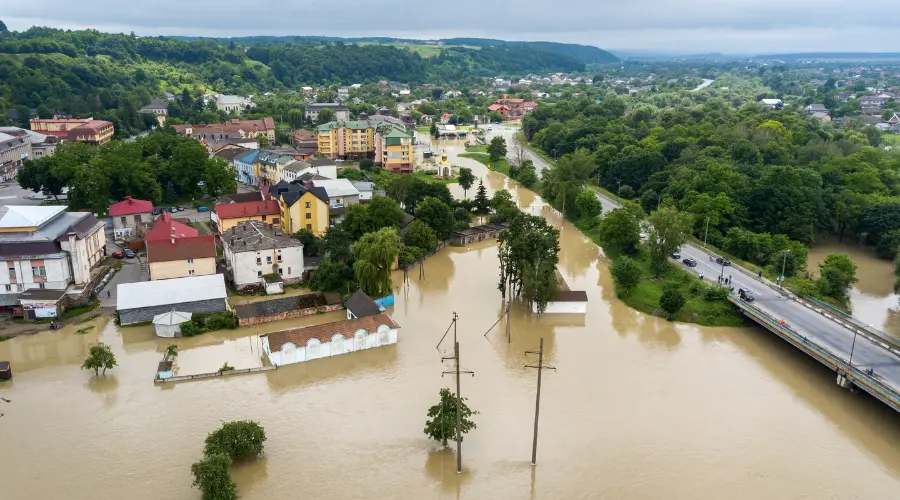
The emphasis of sustainability is shifting beyond emission reduction, with managing climate risks gaining importance. Recent findings from Deloitte indicate that climate-related extreme weather events are already impacting one in three corporate leaders’ operations. In light of these challenges, leaders are actively restructuring their supply chains and business operations to enhance resilience and adapt to a changing climate.
Rising physical climate risks are now a major and growing concern for corporate leaders. Over the past year, natural disasters have triggered global losses estimated between $320bn and $417bn – approximately double the inflation-adjusted average of the past 30 years. Insurers such as Munich Re, Gallagher Re, and Swiss Re report that only about one-third of these losses were actually covered by insurance.
Consequently, some regions are becoming increasingly uninsurable, and the protection gap continues to widen: while corporate insurance policies are typically renewed on an annual basis, business leaders must make long-term investment decisions that extend well beyond the scope of yearly coverage.
Our take on recent sustainability trends
While corporate leaders have become less vocal about their sustainability efforts, we believe sustainability remains a crucial driver of long-term value. The energy transition is expected to progress, not only due to emissions reduction targets, but also because renewables often represent the most cost-effective power solution. In today’s fragmented world, many regions are seeking greater energy independence, and renewables offer a compelling option, especially in areas with limited fossil fuel resources, like Europe.
However, it is uncertain whether this momentum alone will set businesses firmly on a net-zero trajectory. Achieving net-zero goes beyond expanding renewable electricity; it also requires substantial progress in decarbonising heating, producing low-carbon feedstock for materials such as steel and plastics, and developing sustainable fuels for sectors like aviation, shipping, and trucking. These areas demand transformative changes that, even with supportive policies, are often not yet economically viable or may conflict with existing business models – particularly when considering strategies that involve degrowth. These challenges make it significantly more difficult for corporate leaders to implement the comprehensive sustainability transitions that COP meetings call for.
This is reflected in the reality that, according to CapGemini, only one in five leaders has developed thorough and actionable transition plans. It is also increasingly clear that business leaders cannot achieve sustainability in isolation due to the many interdependencies involved. For instance, progress in electrification depends on expanding grid capacity, decarbonising heavy industry relies on advancements in carbon capture and storage (CCS) and hydrogen technologies, and supporting unviable business cases often requires robust policy support.
We therefore anticipate that leading CEOs will increasingly champion systemic change – whether publicly or through strategic, behind-the-scenes efforts – and actively promote cross-sector collaborations designed to accelerate the sustainability transition.