"Interest rates will remain unchanged"
The NBP interest rates will not change, as will the "wait‑and‑see" narrative. This week the Monetary Policy Council is meeting. The decision on monetary policy parameters will be released on Tuesday in the afternoon.
In our view the interest rates will remain unchanged (the reference rate at 3.75%), which would be consistent with the comments of most RPP members. That is also the market consensus. This decision should therefore not significantly affect financial markets. Attention will focus on the NBP governor’s conference (probably Wednesday at 15:00), which will allow an assessment of future interest rate prospects. Financial markets still price 1‑2 rate hikes this year.
In our view the RPP has room to continue the "wait‑and‑see" stance and a lack of urgency in any tightening of monetary policy. Especially as falling wage dynamics, lower inflation expectations, reduced labor demand and moderate consumption growth limit the risk of a wage‑price spiral.
RPP closer to rate stabilization, but the ECB will not give up the June hike
Our baseline scenario remains rate stabilization, and the much lower CPI data in May plus only moderate consumption growth in Q1 2026 increase the probability of this scenario. Nevertheless, the prolongation of the conflict and the Strait of Hormuz blockade in Q3, resulting in higher energy commodity prices in markets, increase the risk of tightening monetary policy in the second half of the year.
Inflation data will probably not deter the ECB from raising rates this month. On Tuesday at 11:00 Eurostat will publish preliminary inflation data for the euro area for May. According to consensus forecasts, the HICP index rose to 3.2% YoY from 3.0% YoY in April, and the core index to 2.4% YoY from 2.2% YoY.
May inflation data from the two largest euro‑zone economies – France and Germany – turned out lower than expected, increasing uncertainty and suggesting a reading slightly below consensus.
Nevertheless, even a potential surprise downwards will probably not prevent the ECB Governing Council from raising rates on 11 June from 2.00% to 2.25%, unless transit through the Strait of Hormuz is restored by then.
The hike scenario supports the tone of the protocol from the ECB’s last meeting in April, when some council members already advocated a hike. Currently financial markets price that ECB rates at the end of 2026 will be about 50 basis points higher than today.
A series of US labor market data, including non‑farm payrolls, this week’s macroeconomic calendar is very rich. Investors will focus on labor market data, culminating in the Friday release of the non‑farm payroll report. Market consensus points to a rise of 85,000 m/m versus 115,000 m/m in April. Unemployment is also expected to stabilize at 4.3% and wage growth to 3.4% YoY from 3.6% YoY in April.
Earlier published data – ISM indices for industry and services and ADP and Challenger reports – will verify expectations for the Friday non‑farm payroll reading. If the consensus forecasts materialise, the labor market would have moved from a slowdown phase to a slight below‑average stability, which should not affect expectations of financial markets regarding Fed monetary policy (rate stabilization until a 25 basis point hike in March 2027).
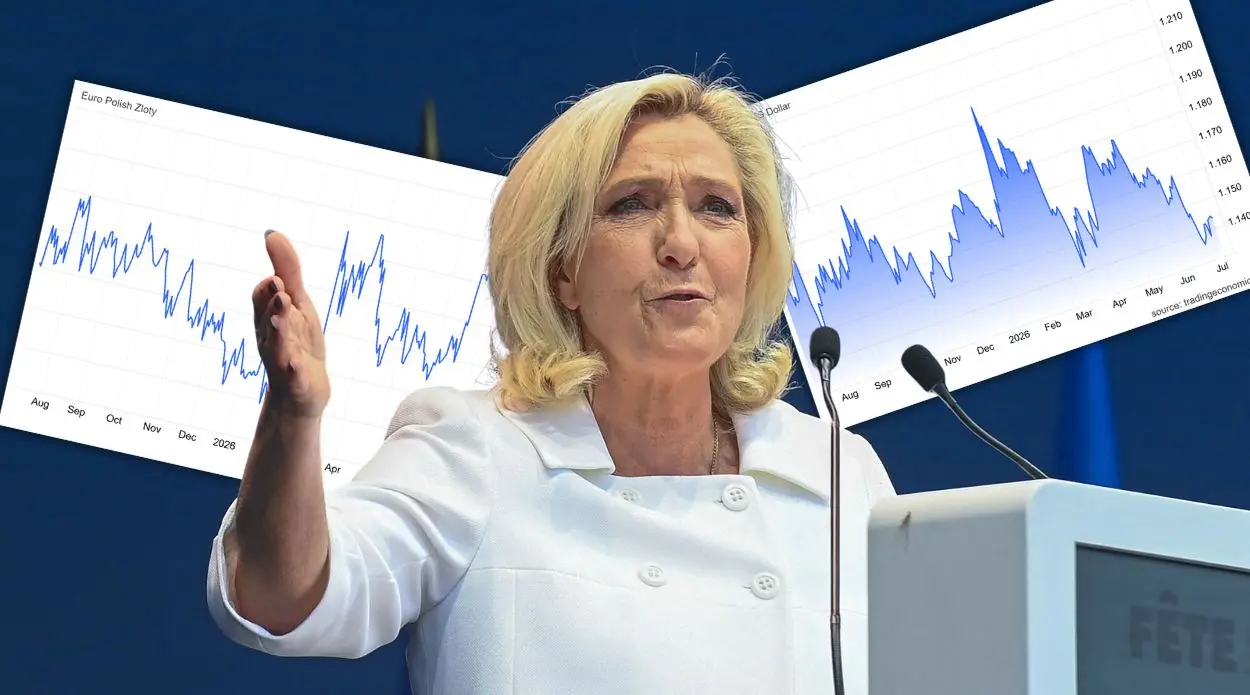
Euro EUR/PLN forecast for the coming days
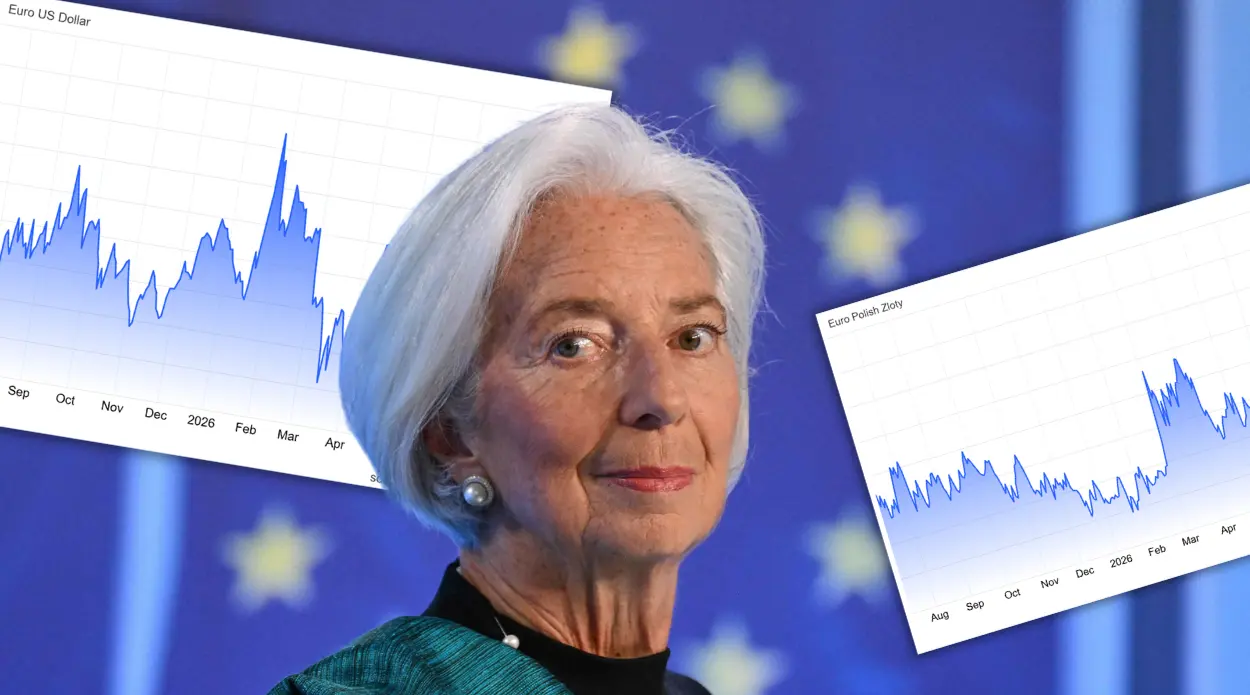
Justification: The PLN/EUR rate remained in a narrow range of 4.22‑4.242, staying in a sideways trend since mid‑April. The PLN rate is limitedly affected by published domestic and foreign data and the development of the Middle East situation.
The PLN remains strong both nominally and in real terms, supported by data indicating solid economic growth this year and changed expectations of monetary policy prospects assuming lower rate hikes in the coming months than priced two weeks ago.
Although in the baseline scenario we do not assume such a move, and rate stabilization, but with gradual de‑escalation of geopolitical risk in the Middle East.
This should support the stabilization of the EUR/PLN rate in the coming months in the absence of structural imbalances in the economy except for a higher fiscal deficit, where the current account deficit will be offset by, among other things, a record amount of EU funds inflow.
Trump has not yet signed the negotiated agreement with Iran and it is hard to say when it will happen, but risk appetite swings and oil prices this week potentially affecting the PLN will be influenced by Middle East news. We assume the EUR/PLN rate will stay this week in the 4.22‑4.25 range.
USD/PLN forecast for the coming days
With the stabilization of the EUR/PLN rate and a relatively stable EUR/USD rate, the chance of a slight rise leads us to expect small changes also for the USD/PLN rate (we assume a range of 3.615‑3.645).
EUR/USD forecast for the coming days
Last week the EUR/USD rate remained exceptionally stable with a slight upward trend from about 1.162 to roughly 1.167. Positive for the euro were reports of a negotiated agreement between the US and Iran, which would extend the ceasefire by 60 days, giving time for peaceful negotiations and the resolution of Iran’s nuclear program. A better‑than‑expected Conference Board confidence index for May and PCE inflation growth in April to 3.8% YoY from 3.5% limited dollar declines.
The agreement has not yet been signed by Trump and it is hard to say when it will happen, but for this week we would rather expect the continuation of positive trends from recent days, which could be aided by de‑escalation news from the Middle East.
EUR/USD growth may be supported by higher inflation for the euro area (CPI and PPI) and a slowdown in non‑farm payroll growth in May. However, we do not assume a large range of movement, and the dollar should be supported by expected modest ISM index increases for May. The resistance level for EUR/USD is 1.17.