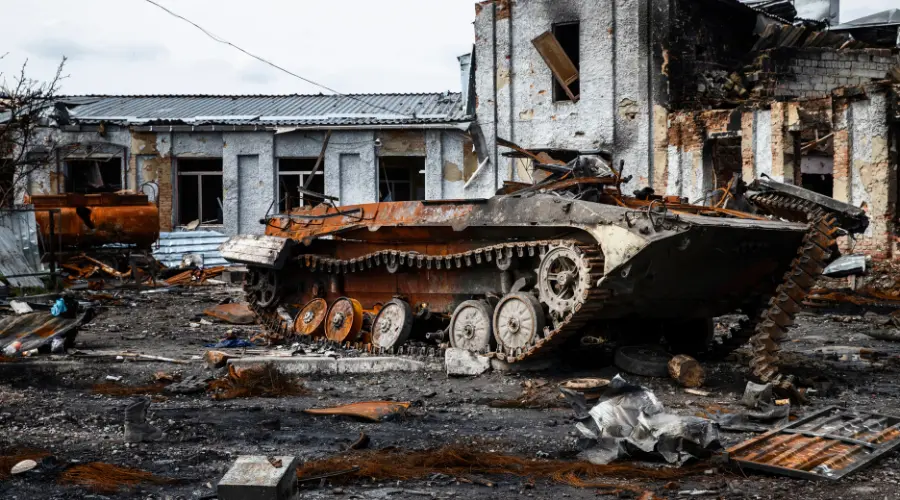
Closing the Strait of Hormuz severed key oil supply routes, triggering the biggest fuel crisis in global exchanges in nearly half a century.
Swiss trick on the global fuel crisis
Raw materials sharply increased in price, market players panicked, and all global exchanges felt it.
Under normal market conditions, such a scenario means one thing: an immediate, painful price spike at gas stations and in stores. How did Switzerland react? It barely noticed. The local consumer inflation index barely budged, staying safely away from any worrisome levels.
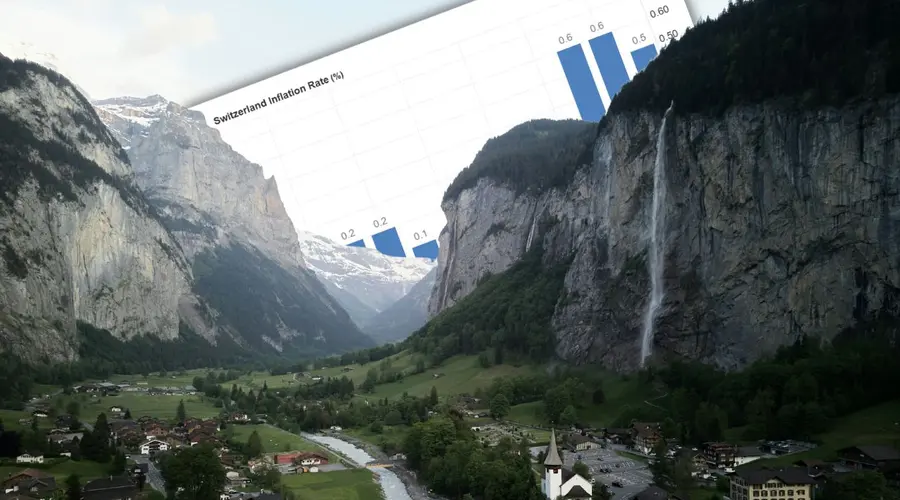
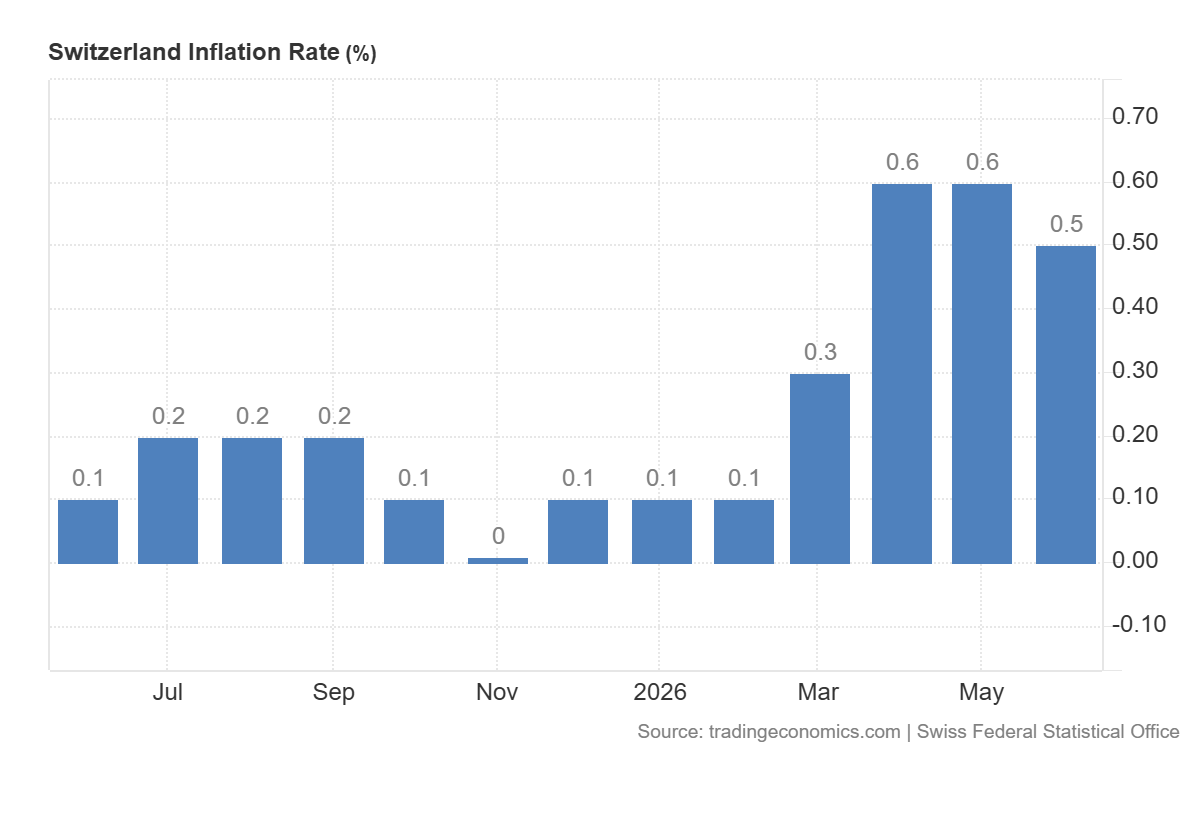
Latest June 2026 data published by the Federal Statistical Office shows a market class in itself. CPI inflation in Switzerland slowed to just 0.5% year‑on‑year (YoY).
This is slightly lower than in May and April, when basket prices rose at a “spiraling” rate for Swiss standards of 0.6% annually. It’s worth recalling that these spring readings were the highest for Swiss residents in 16 months.
Even more impressive is the month‑to‑month (MoM) comparison – in June the CPI index was a flat 0.0%. Prices simply stayed put. By contrast, May saw a rise of 0.2% MoM, April 0.3%, March 0.2%, and February jumped to 0.6% MoM.
That February spike was however only a brief anomaly following a series of six consecutive non‑positive monthly CPI dynamics.
Source: Trading Economics.
See also: Dollar rate on a long road to 4 PLN? Expert issued forecasts for USD/PLN and EUR/USD. “The dollar could gain.”
Illusion of stability according to traditional bankers
What’s happening in the Alps is a powerful slap in the face for monetary policy makers in the US or eurozone. Most global central bankers define “price stability” in a rather twisted way—as a state of permanent, systematic price growth. Regardless of whether the official inflation target is 2%, 2.5% or 3.5%, this financial system always aims for money to lose value at a controlled pace. It’s like a perpetual tax on citizens’ savings.
Swiss National Bank approached the topic with a completely different, almost engineering‑level precision worthy of the best programmers. It set its goal at inflation “no higher than 2%”, which in purely mathematical terms means a wide range from 0% to 2%. Result?
After the covid‑war turbulence of 2022‑2023, by June 2023 the annual Swiss CPI dynamics obediently fell below the 2% threshold. For almost all of 2025, Swiss residents enjoyed genuine price stability, with annual CPI dynamics hovering around zero. Average annual inflation for the entire 2025 year was calculated at just 0.2% YoY.
See also: Will the dollar surprise again? Expert issued a forecast for USD/PLN and EUR/USD. “It’s hard to believe there won’t be more fires.”
Deflationary landscape, CHF/PLN rate and new challenges
For the average stock market investor or tech fan used to perpetual bull markets, currency printing and capital pumping, a lack of price growth can sound like black magic. However in Switzerland deflationary episodes are not anomalies, but a natural, healthy part of the economic ecosystem.
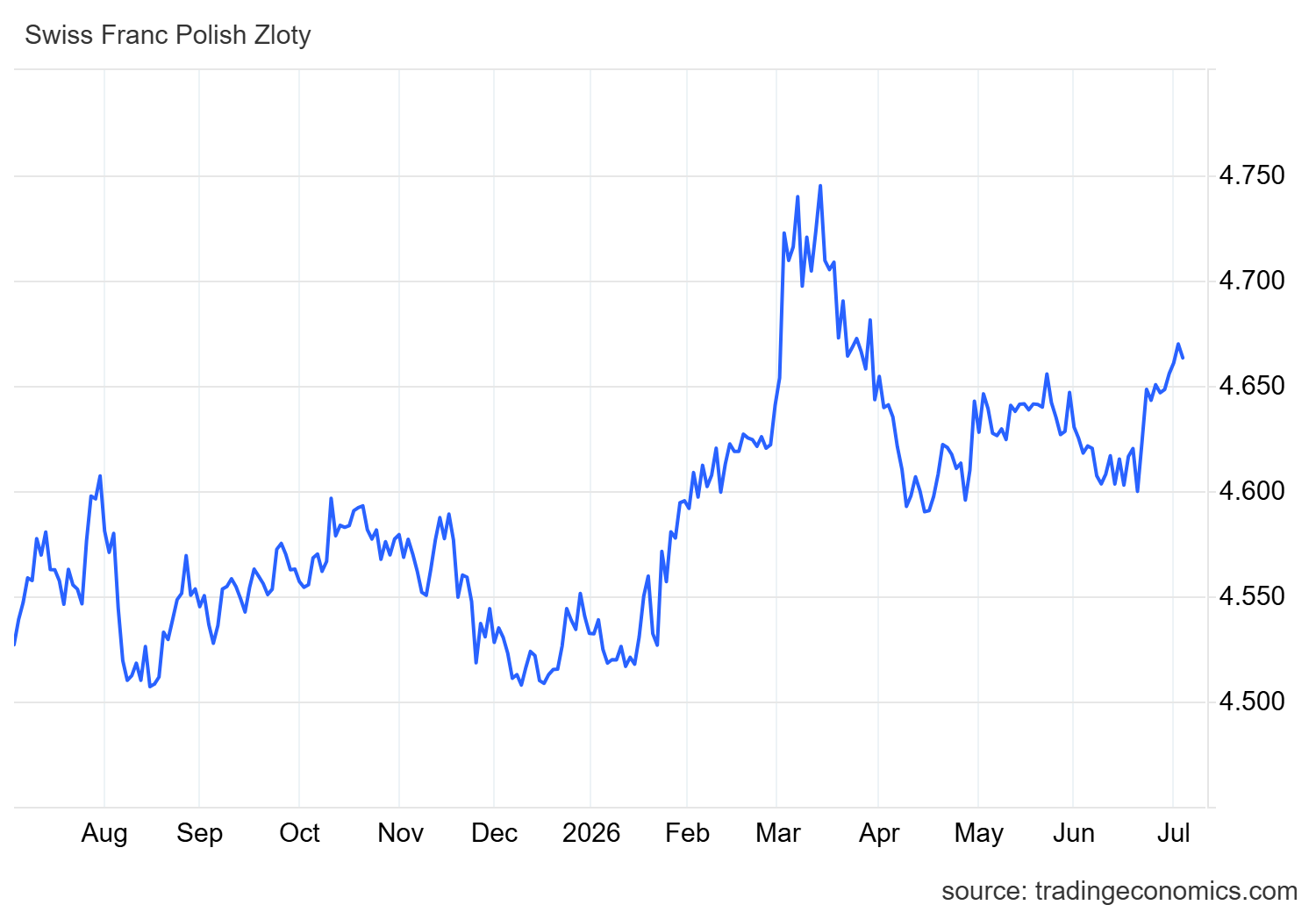
The country has effortlessly handled negative CPI dynamics in 2014‑2016, 2011‑2013 and the crisis year 2009, proving that a strong currency protects consumers’ purchasing power. This stability also shines on the foreign‑exchange market – the current CHF/PLN rate hovers around the strong 4.67 PLN, confirming the franc’s status as a safe haven.
Swiss financial machinery, however, proves that solid fundamentals and a rigorous monetary policy can effectively neutralise even the strongest macro‑economic turbulence. While the rest of the world fights inflation and seeks relief, Switzerland simply operates steadily like a well‑designed algorithm.
Chart. Swiss franc to zloty rate (CHF/PLN)
Source: Trading Economics.
See also: Dollar rate before a breakout chance? Expert: “Capital will flow back to USD.”
Source: Bankier.