Today we will learn the April ESI indicators – sentiment surveys among businesses and consumers in the EU. In Germany a preliminary estimate of April inflation will be released, with market consensus assuming an increase in the HICP to 3.1% year‑on‑year (the highest since January 2024) from 2.8% year‑on‑year in March.
Meanwhile, in the evening the U.S. FOMC will meet – the last time under the leadership of Jerome Powell. The market believes that rates will be kept unchanged.
The report on the implementation of the medium‑term budgetary and structural plan for 2025‑2028 showed a deviation from the growth path of net public finance sector spending from that recommended by the European Commission (according to the Ministry of Finance forecast, this year’s spending should be 27.2% higher than in 2023).
The document states that this deviation falls within the EC’s tolerance limits due to the national exit clause. The fuel price protection package was deemed neutral for the spending path, assuming that the revenue shortfall will be covered by a planned tax on excess profits. The current forecast for this year’s public finance deficit is 6.8% of GDP, and debt 65.1% of GDP.
The calculations did not take into account the judgment requiring Poland to pay for COVID‑19 vaccines amounting to 5.6 billion PLN (about 0.13% of GDP). The deficit reduction relative to 7.3% in 2025 is expected to rely on income measures such as freezing PIT thresholds, a second attempt to raise alcohol excise and sugar tax.

In the "Multi‑Year Macro‑Economic Assumptions for 2026‑2030" the government showed a GDP growth of 3.6% this year and inflation of 2.5%, and for next year growth of 3.1% and inflation of 2.5%. According to the document, at a later stage of the 2027 budget work, in July, an adjustment could be made for the impact of the conflict, which is not included in these calculations.
The Hungarian central bank left interest rates unchanged yesterday, the main one at 6.25%. Both the statement of MNB President Mihaly Varg and the bank’s communication were sharp. They emphasized cautious and calm monetary policy, with a strong focus on guiding by incoming data.
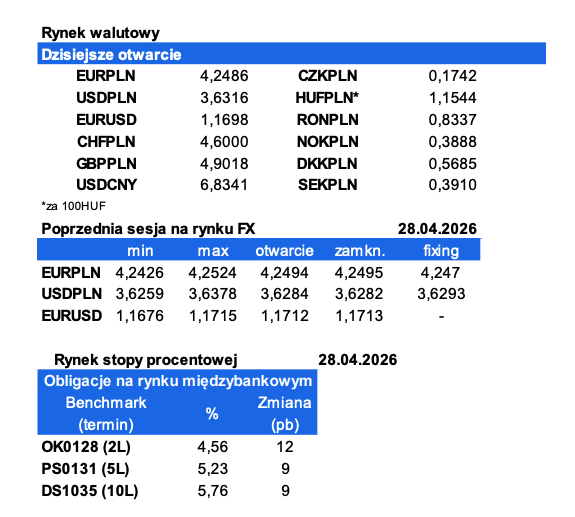
EURUSD remains close to 1.17
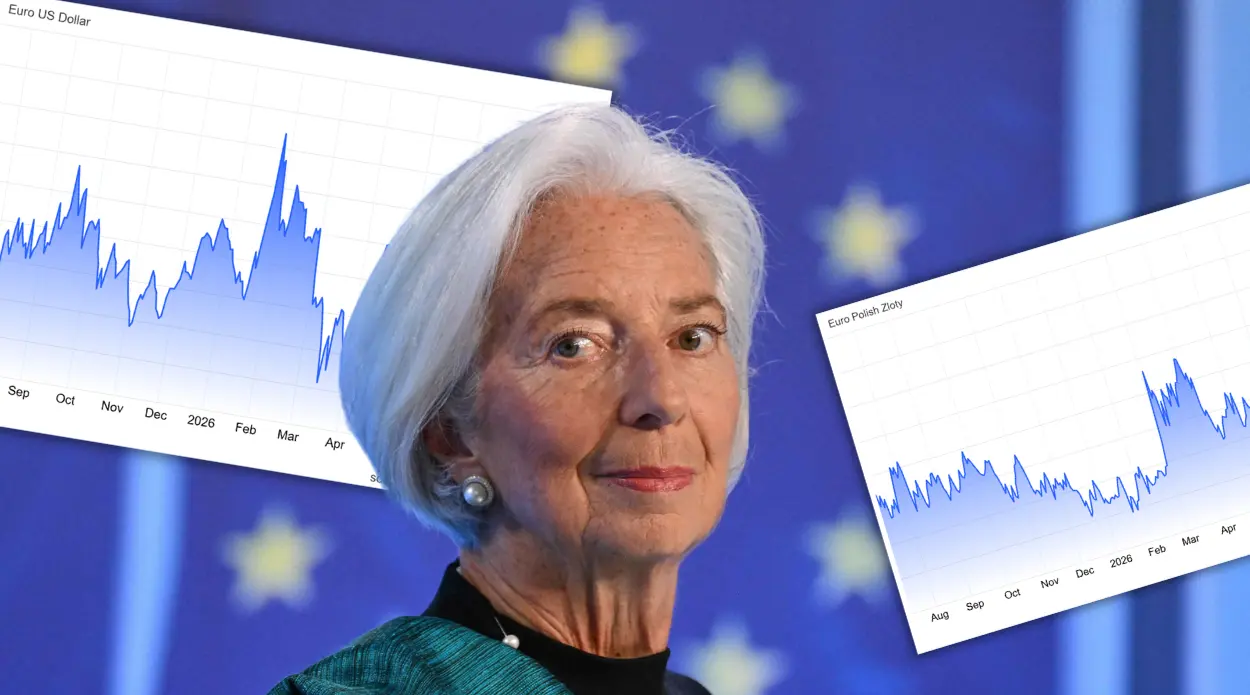
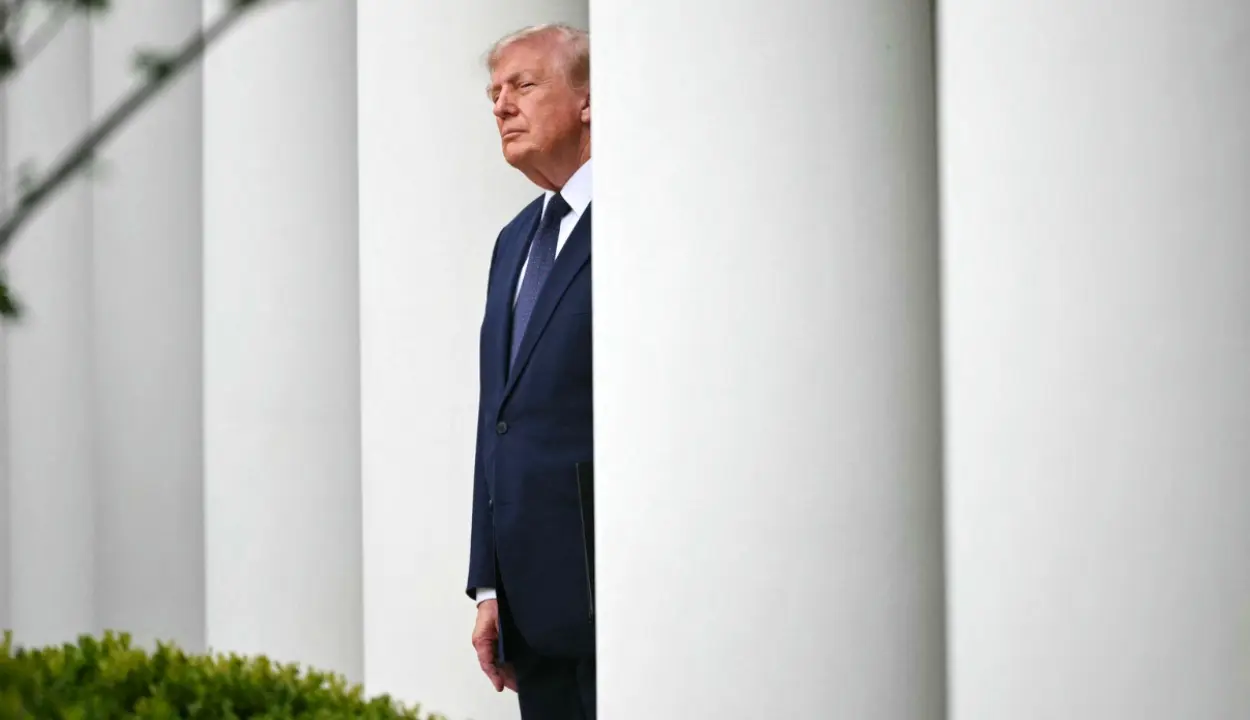
Donald Trump suggested in a social media post that Iran wants the U.S. to open the Strait of Hormuz as soon as possible. However, this did not bring a positive climate to global markets: oil prices continued to rise in line with the week‑long trend (Brent crude reached $111 per barrel), EURUSD remained close to 1.17. The zloty stayed in place against the euro, near 4.25.
Yield increases in the basic debt markets were larger than on Monday, around 2‑5 basis points in the U.S. and 4‑8 basis points in Germany. In Poland we again observed the entire yield curve rising with a simultaneous steepening (10L up by 8 basis points, 2L up by 5 basis points).
Accompanying this movement were increases in IRS rates by 5‑6 basis points and FRA rates. The rate reflecting market expectations for the level of the 3‑month market rate a year from now reached around 4.50%. The Treasury bond auction ended with sales worth 9 billion PLN against a demand of 11.1 billion PLN, bringing the coverage level of this year’s borrowing needs to 49%.