Today there is no data from the Polish economy. Eurostat will publish the May estimate of the unemployment rate for the euro area and individual EU countries, and more data will appear in the US, in particular: employment outside agriculture and the unemployment rate for June, as well as durable goods and industrial orders.
Surprising slump in Polish industry. PMI sharply down while Europe grows
The Polish industrial PMI fell in June by 3.3 points to 46.1 points. Market consensus had expected an increase of 0.4 points to 49.8 points. We also expected a reading around the neutral level of 50 points. Given that the last set of "hard" industrial data was strong, we doubt that the pessimism expressed in the June PMI could translate into a collapse in production in the coming months. All components contributed to the drop in the PMI in June.
More in our Economic Commentary. Germany’s and the euro area’s PMI performed significantly better relative to the Polish indicator. In both cases the final readings beat preliminary data and were 50.3 and 51.4 points respectively. Inflation in the HICP framework for the entire euro area was 2.8% YoY in June, down from 3.2% in May, below the market median forecast of 3.0% YoY.
End of cheaper fuel will hit wallets
The government CPN programme, which lowered VAT on fuels from 23% to 8%, has ended its operation.
Since yesterday gasoline prices rose by about 15%, which, according to our calculations, automatically translates into an increase in expected CPI inflation in July by about 0.7-0.8 percentage points.
In the coming months inflation will therefore likely remain close to 3%. According to the Ministry of Finance, the cost of running the CPN programme from April to June was 4.7 billion PLN.
Fed Chair Kevin Warsh spoke yesterday at the EBC conference in Sintra. He stated that the risk of high inflation has significantly decreased in recent weeks.
He also emphasized that the Fed is determined to maintain price stability in the economy, but in line with the new Committee policy, it will not communicate any guidance on further monetary policy steps, the so‑called forward guidance.
After this speech the dollar weakened slightly, although EURUSD still did not return above 1.14. The ADP report on the US labour market and the ISM manufacturing business cycle turned out to be weaker than expected, although it seems that in the face of Warsh’s remarks it fell to the background.
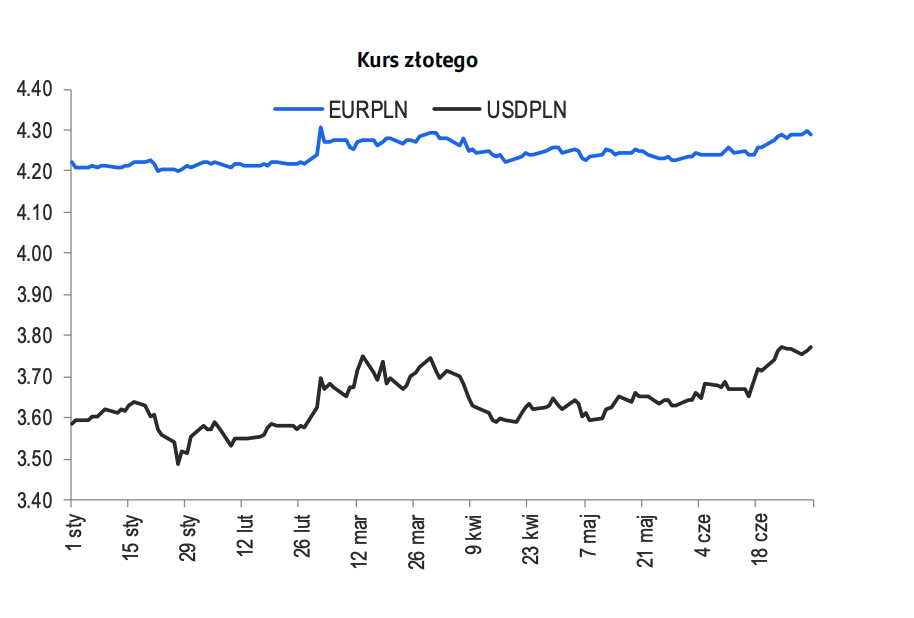
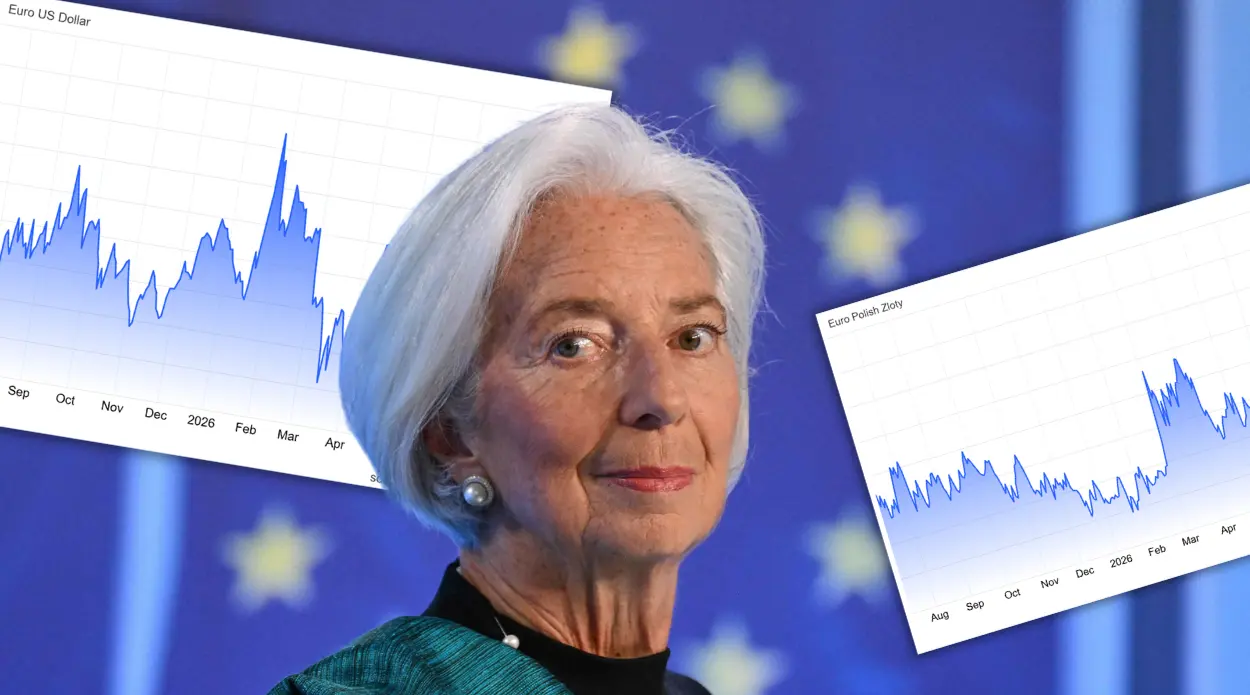
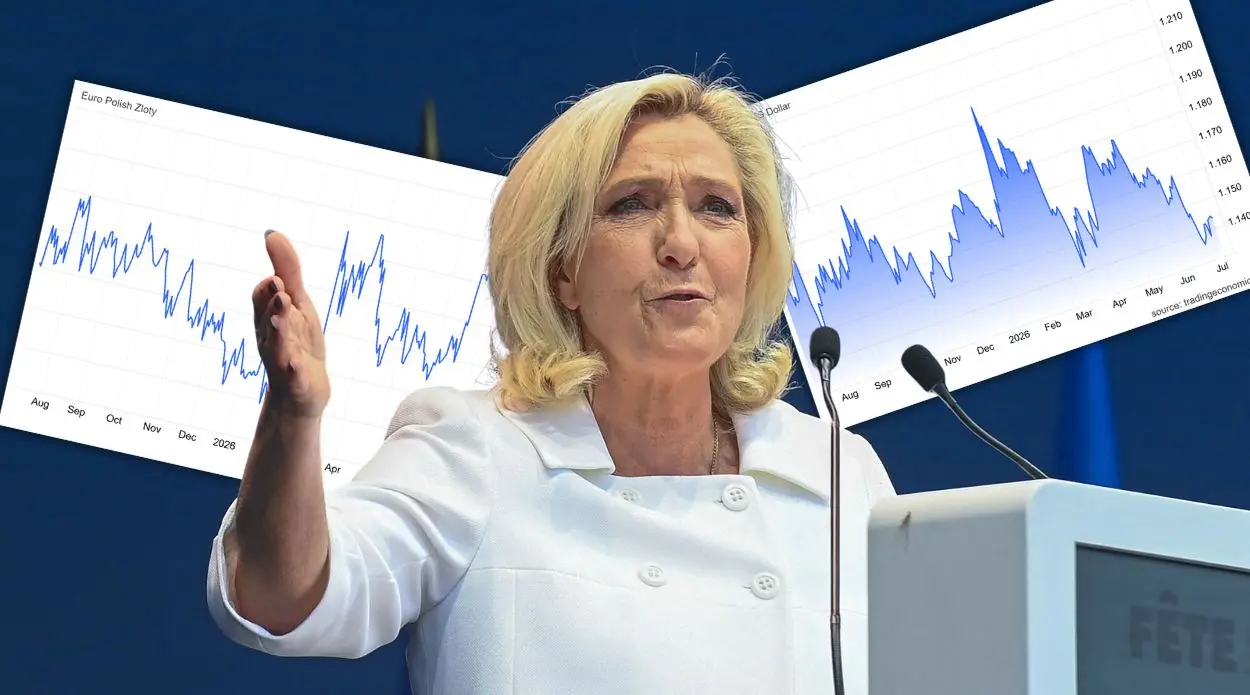
The EURPLN pair, after a sharp Tuesday rally above 4.30 due to the Polish inflation surprise, fell slightly to 4.29 yesterday.
In the debt market we recorded a slight decline in Polish bond yields, about 2-3 basis points on the short end. IRS and FRA rates fell by only 1 basis point.
US Treasuries recorded a yield decline of 2-4 basis points, and the pricing of future Fed rate hikes also fell significantly.