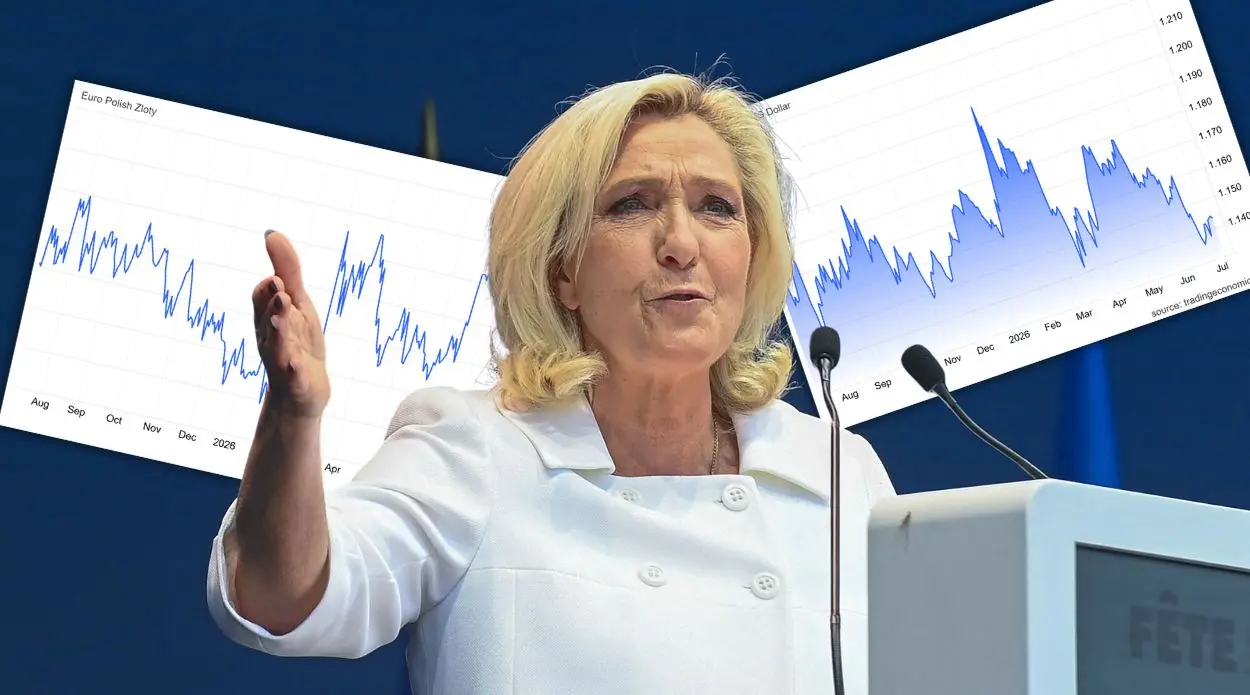
This negative backdrop only slightly affected the FX market, where dollar strength was marginal, the zloty remained stable against the euro, and its depreciation against the U.S. dollar was small. Consumer inflation readings from Germany and Spain for April, along with the Fed's evening meeting, and geopolitical factors will be the main determinants of market sentiment on Wednesday.
>> Also read: Dollar fell 20 cents. Iran appeals to the U.S.
If investors' concerns about restrictive monetary policy by central banks intensify and no positive breakthrough occurs in the Middle East, pressure on EM currencies could rise, while in FI markets the upward movement of yields may continue.
The key event will be the FOMC meeting, which ends tonight. Its outcome should not be a surprise – the widely expected further stabilization of the fed funds rate in the 3.50‑3.75% range is assigned a 100% probability by FedWatch. In March, the Fed deemed it prudent to maintain caution amid high uncertainty about the war’s impact on Middle Eastern inflation, and we believe this stance will continue. Today's meeting will likely be the last under J. Powell, whose term as Fed Chair ends May 15.
In Europe, the focus today will be on German inflation data – in April, further increases in HICP and CPI to around 3.0% year‑over‑year are expected. In the context of the war‑driven rise in energy prices and its impact on the European economy, it is worth examining the details of the ESI business‑sentiment index – including inflation expectations measures.

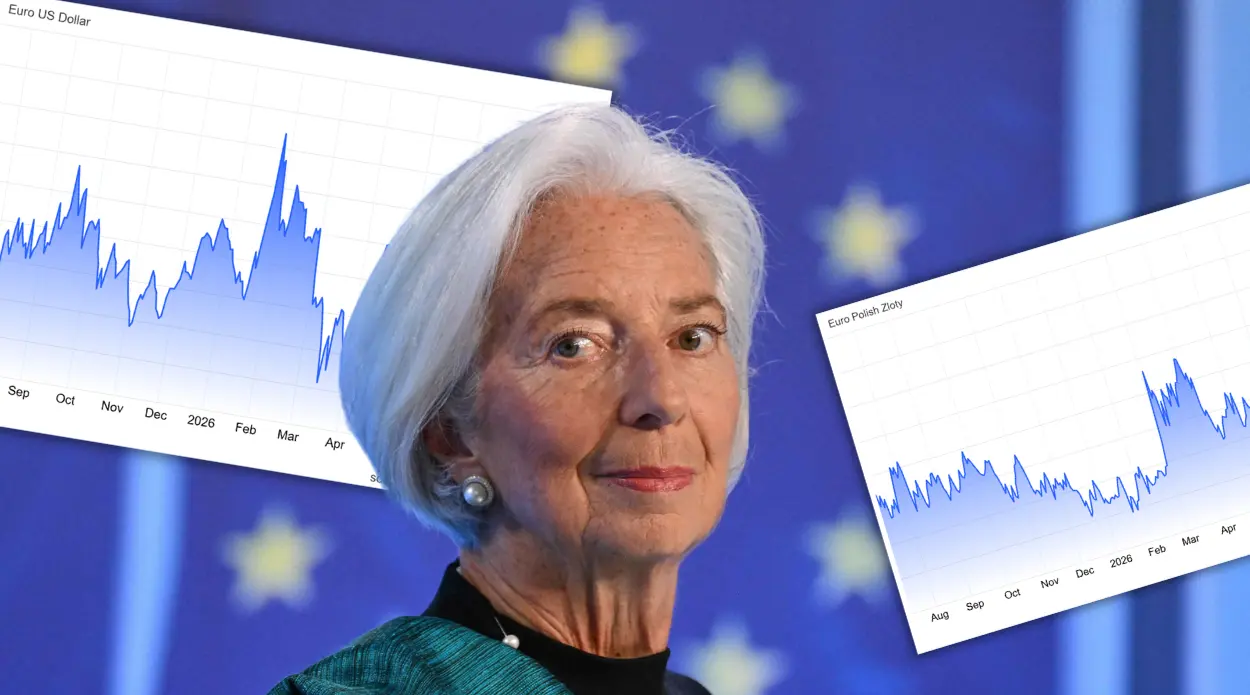
EURPLN remained at 4.25, and USDPLN approached 3.63
The zloty did not change against the euro on Tuesday and weakened slightly against the dollar. EURPLN stayed at 4.25, and USDPLN approached 3.63. In base markets, EURUSD fell slightly to around 1.1710.
Risk‑off markets: oil and inflation strengthen the dollar, zloty remains stable
During Tuesday’s trading, the global risk‑off mode intensified, driven by continued oil price rises and inflation expectations that heightened investors’ fears of tighter central bank policy.
The source of these tensions remained the lack of positive news from the Middle East, where the economic‑logistical chokehold in the Strait of Hormuz and its surroundings persists.
The scale of risk aversion growth was not large, so the zloty reacted mainly to the slight dollar strengthening, which mainly during the European trading session again benefited from its safe‑haven role.
Overall, the shifts in the discussed pairs were small and did not alter their short‑term trend picture. After Tuesday’s trading, EURPLN stayed below the resistance slightly above 4.25.
For USDPLN, a key barrier for further gains remains the 3.6450 level, while the EURUSD resistance to a drop toward 1.16 is held by local support near 1.1670.

Inflation in Europe and the Fed decision at the center of attention
Consumer inflation readings from Germany and Spain for April, along with the Fed’s evening meeting, and geopolitical factors will be the main determinants of market sentiment on Wednesday.
Higher than expected inflation data and hawkish Fed messaging could, in our view, intensify investors’ risk aversion.
In such a scenario, maintaining short‑term resistance levels on EURPLN and USDPLN – 4.2550 and 3.6450 respectively – could prove difficult.
Interest‑rate market
On Tuesday, domestic SPW yields rose by 6–12 basis points. In the 10‑year segment, yields increased by 12 basis points to 5.72%, while in base markets U.S. Treasury and German Bund yields rose by 2–3 basis points to 4.35% and 3.06% respectively.

Tension increased by the UAE’s exit from OPEC and OPEC+
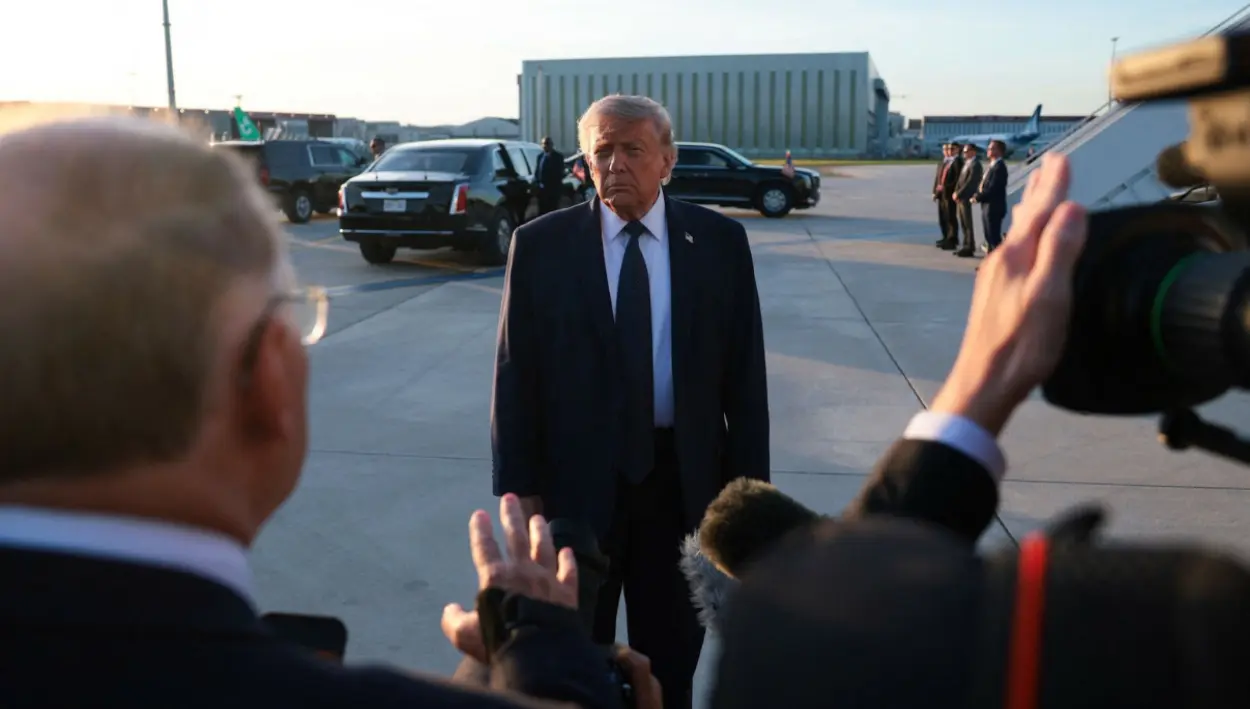
On Tuesday, financial markets saw a clear intensification of risk aversion. Optimism that emerged after reports of talks on an Iranian peace plan gave way to concerns about further escalation of the U.S.–Iran confrontation after President D. Trump’s negative reception of Tehran’s proposal. Growing nervousness around the opening of the Strait of Hormuz is illustrated by daily oil price rises, which accelerated on Tuesday and pushed Brent above $110 per barrel. The atmosphere of regional tensions was further heightened by the UAE’s decision to exit OPEC and OPEC+.
The described sequence of events, a result of economic pressure created by the U.S. “Economic Fury” plan, again pushes yields in the interest‑rate market toward the upper range of fluctuations set by the earlier, intense phase of military operations in Iran. The critical factor for the market remains central banks’ reaction to the changing inflation environment.
The first signal before the ECB and Fed meetings was the Bank of Japan’s Tuesday meeting, which did not raise the policy rate but had a hawkish tone. It strengthened expectations that Japan’s policy rate could rise to 1% in upcoming meetings, especially given new projections indicating a higher inflation path in Japan.

The interest‑rate market remains in a waiting phase for positive signals regarding possible breakout frameworks around the opening of the Strait of Hormuz. In their absence, upward yield movement may also persist on Wednesday.