Frankfurt plays it safe – markets await a move
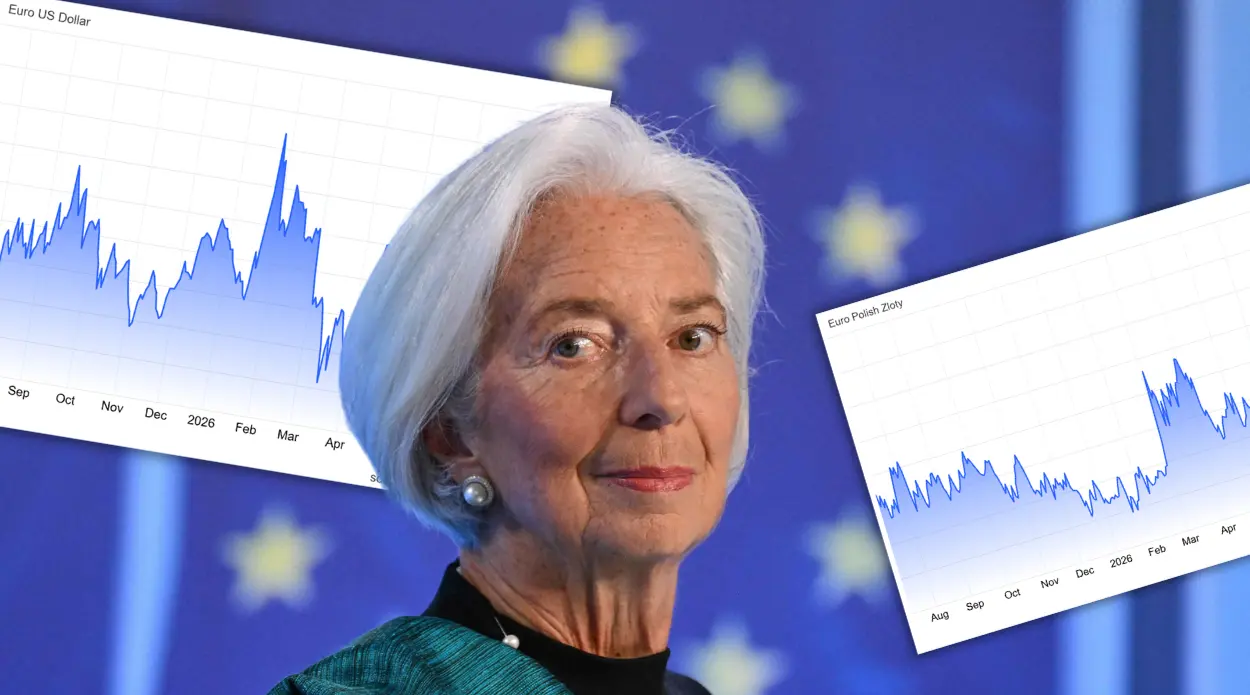
The latest European Central Bank meeting can be summed up as status quo with a heavy dose of uncertainty. ECB kept interest rates unchanged, and the post‑meeting statement was completely devoid of concrete declarations regarding upcoming hikes. Although the bank acknowledged that the risk of stagflation in the eurozone is now real and has certainly intensified since the March meeting, investors still felt quite deceived.
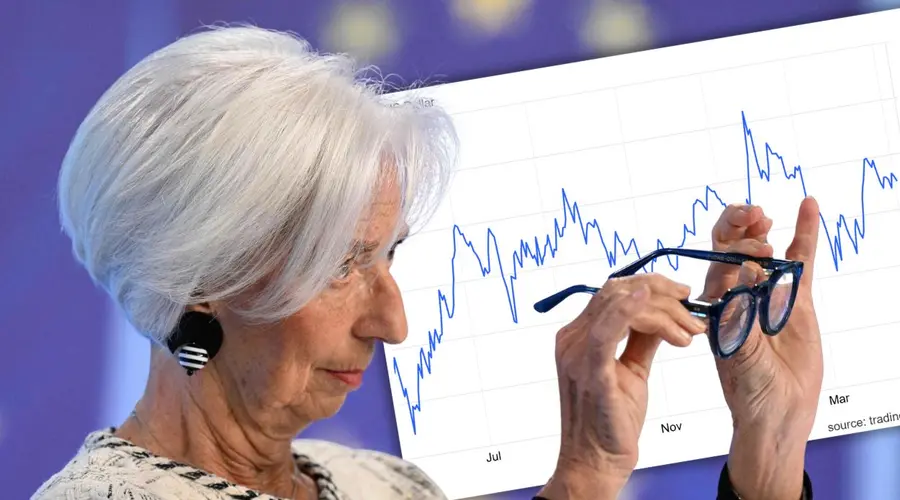
Christine Lagarde, President of the European Central Bank, deftly avoided any direct statements during the press conference. Lagarde pointed to June as the moment when the bank will have a “better outlook” to make concrete decisions.
For bulls in the EUR/USD market it’s a cold shower, because the market expected more aggressive decisions, given that inflation in April reached 3.0%. Instead we received rhetoric about “balancing risks”. On one hand price pressure, on the other hand a drastic GDP slowdown, which in the first quarter amounted to just 0.1%. Frankfurt clearly fears that a too‑sharp move will choke an already barely growing economy.

Source: Trading Economics
See also: The dollar and euro rates before a strong change of direction! A well‑known bank released forecasts for USD/PLN and EUR/USD
EUR/USD in a downtrend
What is currently happening on currency charts is a direct reflection of events in the Middle East. The war in Iran triggered an energy shock that hit Europe much harder than the USA. This is logical, as the USA is one of the largest oil suppliers worldwide. When Brent crude barrels hover around 115 USD, the eurozone, a net energy importer, is under siege. Credit Agricole experts pinpoint this situation precisely:
We believe that the outlook for the EUR will increasingly depend on relative growth forecasts in the eurozone
Technical analysis and capital flows clearly suggest that the lowest resistance line for the main currency pair points downward. Even if hawkish rhetoric from some ECB Board members, such as Isabel Schnabel or Philippe Lane, attempts to support the euro, the fundamentals of the common currency are starting to crack. As Credit Agricole analysts note:
While ECB rhetoric and persistent expectations for rate hikes may help ease downward pressure on the EUR by limiting the adverse nominal rate differential, we expect the EUR/USD to remain in a downtrend in the coming months.
Analysts predict that by the end of June the EUR/USD pair will fall to 1.14, and in September even to 1.12.
The end of the year is expected to see a floor at 1.13.
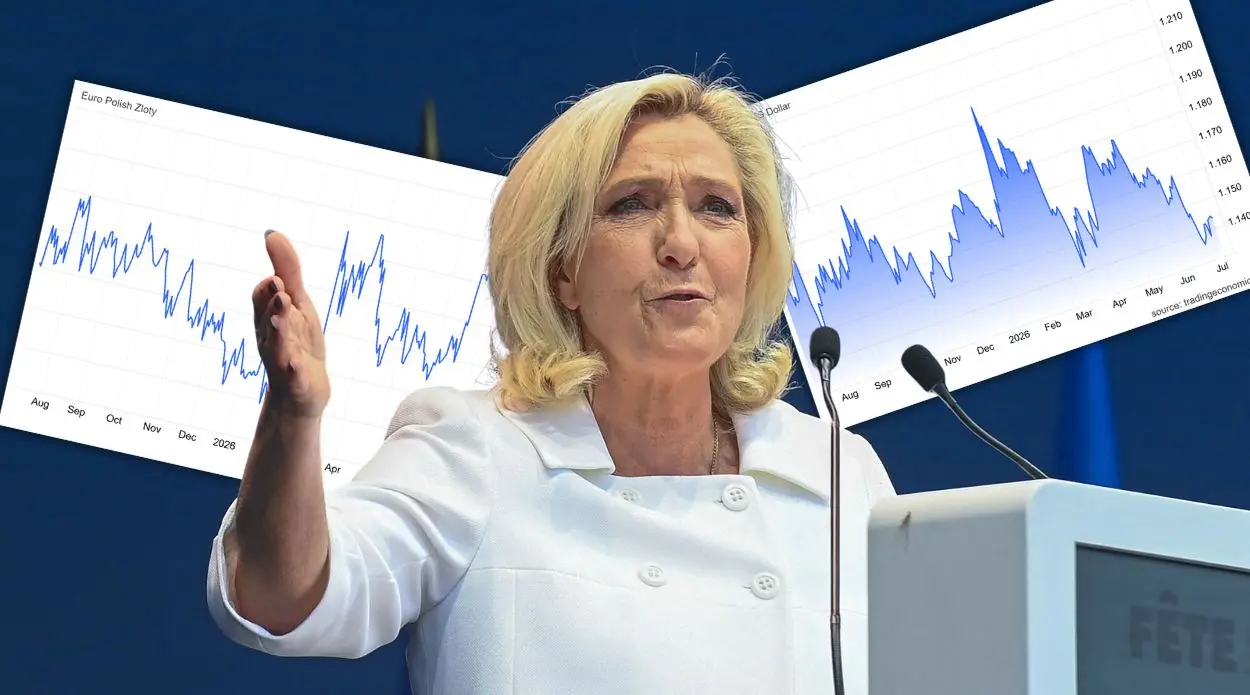
Currently the EUR/USD pair is at 1.16.
Chart. Euro to dollar (EUR/USD)

Source: Trading Economics.
See also: Euro price EUR/PLN on Monday, May 4. How much will we pay for the euro today?
EUR/PLN – the global trend rollercoaster is tightening
Although the Polish zloty shows some resilience to global turbulence, the weakening of the common European currency on the broad market will sooner or later hit Polish assets hard. The EUR/PLN rate on Monday after the May weekend rose by about 0.34%, clearly showing that uncertainty about the next ECB and Fed moves is also felt locally. The Polish economy is strongly linked to German industry, so it feels every tremor passing through the eurozone and economic giants such as France and Italy.
The current EUR/PLN rate on Monday, May 4 2026, is 4.25.
The bank expects the pair to reach 4.27 by the end of June, 4.23 by the end of September, and 4.20 by the end of December.
Chart. Euro to zloty (EUR/PLN)

Source: Trading Economics.
See also: Donald Trump threatens Europe – wants to hit the automotive market. What is the U.S. president playing?