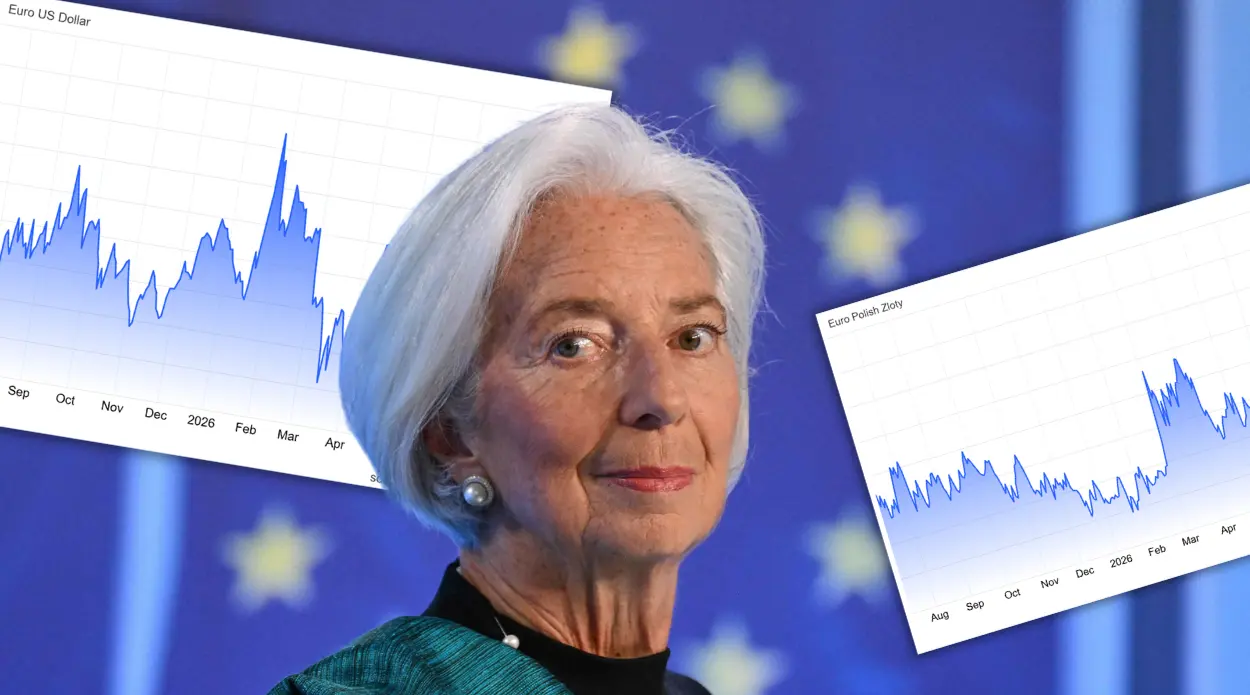
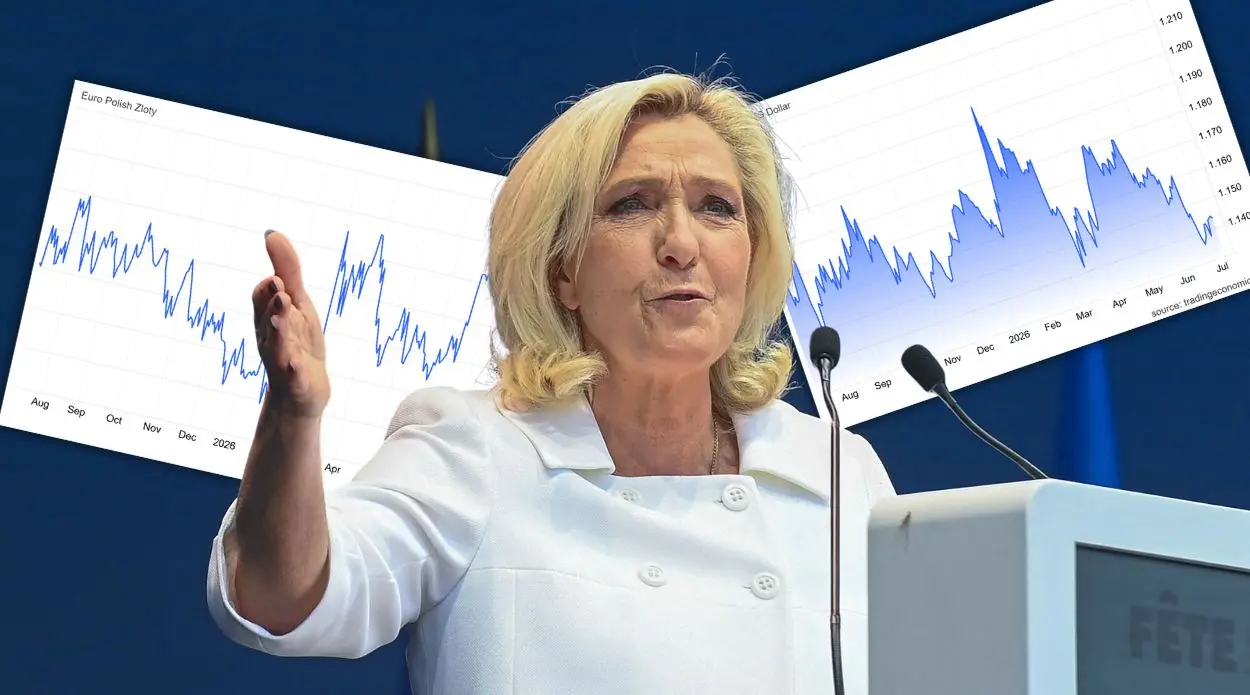
An empty domestic macro calendar and the lack of significant changes in global dollar valuation contributed to Thursday’s stabilization of the main pairs with the zloty near levels reached the day before.
Consistent with expectations, US PCE readings indicating an acceleration of inflation in the United States did not alter market perception, which values the Fed’s return to rate hikes, and at the same time did not weaken the already strongly purchased dollar in the broad market.
The trend picture on the currency pairs we observe has therefore not changed and favors a stronger dollar, and the slight Thursday pullback is, in our opinion, a correction that may expand further in the coming days.
In this context it is worth observing market behavior regarding support at 100.5 points on the dollar index, resistance at 1.1460 EURUSD, and 3.75 on USDPLN (important support), whose maintenance we consider a condition for the continuation of current trends.
Euro rate – forecast for the coming days
On Friday, in the absence of domestic market releases, the zloty will remain under the influence of impulses coming from the external environment. Confirmation of a decline in short- and long-term inflation expectations in the US, part of the University of Michigan report, linked to the recent sharp drop in oil prices, may, in our view, not be enough to reverse the dollar’s appreciation trend.
The dynamics of this move may, however, slow down in the short term, hence we expect the week to end between 1.13–1.14 on EURUSD, and for USDPLN in the range 3.75–3.78.
We also assume that EURPLN will stabilize near 4.28.
Interest rate market
The interest rate market remains sensitive to information about falling oil and natural gas prices worldwide. In this context it is worth noting that on Thursday, WTI oil briefly fell below $70/b. Mainly because of this, the yields on Polish bonds have already fallen by about 10-15 basis points across the curve since the beginning of the week, and by more than 30 basis points since the end of May. After recent changes in listings, the domestic market stopped pricing in the risk of NBP rate hikes, and the baseline scenario became maintaining them unchanged in 2026-2027.
The mentioned revision of market expectations occurs in parallel with a decline in inflation expectations and statements by RPP members, which reduced fears of a potential tightening of monetary policy in Poland. In the short term, the most interesting event for the domestic debt market in this context will be the local Tuesday release of preliminary inflation readings.
It can be expected that GUS next week will confirm a drop in the CPI index from 3.1% y/y in May to a level close to the NBP inflation target. Such a significant change in inflation will favor a gentler stance by the RPP. Consequently, over a slightly longer horizon, expectations for rate cuts in 2027 may gradually return to the market.
Limited space for further yield declines
In the near future, the space for further declines in bond yields appears limited. With current relatively high valuations, a drop in 2‑year yields below 4.15% and 10‑year yields below 5.30% would require additional impulses from both the domestic economy and the global environment.
During the Friday session, investor attention in the US and Eurozone will likely focus on releases of inflation expectation indices. The forecasted slight decline fits the dominant global trend of falling bond yields.