Since the Fed’s June hawkish reversal, investors are increasingly assessing currency attractiveness through the lens of market expectations for future monetary policy of major central banks.
The dollar benefited from this shift, supported by both the outlook for U.S. economic growth of 2.2‑2.3% in 2026‑2028 and the pricing of at least one Fed rate hike this year.
The market also assumes another ECB rate hike of 25 basis points by the end of 2026. In Poland, after a CPI inflation reading for May that was lower than consensus, the market withdrew from the June‑priced NBP rate hikes.
Additionally, yesterday’s surprise lower CPI inflation for June caused rates to start falling in the second half of 2027 in the pricing.
This narrowed the market‑priced NBP rate differential relative to the main central bank rates, reducing the zloty’s attractiveness in carry‑trade strategies.
Euro rate – forecast for the coming days
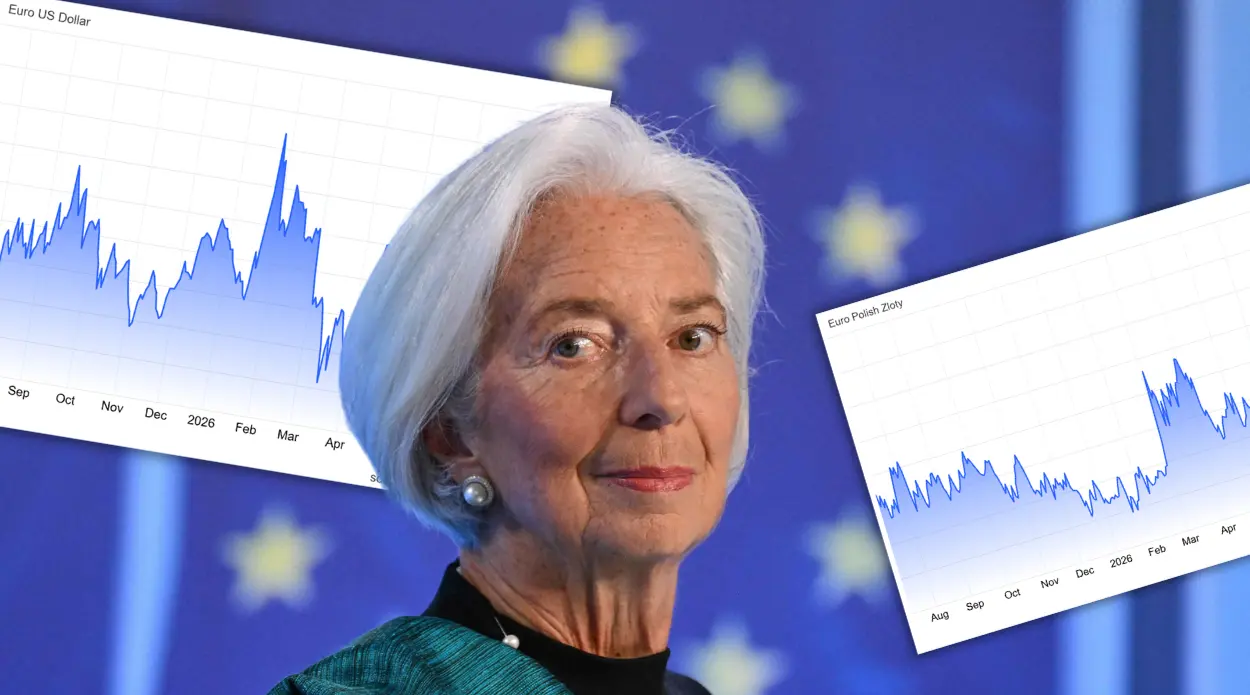
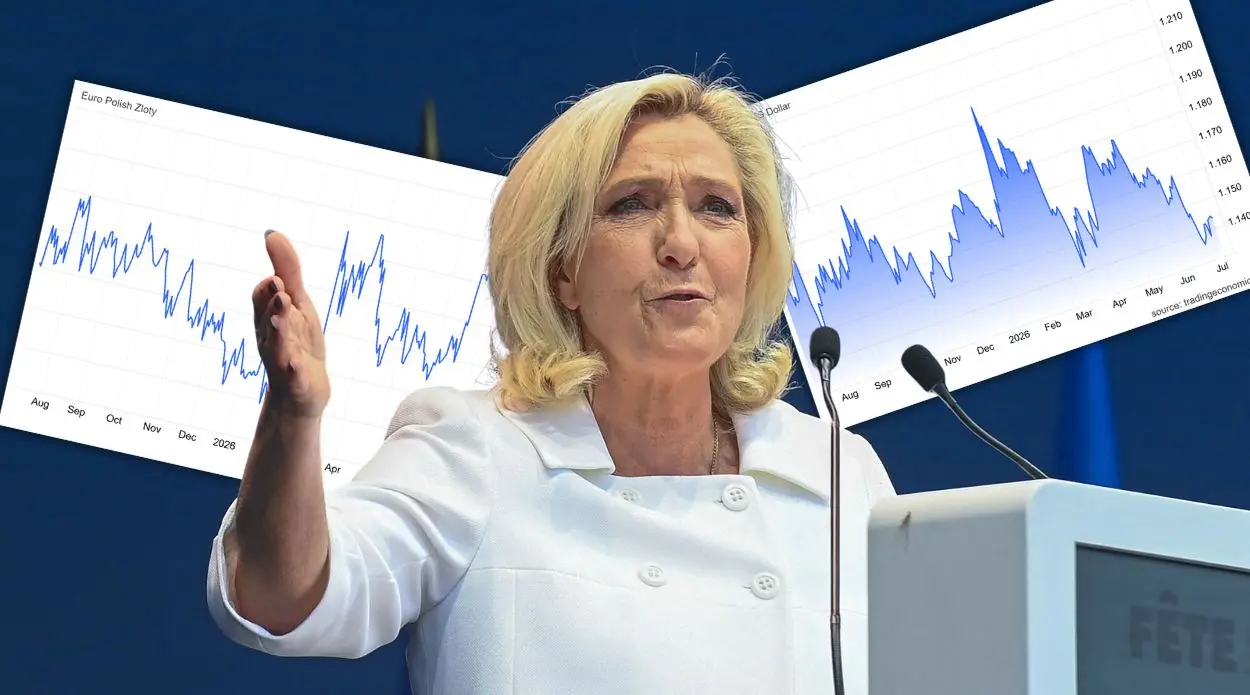
Alongside the globally strong dollar, this was the main reason for the PLN’s depreciation in recent weeks, pushing EURPLN toward the upper bound of the medium‑term sideways trend (4.3050) and USDPLN toward this year’s highs.
In the coming days, some PLN‑weakening factors, especially the dollar’s strength, will be tested by macro data, primarily from the U.S. labor market. Readings clearly above consensus could intensify expectations for Fed rate hikes, strengthening the dollar and opening a path for USDPLN toward the 3.81‑3.86 zone.
For EURPLN, with falling inflation in the euro area, the market may start pulling back from ECB rate‑hike pricing, which, in our view, would support the zloty against the euro and keep EURPLN in the medium‑term sideways trend.
On the domestic debt market, Tuesday’s session brought a clear decline in bond yields. The impetus for higher pricing came from the release of inflation data in Poland and key euro‑area economies, which turned out to be significantly lower than market expectations.
Despite low yield levels, we maintain the thesis of a continuing downward potential in the coming months.
We forecast that 2‑year instrument prices may move toward 4.0%, while 10‑year ones toward 5.1%. Key support for the European debt market on Wednesday should come from HICP data for the euro area.
In light of recent readings, the market is speculating on a stronger decline in June inflation, possibly below 3% YoY (vs. 3.2% in May).
The government borrows massively, but foreigners save us
Positive sentiment may be cooled by information about high debt supply in Q3 26. The Ministry of Finance announced plans to offer bonds worth 60‑100 bn PLN (for comparison: sales were 100 bn PLN in Q1 and Q2), and additionally organize one or two swap auctions.
Our expectations assumed sales around 80 bn PLN (with 20% of that from swap auctions), indicating sustained high demand for finance department funding.
Pressure on the market will also come from planned BGK activity, which intends to issue FPC bonds in six auctions. Consequently, we continue our thesis from the June special report that high supply supports asset‑swap spreads in the debt market at elevated levels, with increasing risk of the 10Y ASW breaking above 100 bp.
Despite supply challenges, significant support remains the foreign demand. Since early 2026, non‑resident portfolios have grown by 31 bn PLN, with over 15 bn PLN coming from purchases in May.