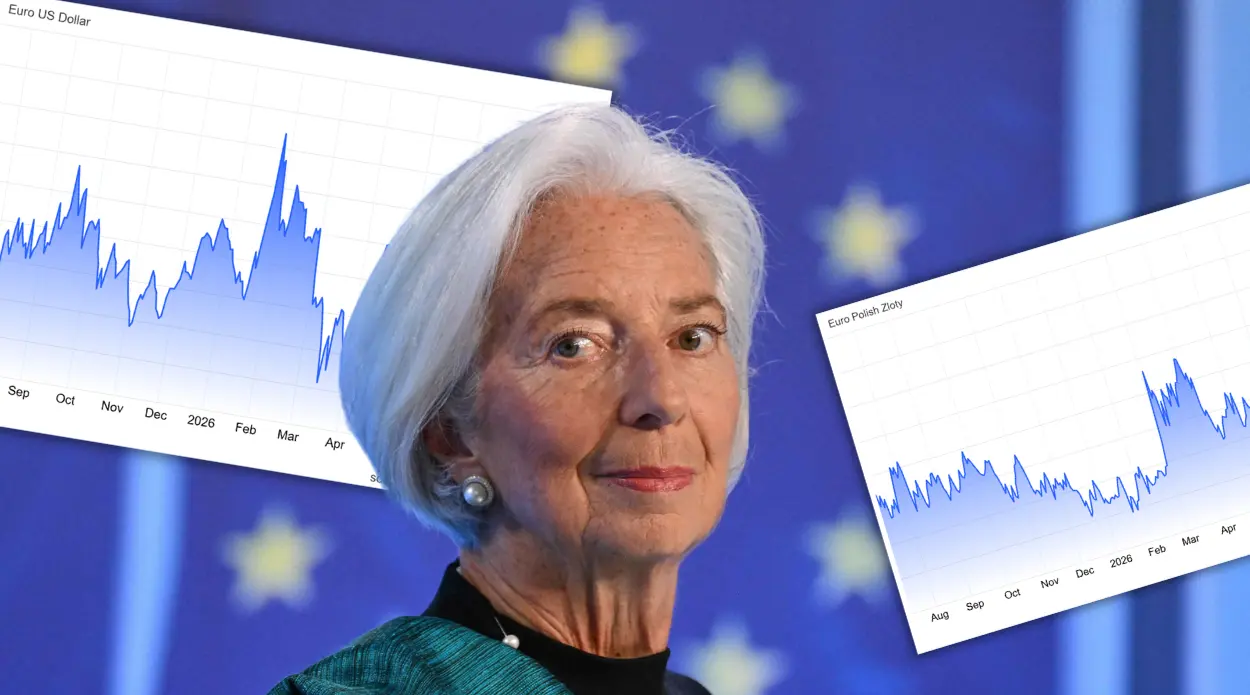
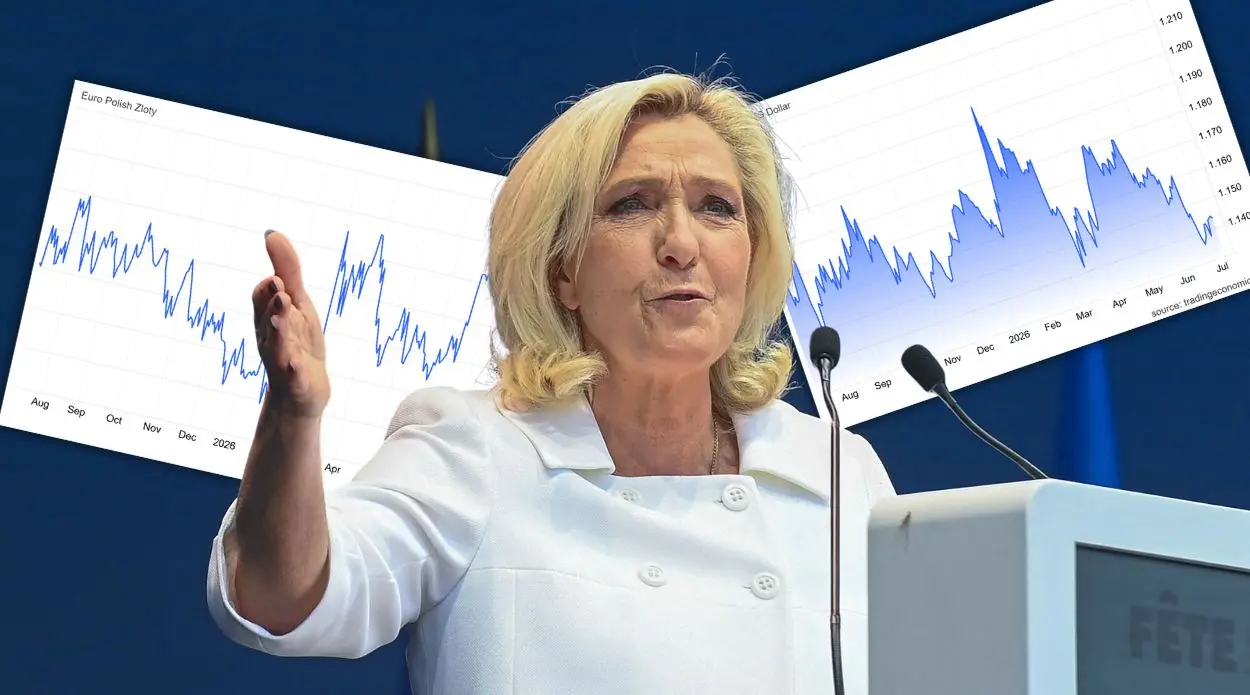
The start of the week brought a deterioration of sentiment – as Brent oil rose to around 110 USD per barrel, the dollar strengthened, the EUR/PLN rate climbed to about 4.29, and the yield on 10‑year Polish government bonds approached 6%.
In the following days, sentiment improved noticeably thanks to statements by D. Trump suggesting the possibility of ending hostilities within a few weeks, which was also aided by a lower-than‑expected inflation reading in Poland.
As a result, the zloty recovered some losses, EUR/PLN stabilised near 4.28, and on the domestic debt market we observed a clear decline in bond yields and IRS rates. On Friday this picture did not change significantly, as most major markets were closed due to Good Friday.
This week the main factor shaping the situation in financial markets will remain the development of the conflict in the Middle East and its impact on energy commodity prices, although the focus of the domestic market will also include the RPP meeting. We believe the Council will keep interest rates unchanged, while US publications may support a cautious stance by investors towards the zloty and the domestic debt market.
Fuel market intervention will flatten inflation until the end of 2027.
Last week the government launched a new fuel market intervention mechanism aimed at limiting the transmission of the oil shock to retail prices in Poland. The core of this package is a statutory maximum price for liquid fuels at service stations, linked to a temporary VAT reduction on fuels. Each day the minister announces in the Polish Monitor the maximum price for each type of fuel, effective from the next day.
The maximum price is set as the sum of the arithmetic mean of wholesale fuel sales prices from the previous business day used by five producers or traders with the largest share in the domestic market, increased by excise duty and fuel fee, and then by a fixed amount of 0.30 PLN per litre to cover operating costs.
Simultaneously the government lowered the VAT rate on fuels from 23% to 8%, and temporarily reduced the excise duty on gasoline and diesel.
The instruments introduced by the government will have a significant impact on fuel price formation, and consequently on overall inflation. Below we present our updated inflation scenario and the associated interest rate scenario in Poland. In the current legal state, the maximum price instrument is temporary, as its validity is directly linked to the period of reduced VAT on fuels (i.e. end of April).
Fuel market intervention will flatten inflation until the end of 2027
In our scenario we assume that the government will decide to maintain the intervention – perhaps in a partially modified form – until the end of February 2027. This assumption means that fuel prices would be released in March 2027, and due to the strong price increase observed in March 2026 (high‑base effect), its impact on the annual price dynamics in this category would initially be relatively limited.
In other words, the direct effect of price release would be largely amortised by the high‑base effect. To estimate the impact of the government intervention on the fuel price path in Poland we prepared two alternative scenarios. In the first we assume the maximum price mechanism remains in force and model the fuel price path in two stages.
First we model the transmission of Brent oil prices expressed in zlotys to domestic wholesale gasoline and diesel prices, using historical relationships between these variables.
Then, based on forecast wholesale prices, we set retail prices according to the statutory maximum price mechanism, i.e. taking into account the administrative price limit based on the wholesale price, indirect taxes and a fixed cost component.
In the second scenario we assume no administrative intervention and directly model the translation of global oil price changes into retail fuel prices based on historically observed relationships.

Comparison of the two scenarios shows that the maximum price mechanism does not eliminate the impact of the oil shock on fuel price dynamics, but primarily changes its profile over time. In the scenario without a maximum price, fuel price increases in 2026 would be very sharp, with an annual dynamic reaching over 30% in Q2 and staying at a double‑digit level until the end of the year, reflecting a rapid and full transmission of higher oil prices to retail prices.
In contrast, in the scenario with a maximum price, fuel price increases in 2026 are noticeably weaker, and the peak dynamic is limited to about 14% year‑on‑year in May‑June. At the same time from April 2027 the difference between the two paths reverses: in the no‑intervention scenario the high base from 2026 leads to a clearly negative fuel price dynamic for most of the year, while in the maximum price scenario the earlier administrative suppression of price levels results in a strong low‑base effect after the mechanism expires.
As a result, fuel price dynamics rise again and by the end of 2027 exceed 15% year‑on‑year, showing that the intervention reduces inflation in the short term but increases it in the medium term. We estimate that introducing the maximum price mechanism will lower overall CPI inflation by 1.0 percentage point in 2026 and raise it by 0.4 percentage points in 2027 compared to a scenario with full transmission of higher oil prices to retail fuel prices.

Inflation cut forecast to 3.2%
Before announcing the new fuel market intervention mechanism, we forecasted that average annual CPI inflation in Poland would be 3.9% year‑on‑year in 2026 and 3.6% in 2027.
We are now revising this path, expecting inflation to drop to 3.2% in 2026 and then rise to 3.9% in 2027. Due to the lower starting point we also lowered our food price path. We now expect the average annual growth rate of prices in the “food and non‑alcoholic beverages” category to fall to 3.2% year‑on‑year in 2026 (3.4% before revision) versus 4.7% in 2025, and to rise to 7.4% in 2027 (7.8% before revision).
Although we still do not know the data structure, we believe the main reason for the slower food price growth in March was lower dynamics in the “meat” and “oils and fats” categories.
We maintain our assessment that, if energy carrier prices remain elevated due to the Middle East conflict, food and non‑alcoholic beverage price dynamics will reach a local maximum in Q2 2027 at about 8.2% year‑on‑year.
Additionally, we assume that the disinflation process in the euro area will be slower than previously assessed (see MAKROmap on 30.03.2026), which will reinforce the persistence of inflation in Poland in 2027.

RPP will have weak arguments for a rate cut
Until now we assumed that in 2027, with the fading of oil shock effects, there would be room to resume monetary easing in Poland, allowing the NBP reference rate to be cut to 3.50% in Q2 2027.
Maintaining the maximum fuel price mechanism until the end of February 2027, and then its expiry and the associated strong low‑base effects, will cause inflation to remain above the upper bound of acceptable deviations from the NBP target throughout 2027. This means that the RPP will have weak arguments for cutting interest rates.
This assessment is also reinforced by a less favourable external environment, especially higher rates in the euro area, which limit the room for monetary easing also in Poland. As a result, we now assume that the NBP reference rate will remain at 3.75% until the end of 2027.
Macro indicators and currency forecast: euro, dollar and franc