Macro data from Poland
According to preliminary data for March 2026, service production in Poland grew 11.0% year‑on‑year, and month‑on‑month it rose 10.7% – the Central Statistical Office said.
By the end of December 2025, only 1,497.7 thousand people in Poland were employed exclusively on contract and related agreements, 4.8% more year‑on‑year – the Central Statistical Office reported.
The foreign trade goods turnover deficit after April was 1.7 billion euros – the Central Statistical Office said.
Industrial production in Poland, adjusted for working days, rose 2.0% year‑on‑year in April, after a 5.3% year‑on‑year increase the month before – Eurostat said. Month‑on‑month, production fell 3.4% versus a 5.4% rise previously.
The probability of interest rate changes in Poland by the end of 2026 or even the first quarter of 2027 is low; the tendency for rate hikes is slightly lower than a month ago, and it is not the right moment to signal a return to cuts – RPP member Ludwik Kotecki told Bloomberg.
The budget deficit after May 2026 was 108,214.2 million PLN – the Ministry of Finance estimates published on the ministry’s website.
By 14 June, 28,346 EU funding agreements for projects that will use 65.6% of the available EU cohesion funds for 2021‑2027 were signed – the Ministry of Regional Development said on its website.
Macro data from the world
Industrial production in the euro area rose 0.1% in April, after a 0.4% increase the month before, following a +0.2% correction – Eurostat said in a statement. Analysts expected a 0.2% rise.
The euro‑area trade deficit in April was 1.0 billion euros, excluding seasonal factors (NSA), versus a 7.8 billion‑euro surplus the previous month – Eurostat said.
US industrial production rose 0.1% month‑on‑month in May – the US Federal Reserve said. Production was expected to rise 0.3% month‑on‑month versus a 0.9% increase the month before, after a 0.7% correction.
Confirmed inflation
Poland’s CPI inflation in May was 3.1% year‑on‑year and -0.3% month‑on‑month (versus 3.2% year‑on‑year the month before), confirmed by GUS’s preliminary estimate. This indicates a slight slowdown in inflation alongside a monthly price decline. The main factor lowering CPI were food prices, which fell 1.0% month‑on‑month, reducing the index by 0.25 pp, also supported by declines in recreation and transport. At the same time price rises persisted in services, especially in hospitality, health and alcohol, partially offsetting the falls.
The inflation structure remains varied. Service prices rise much faster than goods (5.7% year‑on‑year vs 2.1% year‑on‑year), indicating ongoing pressure in stickier components. Year‑on‑year, housing and energy usage costs (≈+1.0 pp) and transport, recreation and health contribute significantly to inflation. Meanwhile, price falls in clothing and household equipment reduce price pressure. For the RPP the picture remains mixed. Inflation stays within the target band (2.5% ±1 pp), and cost pressure in services contrasts with the deflationary effect of food. Consequently, the data support a scenario of stabilised interest rates in the near term.
Euro‑area industry still lacks a clear impulse
Eurostat’s April data show only a very limited improvement in euro‑area industrial activity. Production rose 0.1% month‑on‑month seasonally adjusted (after 0.4% in March), and year‑on‑year it increased 0.3%, reversing the previous three‑month decline. Data structure remains uneven. Increases were seen in intermediate and consumer goods, both durable and nondurable, while declines affected energy and investment goods. Year‑on‑year, clear differences between segments are visible.
Strong growth in investment goods production (3.4% year‑on‑year) contrasts with declines in consumer goods, especially nondurable (-5.1% year‑on‑year). A relatively deep annual decline in consumer goods production may indicate persistent caution among European consumers. The overall data suggest that recovery remains fragile and uneven.
May data indicate further, but clearly weaker growth in US industry
US industrial production rose 0.1% month‑on‑month, after a much stronger increase in April, suggesting a slowdown in short‑term momentum. Data structure remains uneven. Production in industrial processing did not change, while growth was mainly driven by the mining sector (+1.3% month‑on‑month). Year‑on‑year, production remains 1.7% higher, but capacity utilisation (76.2%) is still below the long‑term average. Overall, the sector picture remains mixed – activity rises, but the rebound pace is moderate and concentrated in selected segments.
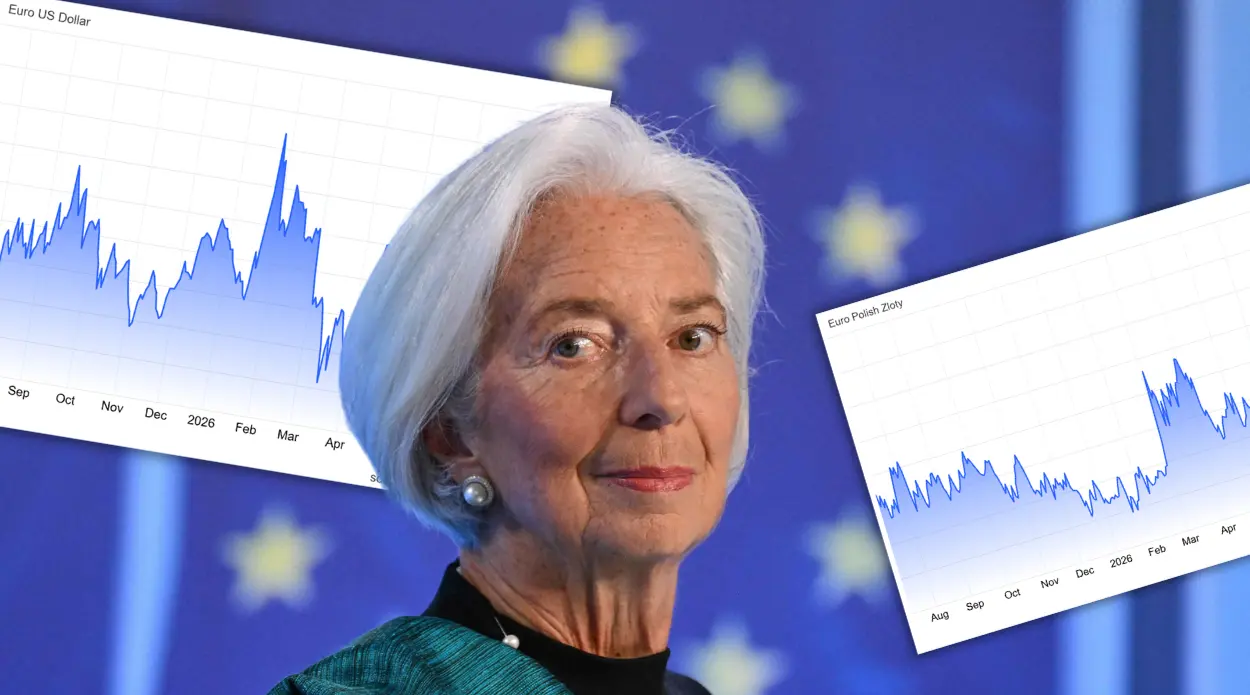
EUR‑USD continues to rise. Yesterday the main currency pair rose to nearly 1.16 by day‑end, helped by the announcement of a US‑Iran agreement. This Friday a signing is expected in Switzerland.
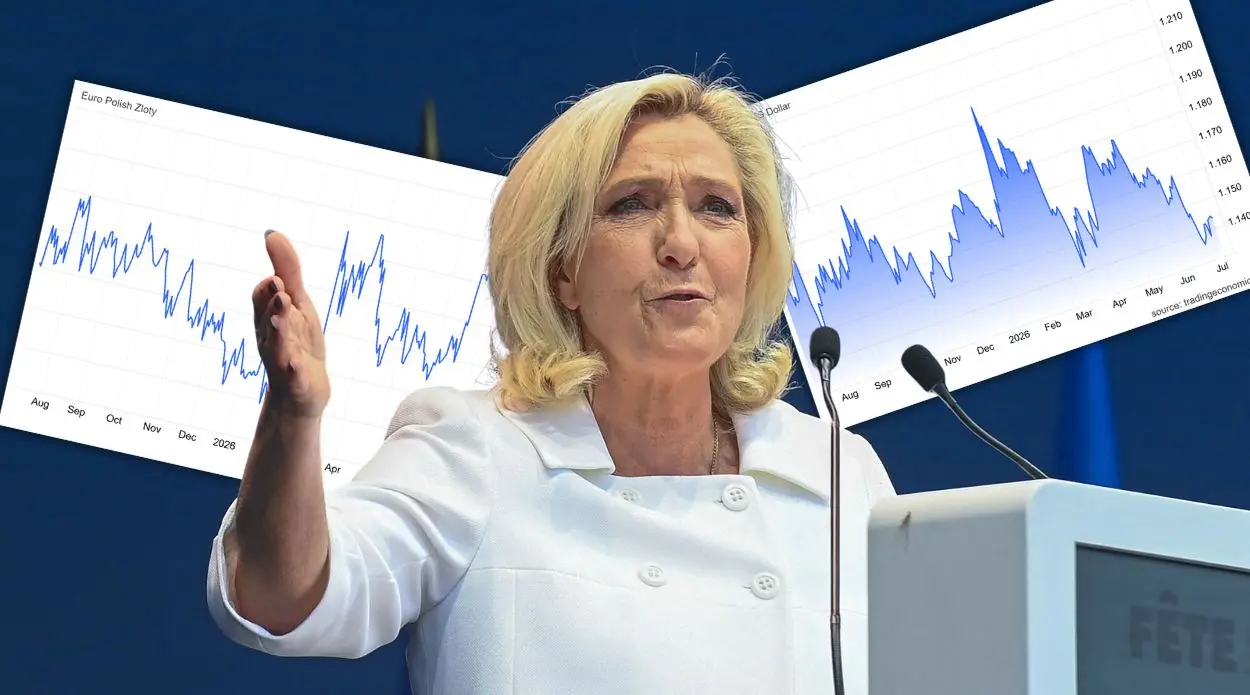
The zloty with slight weakening. The zloty did not benefit from yesterday’s geopolitical news. EUR‑PLN rose about 0.5 points, ending the day around 4.25.
Further debt strengthening. Yesterday further yield declines. The Polish yield curve shifted down 12 pp, German Bunds fell about 4‑5 pp. US 2‑year yields fell about 2 pp, 10‑year yields stable.
At 14:00 NBP will publish May core inflation data. We will also see May data on industrial production and retail sales in China and June reading of the ZEW institute index.