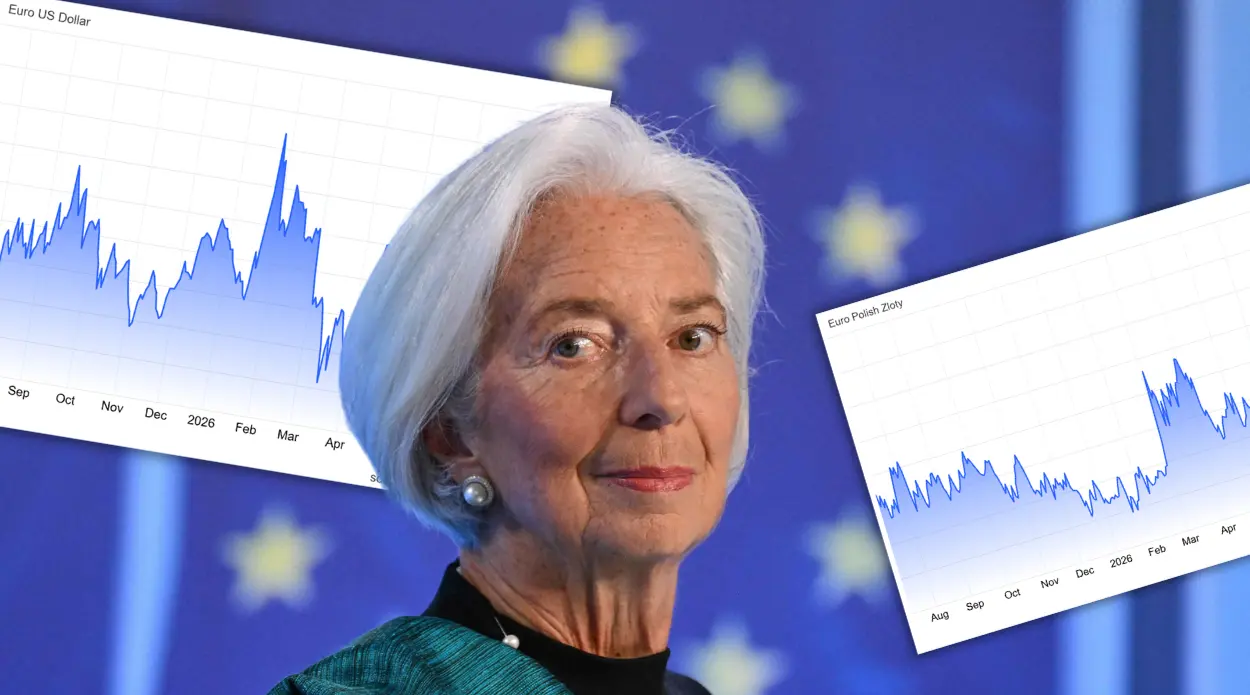
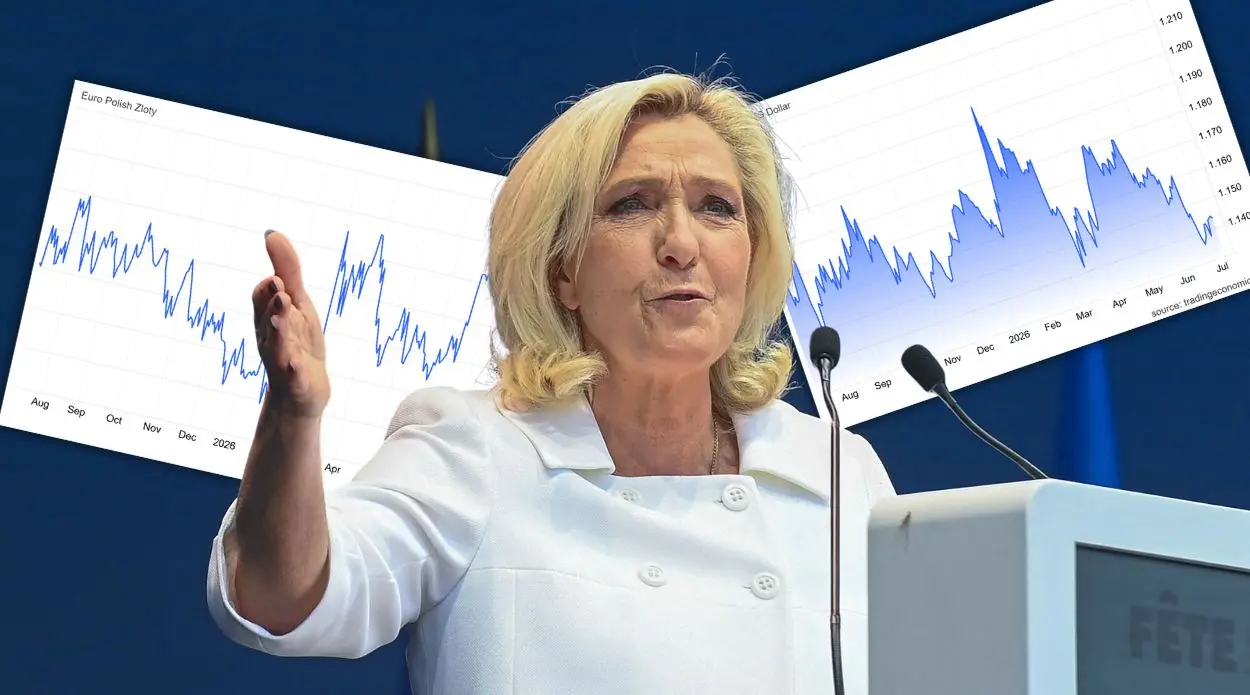
Consistent with economists’ consensus, the rise in core inflation in Poland to 3.0% year‑on‑year in April had no noticeable impact on the zloty, which remained largely influenced by external factors. Initially, investment sentiment was weaker, helped by the rise in Brent crude prices well above $110 per barrel following reports of a drone attack on a nuclear plant in the UAE.
In the second part of the day, sentiment improved after later media reports debunked that the United States might agree to a temporary easing of sanctions on Iranian oil, and after President Trump’s evening statement that he had postponed the planned Tuesday attack on Iran due to progress in negotiations.
As a result, Brent prices largely reversed their earlier gains, and the dollar began to lose slightly worldwide, supporting emerging market currencies, including the zloty. Monday’s moves, however, did not alter the current trend structure in the currency pairs we monitor.
Euro EUR/PLN – forecast for the coming days
On Tuesday the domestic macro calendar is empty, and the global calendar lacks releases that could significantly impact markets. The zloty should therefore remain largely influenced by external sentiment shaped by oil prices and accompanying inflation expectations.
In our view, the market could position itself for a restart of US‑Iran talks and a partial decline in geopolitical risk premiums in oil prices.
In such an environment we see an asymmetric probability of a slight strengthening of the zloty, which could push the EURPLN rate below 4.24 and the USDPLN to around 3.62.

Global debt sell‑off hits Warsaw
Polish government bond yields ended Monday’s session 0.6 basis points below Friday’s close. In the 10‑year segment, yields ultimately stabilized around 5.96%, while U.S. Treasury yields rose 3 basis points to 4.62% and German Bunds rose 1 basis point to 3.16%.
Sharp yield increases in global markets dominated participants’ attention already on Friday. Negative FI market sentiment also persisted in the Asian portion of Monday’s session, especially hitting the Japanese market, where yields on ultra‑long 30‑ and 40‑year bonds rose to unprecedented levels, roughly 4.10% and 4.35% respectively.
Also during Monday’s Asian trading, U.S. Treasuries set yield highs in the current episode of global debt sell‑off. Yields on U.S. 10‑ and 30‑year Treasury bonds temporarily rose to 4.63% and 5.15%. Driven by these moves, the Polish SPW market briefly breached the 6% barrier in the 10‑year sector at the start of the European session.
After a nervous opening of the week on domestic and global debt markets, with no new macro or geopolitical catalysts, the situation gradually stabilized, and yields fell slightly as the session progressed. In conditions of strong investor concentration on inflation data, the neutral reading of core inflation in Poland, which rose to 3% as expected, was taken into account.
We expect Tuesday’s trading to be calmer. In the short term, demand from investors using the discount to rebuild FI positions could have a stabilizing effect. At the same time, the unresolved Strait of Hormuz issue and growing global oil shortages limit the space for a more lasting decline in yields.