We must wait for a breakthrough in Iran
The United States and Iran are likely considering extending the ceasefire for another two weeks, Bloomberg reports.
The agency, citing anonymous sources familiar with the matter, says the parties to the conflict are ready for a second round of talks to reach a compromise on disputed issues.
Among them, it claims, will be opening the Strait of Hormuz and Iran’s uranium enrichment plan.
"If the talks succeed, they could pave the way for another round of negotiations between senior officials of both countries," it said.
Importantly, the information does not guarantee that a final agreement will actually be reached, and on the contrary, attempts to ease the conflict could fail, as happened last weekend in Pakistan’s capital Islamabad.
Current market sentiment was discussed with FXMAG by Mirosław Budzicki, financial markets strategist at PKO Bank Polski.
"Since the beginning of April, investors have started pricing in the growing probability of a peaceful agreement between the United States and Israel and Iran. As a result, risk‑asset demand rose, and emerging market currencies strengthened noticeably," he said.
The case for this scenario is the belief that it is optimal for both the United States and Iran, economic costs for the global economy are rising, and achieving more ambitious U.S. goals in the Persian Gulf seems very doubtful.
"The peaceful scenario is reinforced by the 14‑day truce and ongoing talks (unofficially, a second round of negotiations is scheduled for this week). Investor confidence in a quick agreement did not waver even with the news of the U.S. blockade of the Strait of Hormuz. If the process proceeded as investors expected, one could anticipate a drop in the EUR/PLN rate toward 4,22 and an increase in EUR/USD toward 1,19–1,20,” he added.
The expert emphasized that the above scenario seems "very likely", but an agreement in the Persian Gulf is still not guaranteed.
Until it is reached, the U.S. will pressure Iran by restricting ship traffic to and from Iranian ports, threatening attacks after the ceasefire period, offering long‑term benefits from peace, encouraging third countries to support mediation — most countries favor peace — and attempting to unblock the Strait of Hormuz.
Meanwhile, a weakened Iran should seek to negotiate the best possible position, but still has forces and means for a kinetic response if red lines are crossed.
"The Middle East conflict has already surprised observers many times, so no scenario can be ruled out. It is also important to note the stance of other countries, including Israel," summarized Mirosław Budzicki.
See also: Dollar rate in the shadow of the Middle East conflict. Expert: "Hard to reach a compromise"
Dollar and euro rates on Thursday, April 16
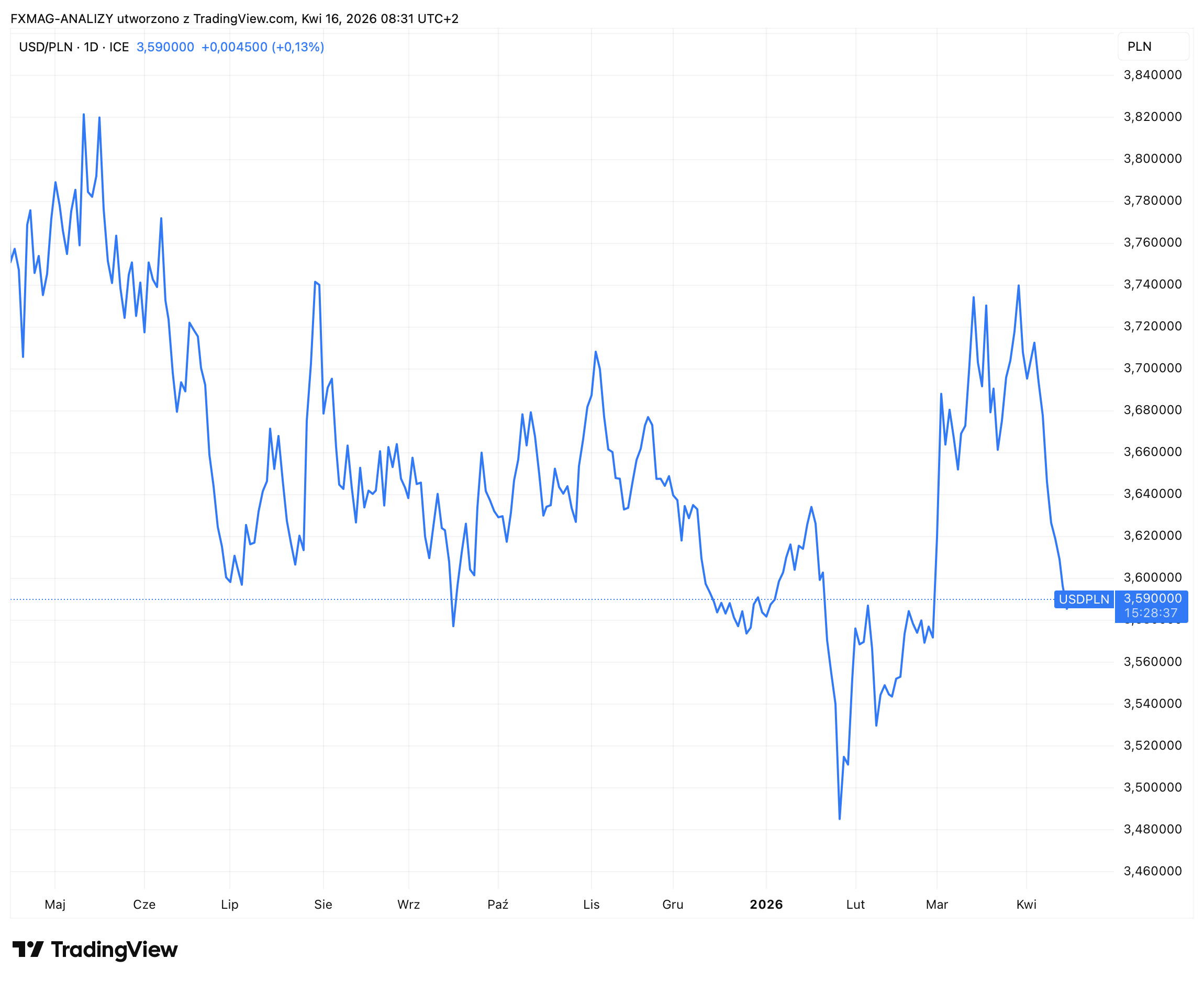
The dollar to zloty rate on Thursday, April 16 is at 3,59 PLN.
Chart. Dollar to zloty rate (USD/PLN)
Source: TradingView.
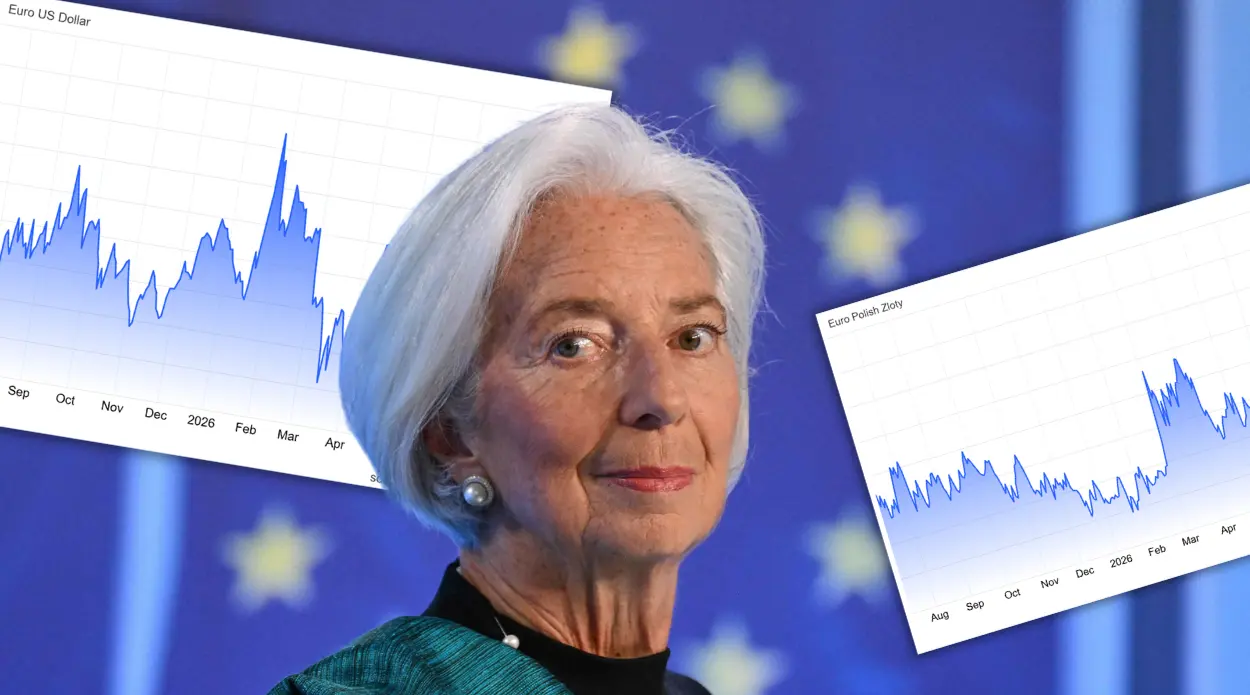
The euro to dollar rate reaches 1,17 USD.
Chart. Euro to dollar rate (EUR/USD)

Source: TradingView.
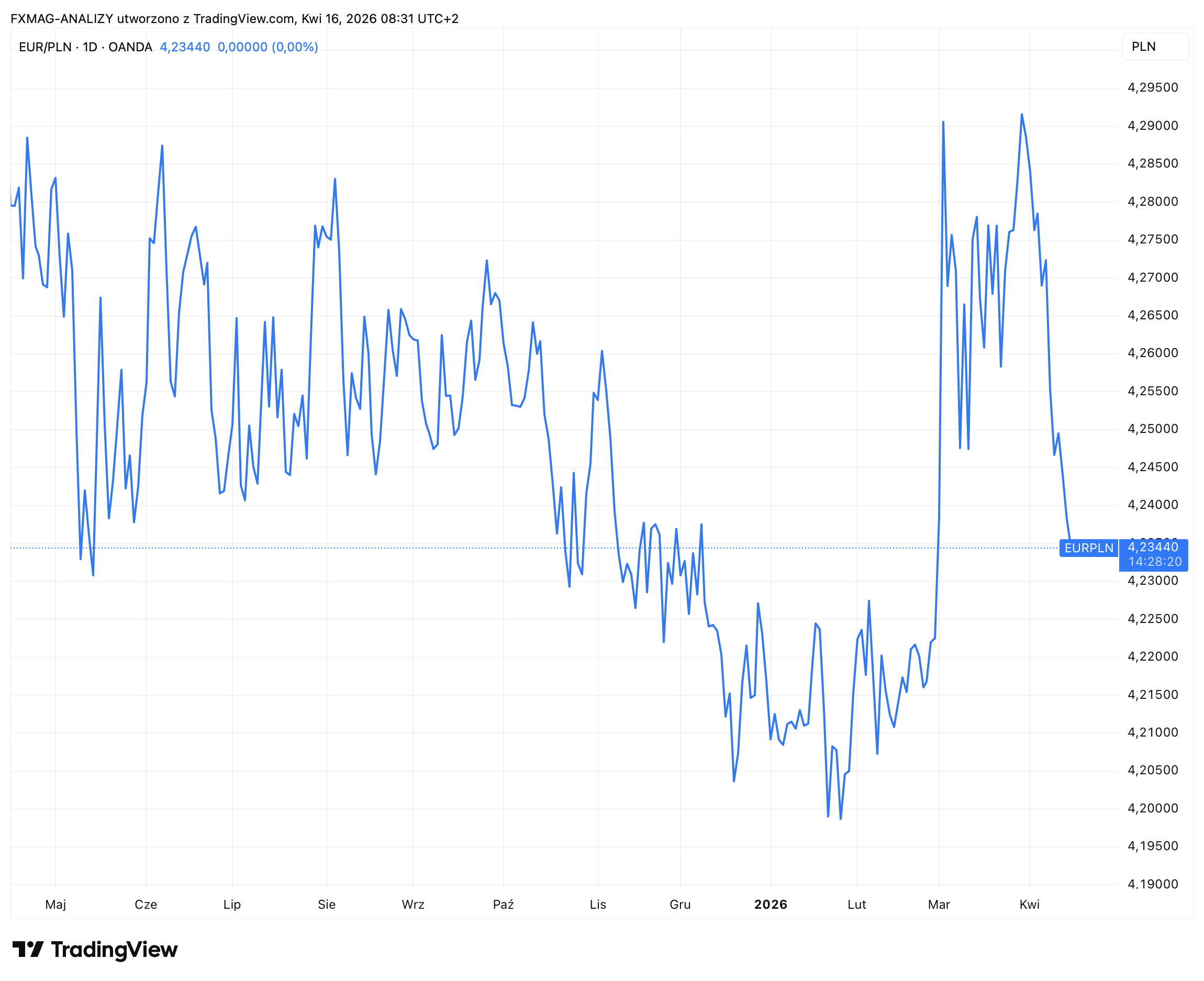
The euro to zloty rate fluctuates around 4,23 PLN.
Chart. Euro to zloty rate (EUR/PLN)
Source: TradingView.
Read also: Will the euro surprise soon? Expert says what will happen with EUR/PLN and EUR/USD
See also: Dollar rate before a "nervous and dynamic" move, euro waiting for a drop? Expert issued a forecast for USD/PLN and EUR/USD