Will the Fed support the dollar? USD resilient to new Iran news
Ongoing peace talks in the Middle East were again called into question after the U.S. attack on Iranian units in the Strait of Hormuz.
The U.S. Central Command announced that American forces carried out strikes on Iranian missile sites and vessels that were attempting to deploy sea mines.
According to CENTCOM spokesperson Captain Tim Hawkins, the attacks were defensive and served to "protect American soldiers from threats from Iranian forces."
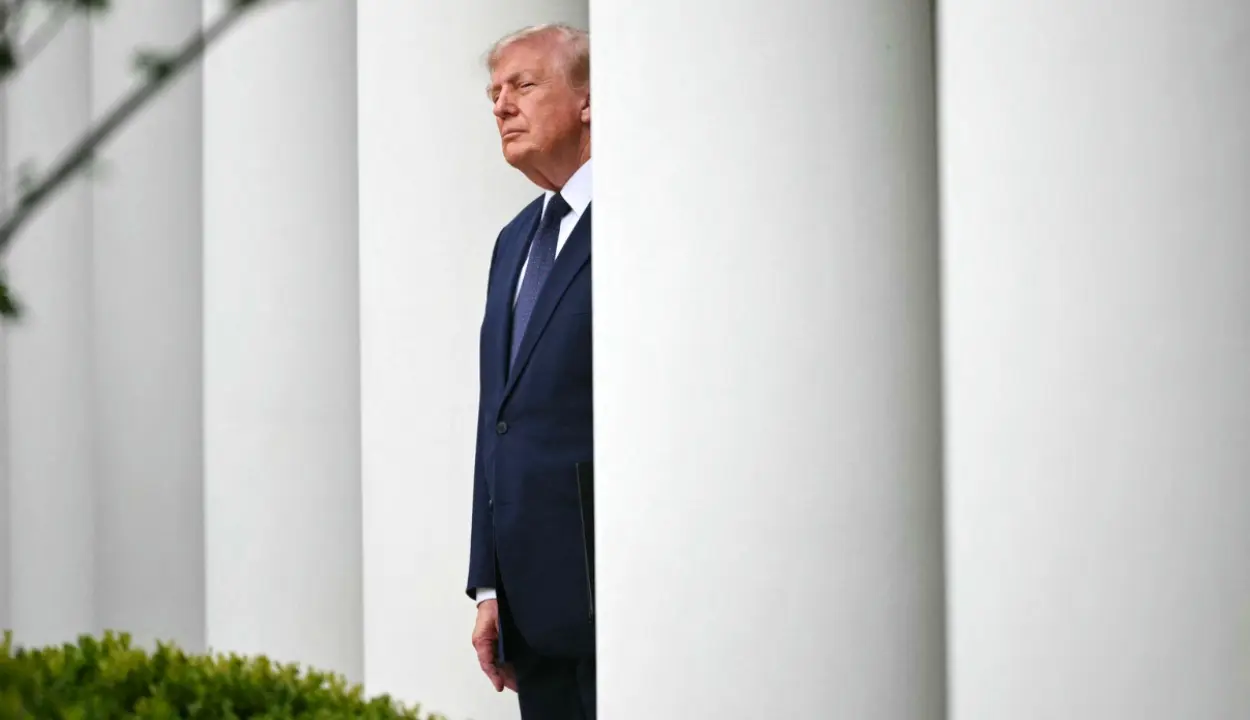
Donald Trump in a Monday post again raised the issue of uranium enrichment by Tehran, which remains the main point of contention in negotiations between the conflict parties.
"Enriched uranium (nuclear dust!) will either be immediately handed over to the United States for transport to the country and destruction, or, which would be the preferred solution, destroyed on site or at another acceptable location, in cooperation and agreement with the Islamic Republic of Iran, with the Nuclear Energy Commission or its equivalent acting as witness to the process and event," he said.
Despite these events, the U.S. dollar did not lose strength as one might have expected.
"We suspect this is due to the belief that the Federal Reserve will soon reduce its dovish tone, while weaker economic activity data raise doubts about how aggressive other central banks, especially in Europe, can be this year in tightening monetary policy," analysts at ING Think said.
Looking ahead to the coming week, the question arises, whether the dollar must lose value significantly, if specific information about easing tensions in the Middle East emerges.
We suspect the answer is slight, because financial markets are currently more interested in the economic effects of these events on the business cycle and inflation.
The macroeconomic calendar for the upcoming week includes, among other things, the release of a report on American spending last month.
"Any surprising increases in this area would strengthen the case for Fed rate hikes this year and help the dollar. This week also includes a series of Fed officials’ appearances," economists reminded.
"If the dollar holds steady or slightly strengthens this week, it could create room for greater significance of local events. In this context, we believe tomorrow’s New Zealand Reserve Bank meeting may take on a slightly more hawkish tone than expected, which could provide some support for the New Zealand dollar," they added.
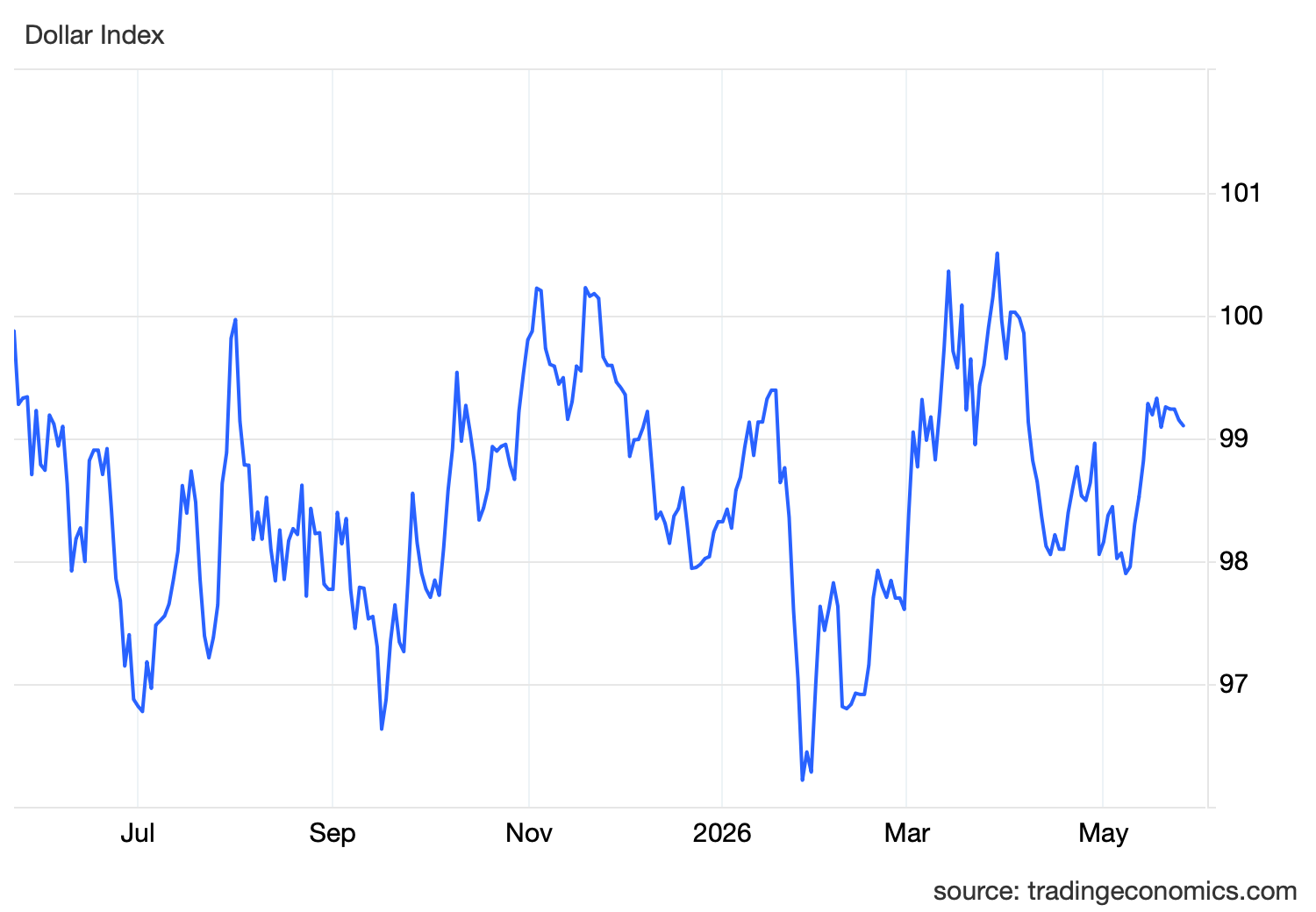
The U.S. Dollar Index on Wednesday, May 27, was at 99,1.
The ING Think team forecasts that DXY will stay in the range 99,00–99,50, with the biggest breakout risk being Thursday’s PCE inflation data for April.
Chart. U.S. Dollar Index level
Source: Trading Economics.
Read also: The dollar’s long road to 4 PLN? Expert released forecasts for USD/PLN and EUR/USD. "The dollar could gain"
See also: Will the dollar surprise again? Expert released a forecast for USD/PLN and EUR/USD. "I find it hard to believe there will be no more fires"
Dollar and euro rates on Wednesday, May 27
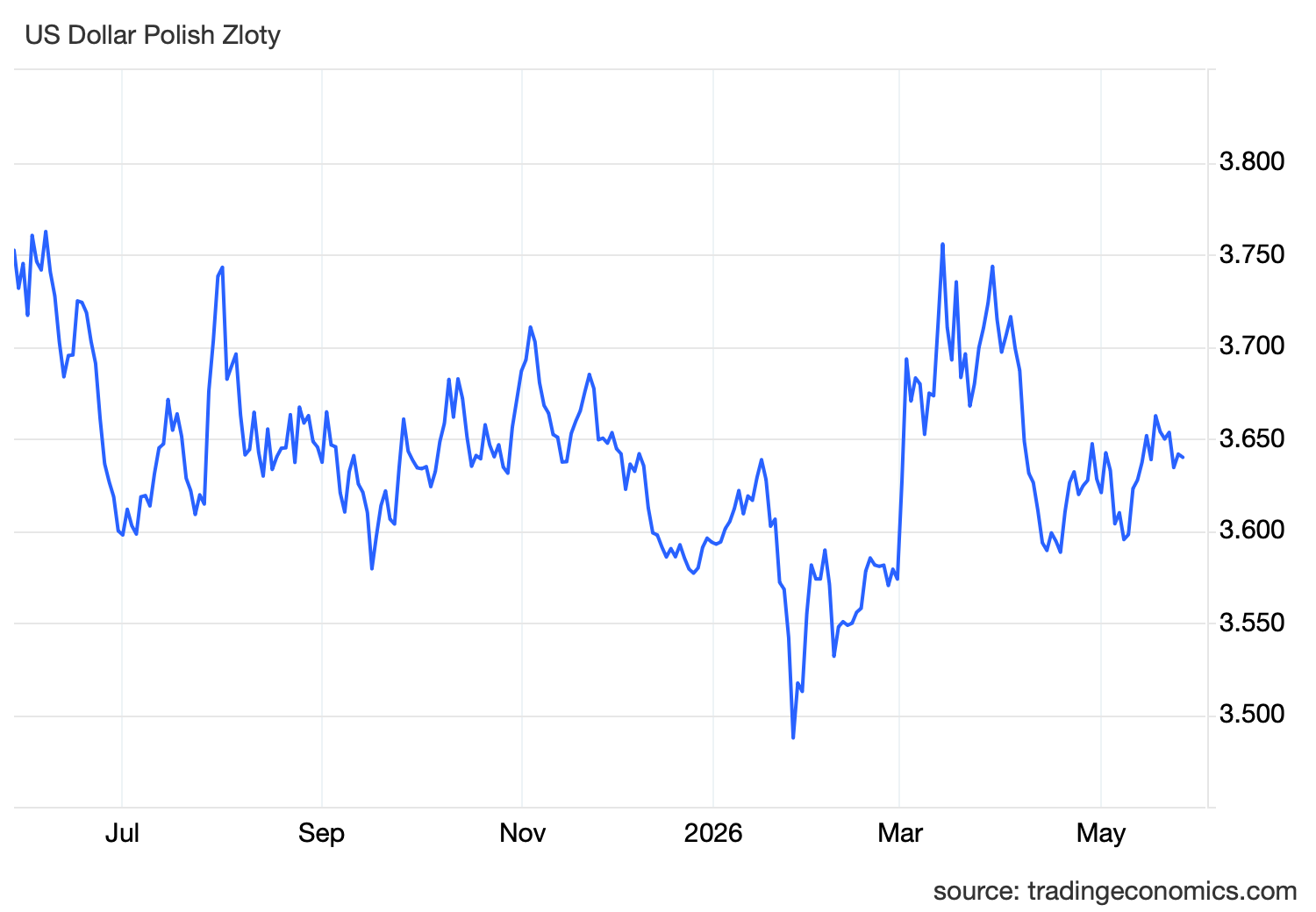
The dollar to zloty on Wednesday, May 27 is at 3,63 PLN.
Chart. Dollar to zloty (USD/PLN)
Source: Trading Economics.
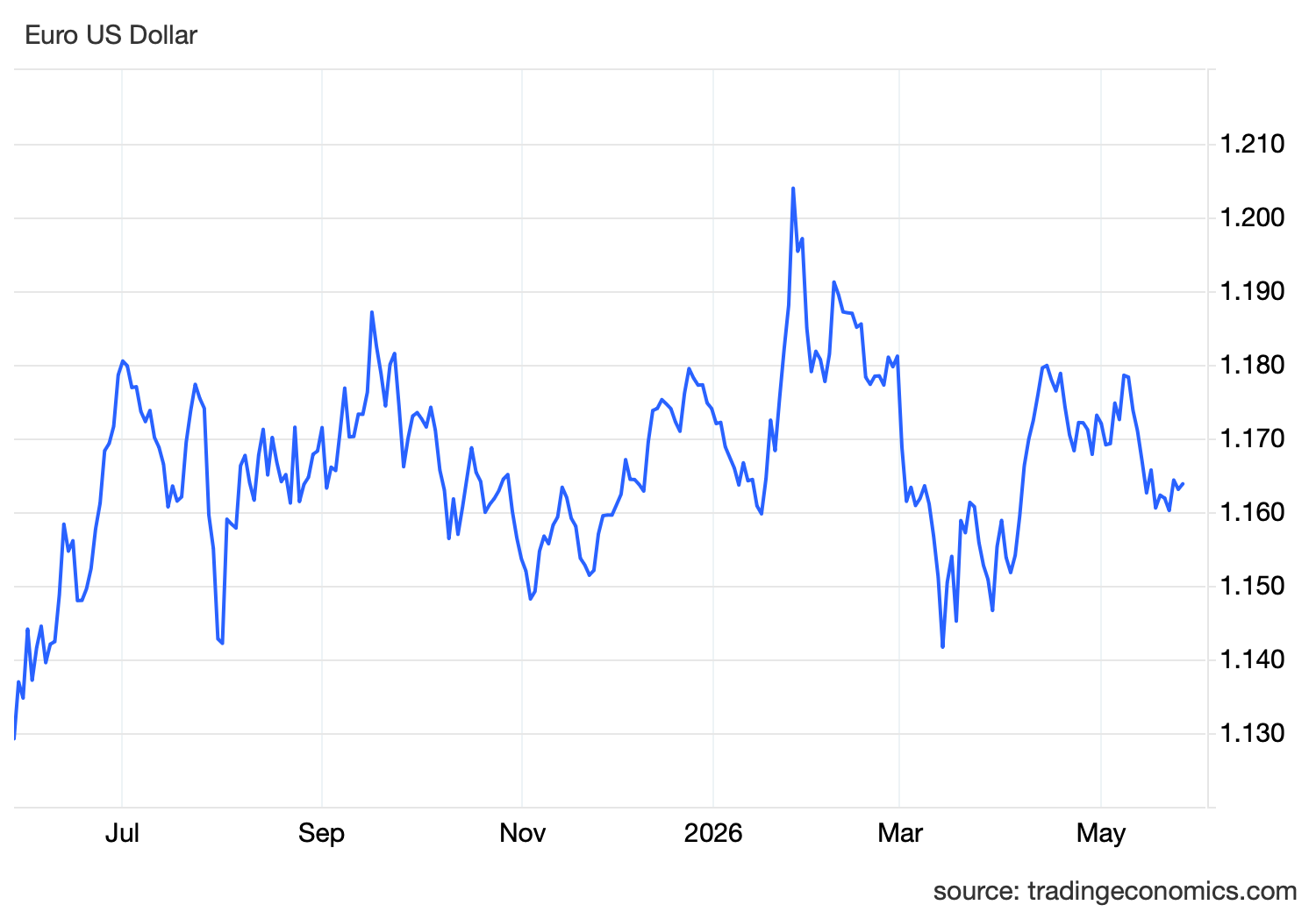
The euro to dollar reaches 1,16 USD.
Chart. Euro to dollar (EUR/USD)
Source: Trading Economics.
Read also: Dollar before breakout? Expert: "Capital will flow back to USD"
See also: Dollar before a "nervous and dynamic" move, euro waiting to fall? Expert released forecast for USD/PLN and EUR/USD
Sources: Bloomberg, ING Think.