Retirement system reform. Germany has a fairly archaic – from a Polish perspective – defined‑benefit pension system. The pension amount is not directly linked to the sum of paid contributions. This means the system is increasingly indebted as society ages. The F. Merz government responded by raising pension contributions from 18.6% to 18.8% of wages (in Poland it is 19.5%) and gradually increasing the retirement age from 65 to 67 in 2030 and beyond in subsequent years, depending on the lengthening of average life expectancy. A small capital‑based pension pillar will also appear, initially absorbing 0.5 percentage points of wages (within the current contribution) and ultimately rising to 2%. This pillar will be invested in the capital market by a state fund.
Income tax reform. It aims to reduce the burden of income tax for low and middle earners with a family‑friendly element. An average household with two children will save 600 EUR per year. It is also intended to be fiscally neutral, meaning it will be offset by introducing additional tax rates of 45% for incomes above 250 k EUR per year and 47% for incomes above 280 k EUR per year. The tax rate will also rise from 2% to 5% for the German equivalent of contract work (mini‑jobs) and tax preferences for craftsmen will fall. The entire reform will affect the redistribution of GDP but is unlikely to dynamize the economy.
Labor market liberalisation. The F. Merz government proposed a series of minor changes to labour law to make hiring and firing easier, allow work at non‑standard times (e.g. Sundays and holidays), and tighten the system of work‑related benefits. It will be easier, for example, to hire on fixed‑term contracts. Higher earners can sign a contract in which they give up the notice period in exchange for a severance package (agreed with the employer). If they quickly find new employment, the severance will be tax‑free. Sick leave will require a doctor’s confirmation from day one; currently such confirmation is only required from day four. Previously a statement of illness from the employee was sufficient.
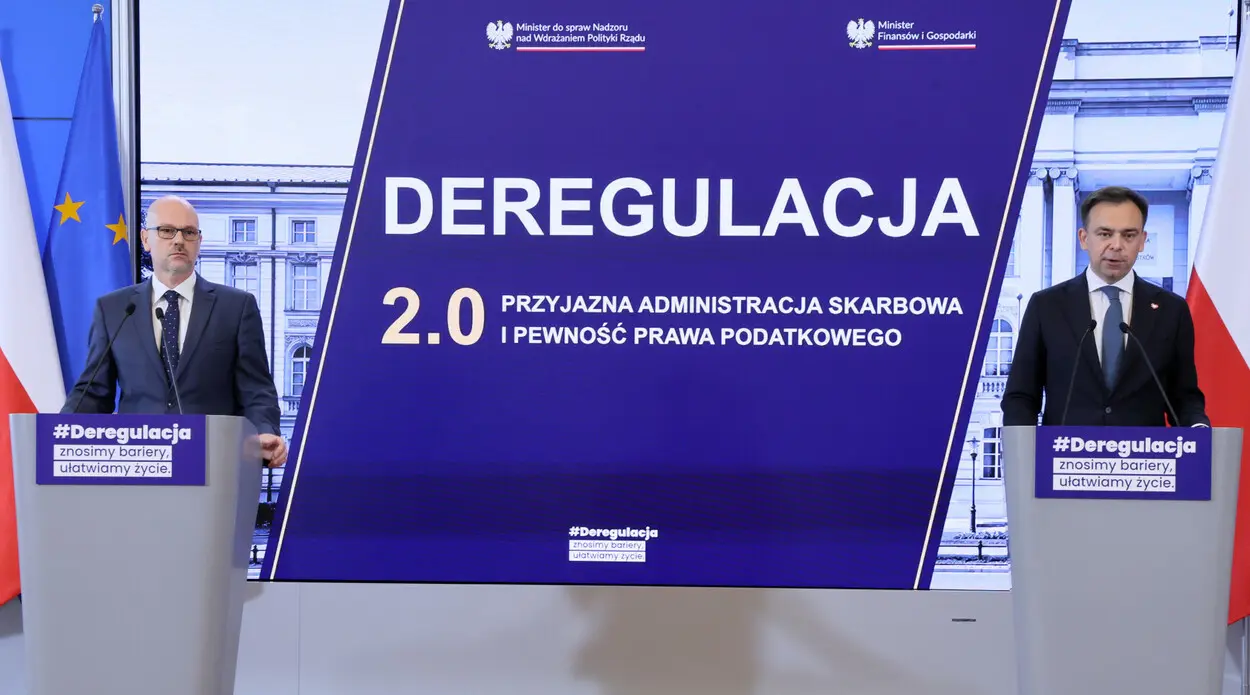
Deregulation. Here the government also proposed a series of minor changes, e.g. limiting the use of GDPR in small firms; reducing reporting obligations for companies; extending the working hours of bakeries, confectioneries and libraries on Sundays; introducing a silent‑approval rule for the office if a company or citizen’s request in a chosen catalogue of matters receives no response within 4 months; limiting federal regulatory requirements to the minimum required by the European Union, etc. The government also intends to make wider use of the benefits of digitisation in public offices.
Industrial policy. The government intends to support future‑oriented sectors of the German economy in a vaguely defined way, including automotive, especially autonomous vehicles, chemical, pharmaceutical, machinery, battery, electronics and AI sectors. Local authorities will receive tax incentives for locating data‑processing centres. The government also declared support for faster application of anti‑dumping duties on “unfair” competitors (read: China).
This entire reform programme evokes strongly mixed feelings. It mixes important and well‑thought‑out points with less significant and poorly considered ones. No proposed reform is in any way pioneering. Germany follows political ideas from other countries, including Poland (e.g. capital‑based pension pillar, silent office approval, sick leave from day one), rather than setting new paths. For those recalling the era when our country chased the West, this is an interesting role reversal.
The most important elements of the programme appear to be political rather than the reforms themselves. On the one hand, the F. Merz government has advocated faster and more decisive cutting of China from EU markets. This is a change, as Germany has so far been reluctant to such action, fearing a cut from the (formerly) profitable Chinese market. On the other hand, the federal government announced something akin to a “local content” policy, supporting “Made in Germany” firms and solutions. This means greater acceptance of protectionism by Germany.
Does this programme have a chance to pull Germany out of stagnation? Not on its own, especially since it lacks a significant fiscal impulse. A more important point from this perspective seems to be the infrastructure and military investment programme, which so far does not impress in scale, although it has been a priority for the government for some time.
Market commentary
The resumption of war actions in the Gulf (Iranian attacks on commercial ships and retaliatory bombings of Americans) reminded investors that the Gulf war is not so far back in the rearview mirror and that the situation is stable enough that oil prices do not carry a risk premium. Consequently, the day was marked by a rise in risk aversion and a discount of government bonds. The yield on the U.S. 2‑year rose by 7 bp, the 10‑year by 8 bp and the 30‑year by 6 bp. The latter benchmark has already settled above 5%.
Additionally, the equity market was nervous yesterday – the U.S. tech index retested a fairly important support (29,000) and investors cannot ignore the fact that this market segment has been flat for two months. The nervousness in the markets caused the upward correction in EUR‑USD to be interrupted and the dollar was again priced.
Today the macro data release calendar is empty – the only exception is the minutes from the last FOMC meeting. The market therefore has plenty of space to refocus on the Persian Gulf and the situation there. Our assumption is that the threshold for resuming war actions is suspended very high and both sides mainly want oil from that direction to flow. A return to the negotiation table would therefore be likely.
Gold did not like yesterday’s market climate, so we saw a renewed weakening and the EUR‑PLN pair returned to around 4.30. SPW yields also followed the indications of benchmark yields from base markets and the market.