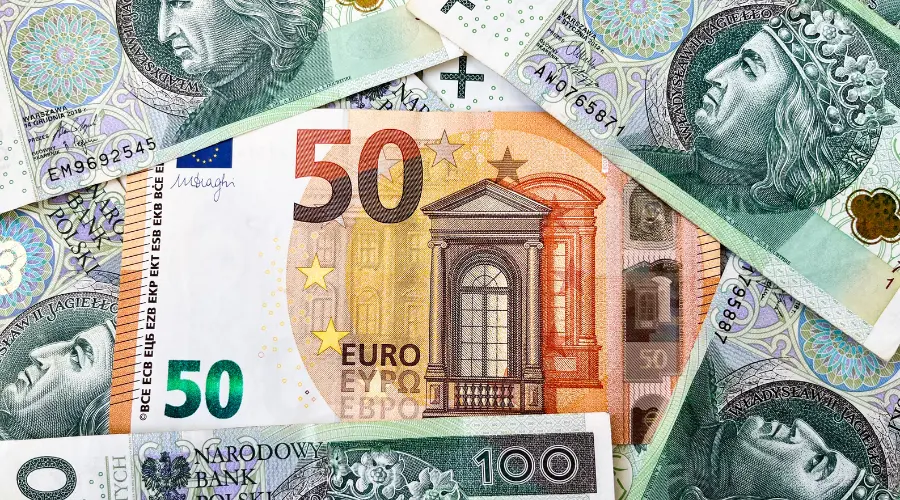
After the NBP president’s conference, the EUR/PLN rate rose to around 4.33, and FRA contracts once again began to indicate a prospect of future rate cuts.
The Polish currency may remain under pressure, especially if investors continue to assume that the European Central Bank and the Federal Reserve will maintain a relatively restrictive monetary policy.
Board members as “cautious doves”
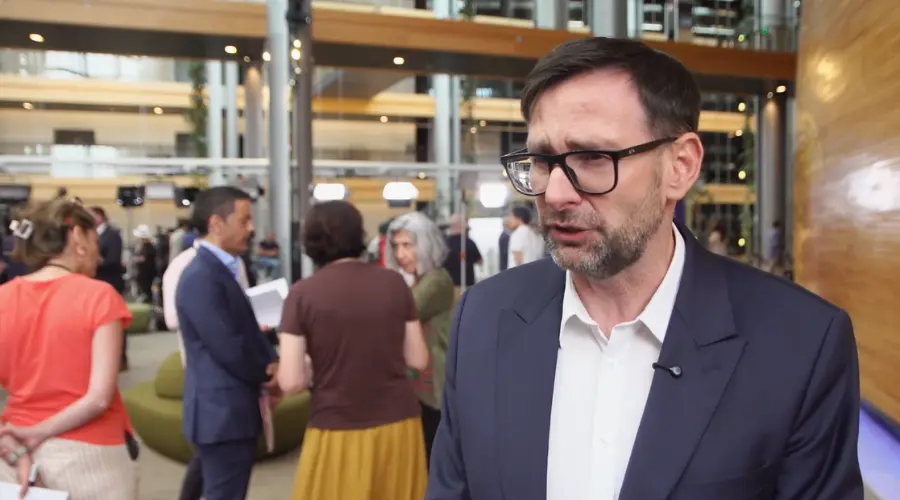
During the press conference, Adam Glapiński described the members of the Monetary Policy Board as “cautious doves,” suggesting that the Board’s stance is gradually becoming more accommodative. He, however, called himself a less cautious and less timid dove.
He allowed the possibility of lowering interest rates as early as 2026, and also of submitting a post‑holiday request for a 25 basis point cut. He cautioned, however, that this is his personal opinion and there is no certainty that the proposal would receive the majority’s support.
At the same time, he ruled out the possibility of two cuts in 2026. The NBP president also assessed that by mid‑2027, the remaining Board members could become less cautious in their approach to easing monetary policy. After Glapiński’s remarks, the probability of an earlier move, possibly even in the first half of next year, increased. Despite the NBP president’s softer tone, the market does not expect a rate cut in 2026.
This is because inflation later in the year may rise more sharply than the central bank’s projections, partly due to tax changes affecting fuel prices. Meanwhile, investors have not yet priced in the full scale of potential monetary easing in 2026‑2027.
Glapiński considered the current inflation situation good
Adam Glapiński considered the current inflation situation good. In his view, price dynamics may temporarily rise, but should remain within the NBP’s target range of 2.5% with a tolerance of one percentage point up or down.
The most important threats to price stability he listed were energy costs, fiscal policy, the war in Ukraine, and the conflict in the Middle East. According to the NBP president, wage growth should no longer be a significant source of inflationary pressure.
Wage dynamics in the corporate sector are clearly slowing and are lowest in five years. Glapiński cited the state of public finances as the biggest weakness of the Polish economy, which may limit the room for monetary easing.
Inflation will still be higher, change in forecasts
A key risk factor remains the situation in the Middle East, especially around the Strait of Hormuz. Partial resumption of shipping traffic initially led to a drop in oil prices, but renewed fighting caused them to rise again.
Glapiński assessed that the conflict could last long, but its current impact on the Polish economy has been smaller than initially feared. In his view, Poland is not currently facing a repeat of the sharp inflation surge seen in 2022.
The National Bank of Poland’s inflation report raised the forecast for price dynamics for 2026‑2027 and slightly lowered the expected economic growth rate.
This means that in the coming quarters the NBP assumes a slightly higher inflation scenario and a weaker economic outlook than it had projected in March. According to the latest forecasts, the average annual inflation in 2026 will be 2.9%, while in March the central bank expected 2.3%.
The forecast for 2027 was raised from 2.4% to 2.7%, while the estimate for 2028 was slightly lowered from 2.3% to 2.2%.
Euro rate highest since 2024!
Inflation should therefore remain within the NBP’s target range of 1.5% to 3.5%, but in the second half of 2026 it may be higher than previously assumed. The central path indicates that in Q3 price dynamics could be about 3%, and in Q4 rise to 3.2%. In subsequent years inflation is expected to gradually decline.
Despite Adam Glapiński’s dovish rhetoric, the July projection results do not provide a strong argument for starting a rapid series of rate cuts. The raised inflation forecasts for 2026‑2027, sustained higher core inflation, and the unfavorable public finance situation argue for caution.
However, the NBP president’s remarks have increased the probability of an earlier single rate cut, provided that inflation remains under control in the coming months and the geopolitical situation does not lead to a lasting rise in energy prices.
The EUR/PLN pair is currently priced at 4.3380 – the highest level since November 2024.