Markets Await CPI Inflation and Kevin Warsh Speeches
This reading will be important from the perspective of expectations regarding U.S. interest rates – the market currently prices an increase in the Fed’s main rate of about 38 basis points by year‑end and nearly two hikes of 25 basis points by April 2027. In our view these are relatively aggressive expectations, so a greater impact on markets is expected if inflation is below consensus. An additional source of guidance for investors will be Fed Chair Kevin Warsh’s speeches before Congress – on Tuesday in the House of Representatives and on Wednesday in the Senate.
Attention will also be drawn to releases on household inflation expectations from the University of Michigan survey and retail sales, which will likely confirm that consumption remains a moderate support for economic growth, while investments related to artificial intelligence development play an increasingly larger role.
On Wednesday we’ll learn the details of June CPI inflation
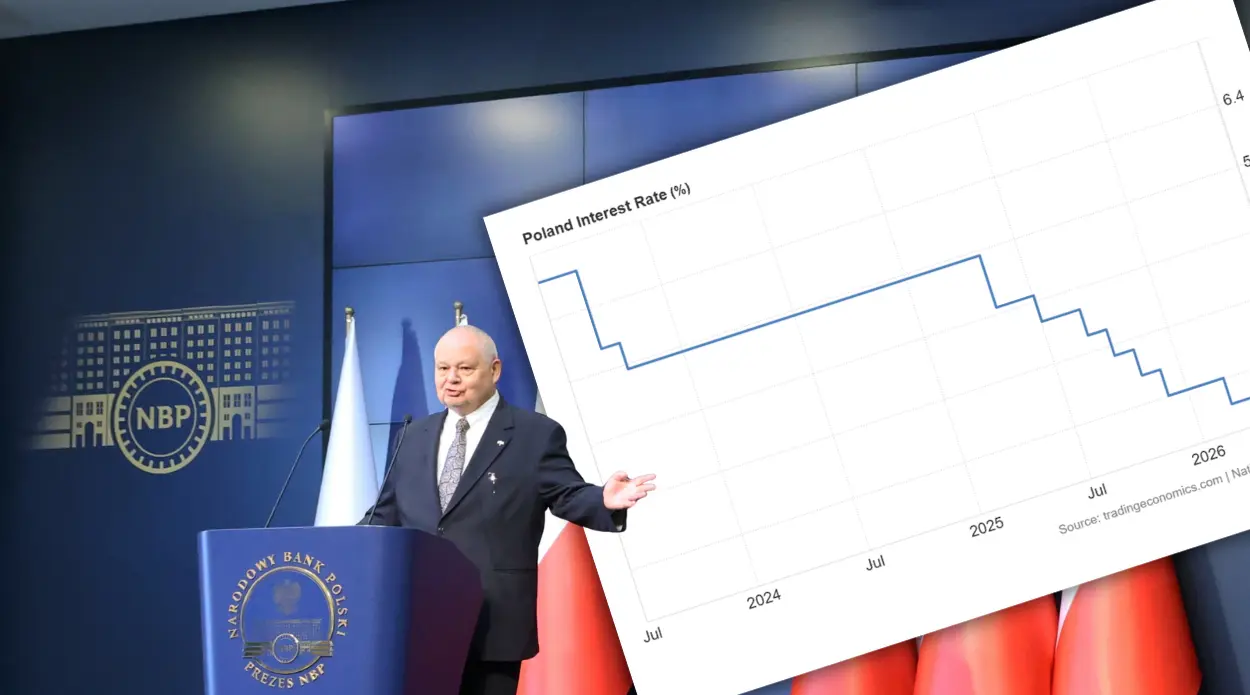
On Wednesday the GUS will publish details of June CPI inflation, which according to a quick estimate fell to 2.5% YoY from 3.1% YoY in May. This was the second consecutive positive inflation surprise. Market consensus had pointed to a decline in inflation to 2.7% YoY. The decline in CPI inflation was driven by supply factors – primarily a drop in fuel prices, but also a decline in energy and food prices. Core inflation, however, remains more persistent and in our view was 3.0‑3.1% YoY in June versus 3.0% YoY in May. Details of the inflation basket will allow assessment of which basket components have the slowest deflation. By July inflation will rise to about 2.9% YoY, mainly due to the withdrawal of the government’s CPN program.
Throughout the second half of the year the CPI index should remain around 3% YoY. Uncertainty about the inflation path remains high, mainly due to the volatile situation in the energy commodity market. In our view such conditions do not create favorable conditions for rapid rate cuts. For this reason the most likely scenario remains, in our view, a stabilization of rates until the end of this year.
The world’s second economy is slowing, but not sharply
On Tuesday at 4:00 a.m. GDP data for China’s 2Q25 will be released. According to consensus, economic growth slowed to 4.5% YoY from 5.0% YoY in 1Q25. The reading should confirm the uneven picture of the world’s second largest economy – weak domestic demand alongside high industrial activity.
Disappointing retail sales were the result of persistent household uncertainty related to a prolonged correction in the real estate market and weak income dynamics.
At the same time growth was supported by the industrial sector, benefiting from an export acceleration before the implementation of new trade barriers. Advanced technology goods production, including electric cars, batteries, photovoltaic panels and electronics, grew particularly dynamically.
This data arrangement would mean that China remains an important support for global industry and trade, but at the same time does not generate a strong demand impulse for the world economy.
The slowdown of growth and the persistent weakness of domestic demand reduce the strength of higher energy carrier prices being passed on to other goods and services, thereby favoring a gradual easing of inflationary pressure in the global economy.