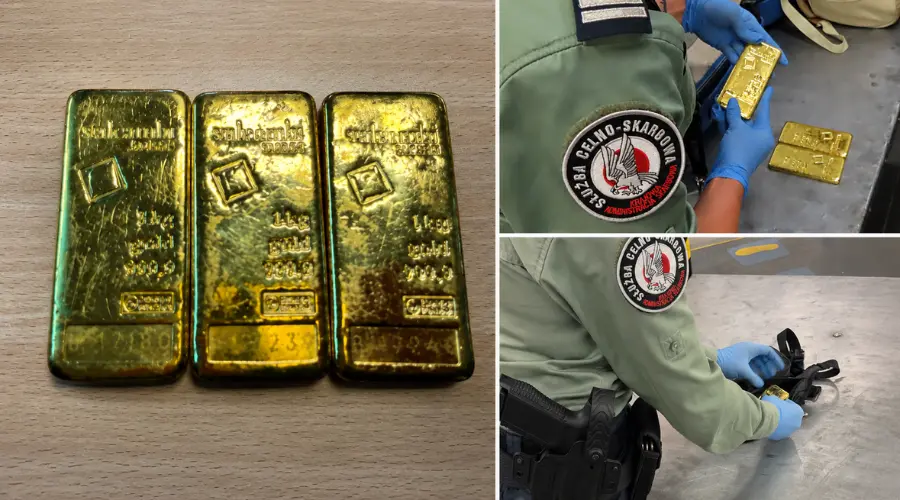
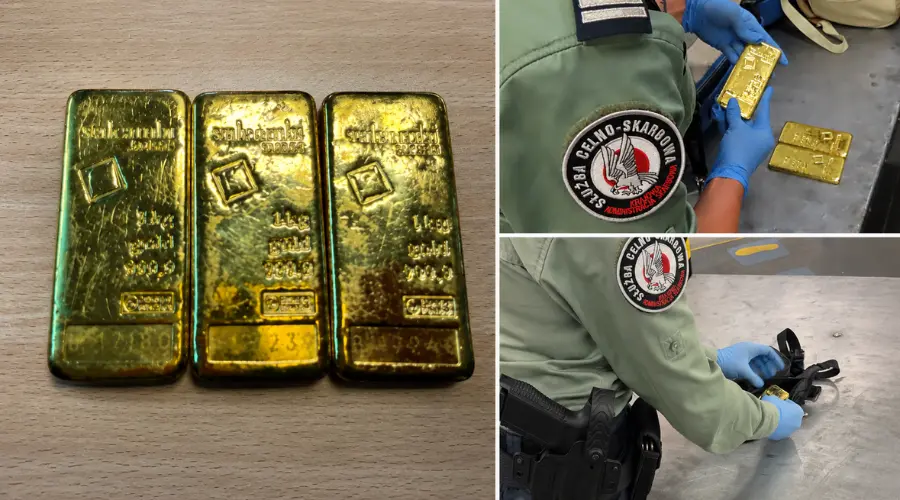
Three gold bars, worth about 1.5 million PLN, and a control that stopped illegal transport. At the border crossing in Krościenko, officers from the Podkarpacki National Tax Administration inspected a 46‑year‑old Ukrainian citizen entering Poland by car. The woman hid the gold under her clothing.
Gold hidden under clothing, risk measured in millions
The traveler arrived for inspection at the Polish entry point. During the check, officers from the Customs and Tax Service of the Podkarpacki Customs Office in Przemyśl used a scanner designed for people screening. The device indicated the locations of the concealed goods.
The officers found three kilogram gold bars. The woman had placed them in pouches hidden under her clothing. Their total value was estimated at about 1.5 million PLN.
The scale of this amount shows how much a single border control can change. The bars take up little space, but represent huge value.
The scanner gave the concealed goods a disadvantage
The gold was located directly on the body, beneath a layer of clothing, which was meant to make it difficult to detect during inspection. However, the technology quickly changed the course of the check.
The scanner precisely pointed officers to the hiding places of the bars. They did not have to rely solely on observation or chance. The device directed their attention exactly where the woman had placed the gold pouches.
Advertising
The goods were secured for further proceedings, which are being handled by the Podkarpacki Customs Office in Przemyśl. In addition to the penalty threatening the Ukrainian citizen, officers also seized 23,400 EUR. One attempt to cross the border thus triggered a series of serious consequences: the gold was revealed, the goods were seized, proceedings began, and a substantial sum of money was secured.
The 10,000‑Euro border limit does not apply only to cash
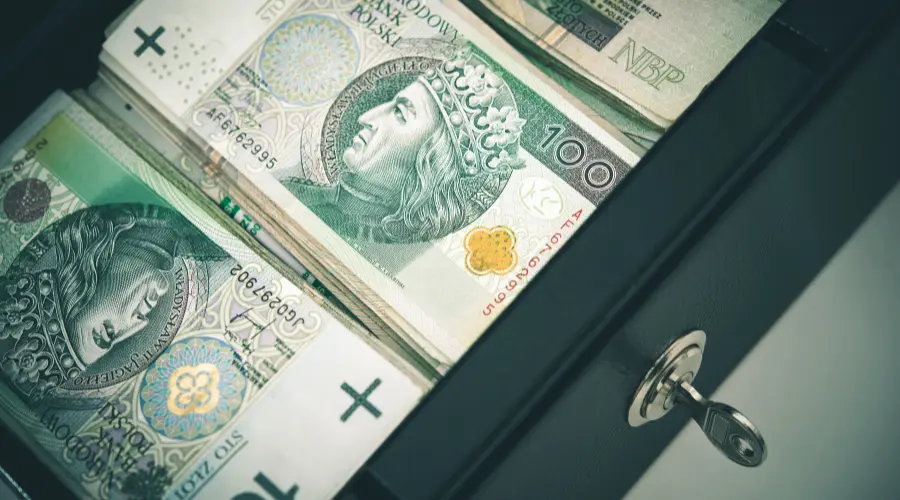
The case from Krościenko reminds of the obligation that covers much more than banknotes. Travelers entering or leaving the European Union must report to customs authorities the transport of monetary instruments when their total value equals or exceeds the equivalent of 10,000 EUR.
The regulations apply not only to cash. They also cover, among other things, checks, promissory notes, money orders, and gold in the form of bars. The absence of banknotes in luggage does not mean that the traveler is not carrying value that must be declared.
Are you transporting cash, financial documents, or gold across the EU border? Check their total value and make a declaration before the hidden goods are detected by the scanner.
FXMAG’s editorial team creates high-quality content on financial markets, investing, and the global economy. We provide timely analysis and clear insights to help our audience navigate complex market dynamics.