What about the zloty?
The last days of the past week were very chaotic for the Polish currency. On Monday the euro opened at 4.29 PLN – a lot from the perspective of recent quarters, although previous weeks had already accustomed us to the fact that we had left the 4.25 PLN area, where we spent most of the time in the last two years. The problem is that the situation started to intensify.
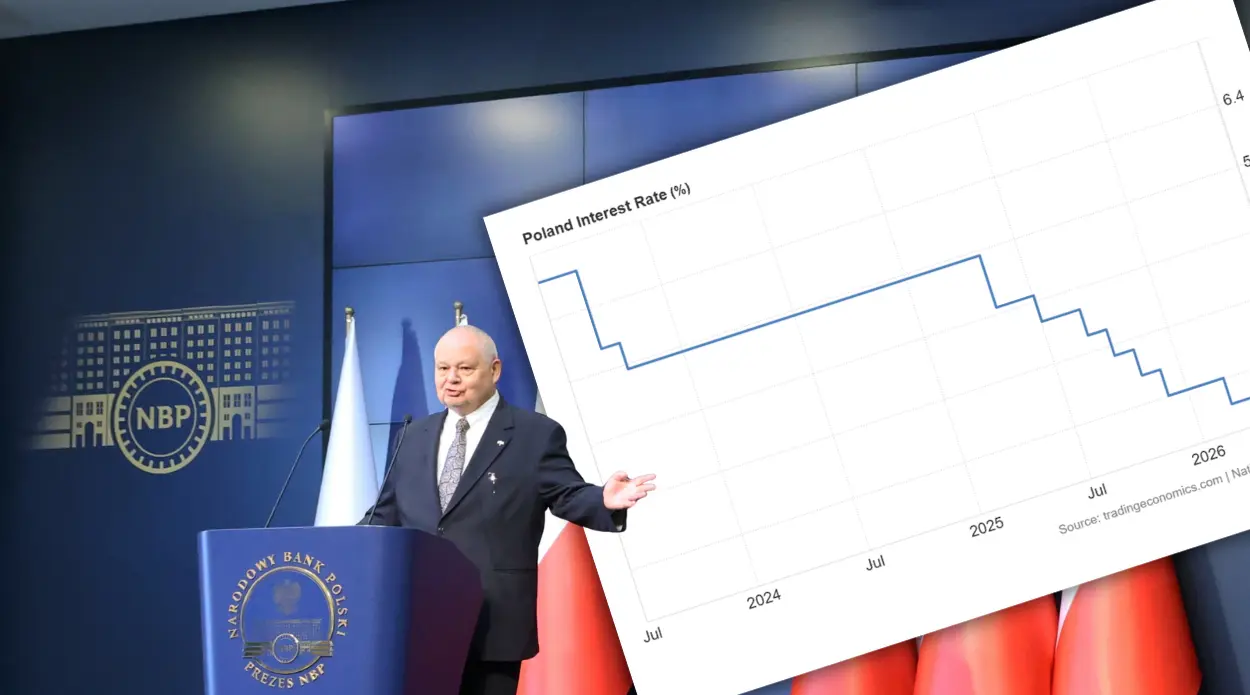
By Wednesday morning we were already at 4.31 PLN, and after the NBP president’s conference it was already 4.33 PLN.
On Friday we reached 4.35 PLN. Then, however, it seems someone asked themselves: what is actually happening? The answer “exaggeration” is not particularly inappropriate.
As a result, we witnessed a quick return to around 4.33 PLN.
It seemed that investors decided it was time to realize profits on the weakening Polish currency. Today, however, the zloty has been losing again since morning – and not only against the euro.
It is weakening against most currencies, including the forint and the Czech koruna, which suggests that the sources of the problem should be looked for more inside the country than in the external environment.
Markets fear escalation
The topic of tensions in the Persian Gulf is coming back like a boomerang. It seems nothing breakthrough happened over the weekend, yet the increase in concerns is visible.
It is especially visible in oil prices. On Friday the market closed at a Brent barrel price of about 76 USD, and today it already exceeds 79 USD.
This shows that despite relative calm over the weekend, investors believe that things are going in the wrong direction and that it is worth buying oil because it could get even worse.
The gloom is also visible on the world’s main currency pair – EUR/USD again tested 1.14 early this morning. And
investors in a situation of increased risk treat the U.S. dollar as a safe haven – even though it is the United States’ actions that are one of the sources of the current uncertainty.
Canadian data
On Friday we learned data from the Canadian labour market. The unemployment rate fell to 6.5%, although analysts expected it to remain at 6.6%. Such changes often result from relatively small differences and rounding. However, the number of new jobs – 18.2 thousand – is objectively good news.
The problem is that 17.5 thousand of them are part‑time jobs. The market still took it as good news, as evidenced by the strengthening of the Canadian dollar after the release. However, we must remember that we are in the summer season, which may justify this type of employment.
Today in the macroeconomic calendar there are no important readings.