“Deregulation was one of the key elements of changing the conduct of economic policy. It is one of the reasons why Poland today is at the forefront of the fastest-growing economies in the European Union” - assures the Office of the Prime Minister.
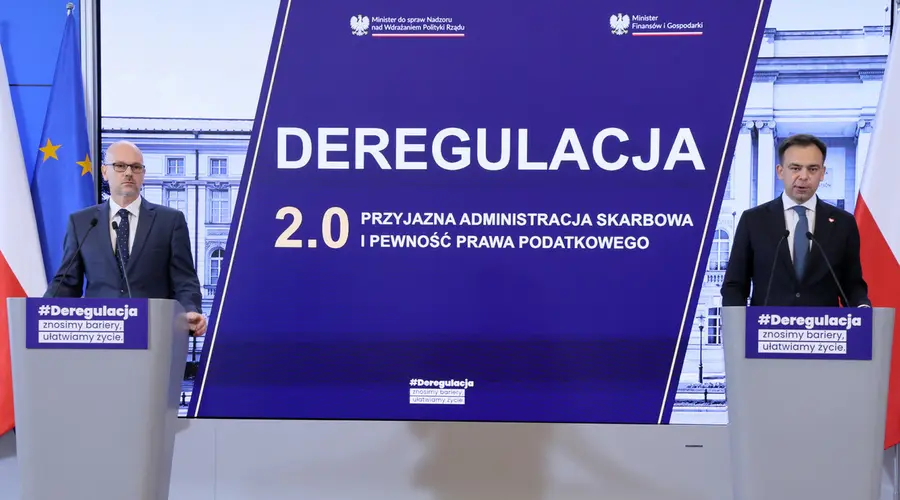
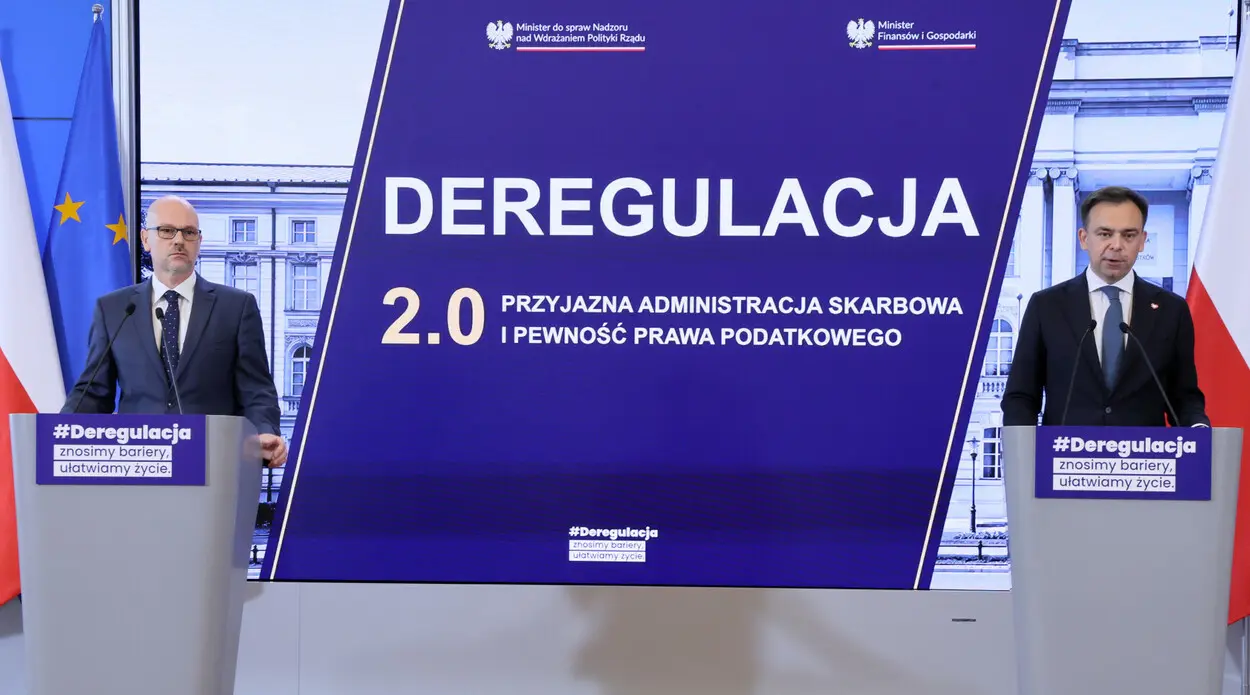
Information about what “Deregulation 2.0” will entail was jointly provided by the Minister of Finance and Economy Andrzej Domański and the Minister for Oversight of the Implementation of Government Policy Maciej Berek.
“It will be simpler and safer. Certain tax interpretations. Secondly, an extension of silent consent. Thirdly, clear, readable procedures for contacting the administration. And fourth, perhaps the most important: leveraging this huge digital revolution that we all observe to make it easier for taxpayers to run their businesses” - announced Andrzej Domański.
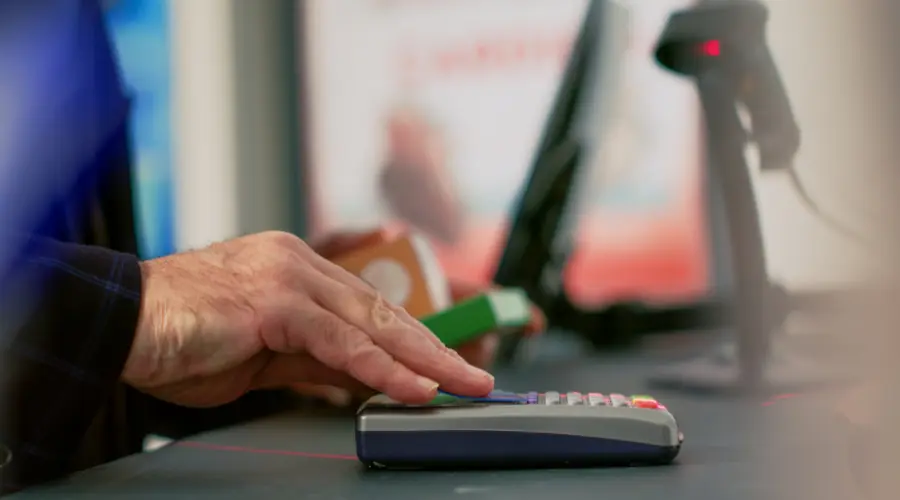
Among the proposals included in the package is the introduction of an application that will serve as a cash register. We have already reported on this idea on FXMAG. In brief, it will be an option for entrepreneurs – especially small ones – who are engaged in trade and do not want to pay for purchasing a cash register and its maintenance, such as annual inspections. It should be noted that the application will be optional, meaning that entrepreneurs who still want to use traditional cash registers or online registers will still be able to do so. As the Ministry of Finance assures, if the application is used, the client will be able to receive a receipt in electronic form. However, this is not the only proposal included in the “Deregulation 2.0” package.
VAT declaration filled out by the “tax office”
In the “Deregulation 2.0” package there were also other proposals for changes. Among them the filling out of the VAT declaration. What will this entail? It turns out that The Tax Office, as is often the case with PIT tax, will prepare a preliminary VAT declaration for the taxpayer, which after being checked by them can be accepted and submitted to the office. This is a major simplification that aims to speed up the VAT recovery process and may also contribute to reducing accounting costs that companies have to cover. The catch, however, is that in this case I am sure there is a catch that may deter entrepreneurs from using this form of settlement. It turns out that if errors appear in the settlement and the taxpayer does not catch them, they will still be responsible for them, even if they stem from an error by the official preparing the declaration.
In the case of VAT settlements, a mistake is not difficult, because it is a complex process in which many deductions can be applied. It is hard to expect that the official will verify, for example, whether the entrepreneur declared that the car registered in the company will be used 100% for the business activity, or in a mixed manner, i.e. business-private.
“VAT is a completely different scale of complexity: invoices of different nature flow into KSeF, some of which entitle full deduction, some none, and some – such as fuel or mixed sales – only partial deduction in a set proportion” - noted Piotr Juszczyk, chief tax advisor at inFaktu, in the portal bizblog.spidersweb.pl.
If the taxpayer does not verify the properly prepared declaration, but reflexively clicks send, they may run into tax problems, from which they will have to explain themselves. According to experts, the idea itself is not bad, but the ministry must emphasize informing entrepreneurs that it is only an auxiliary tool, not one that can be used without prior analysis.
Important change regarding deadlines
In the “Deregulation 2.0” package there were also many other proposals for changes. Among them those that could facilitate the functioning of entrepreneurs. One of them is defining when a procedure against a taxpayer starts and ends. All this is to prevent the entrepreneur from waiting indefinitely for information about what is happening in their case, without receiving any signals from officials.
Another proposal is the validity period for individual interpretations made by the National Tax Information. Currently all interpretations made by the KIS director are indefinite, which means that often one issued earlier excludes the next one issued later. Individual interpretations are to be valid only for 5 years.
Taxpayers should also have 30 days, not the current 14 days, to appeal a tax decision.
“Deregulation is supposed to be a way of thinking about creating law. Deregulation is not just cleaning up legal systems, it is primarily about setting filters that prevent the creation of overregulation that would later need to be regulated again” - said Minister for Oversight of the Implementation of Government Policy Maciej Berek.
See also: Smartphones instead of cash registers. A new idea from the Ministry of Finance