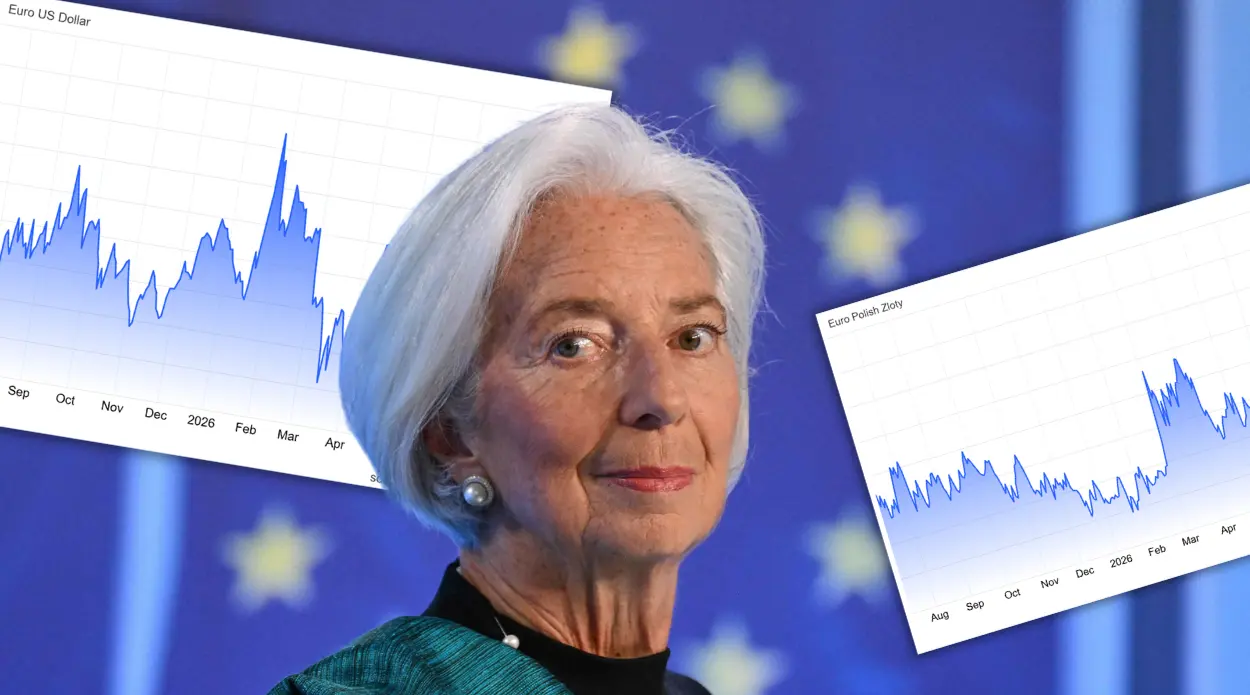
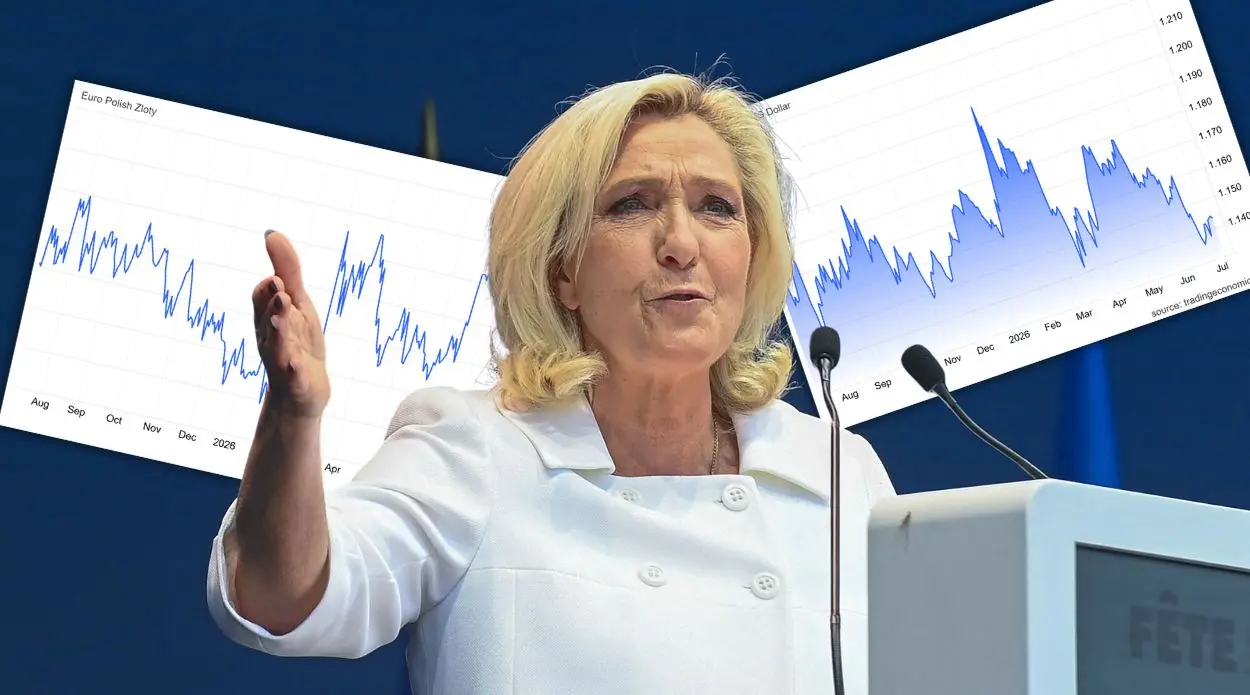
We believe that after the US’s negative reaction to Iran’s response, the risk of a renewed escalation of the conflict in the Middle East has increased, which will push global risk aversion higher, weaken the zloty, and lower Polish bond prices.
On Thursday a preliminary estimate of Poland’s GDP for Q1 will be published. We expect the growth rate to have fallen to 3.9% YoY versus 4.1% in Q4 2025, still above market consensus (3.6%).
In our view the slowdown in economic growth was mainly due to a dampening of investment activity, driven by adverse weather conditions in January and February. At the same time we believe that private consumption growth remained solid, limiting the scale of the GDP slowdown. Materialising our higher-than-expected forecast would be slightly positive for the zloty and Polish bond yields.
Expectations for macro data and inflation
We expect overall inflation in the US to have risen to 3.8% YoY in April from 3.3% in March and 2.4% in February. The main driver of the acceleration remains higher fuel prices. We also forecast core inflation to have risen to 2.8% YoY in April from 2.6% in March. We expect overall CPI inflation to reach a local peak in May around 4.2% YoY, then gradually decline, though it will remain clearly above the Fed target (2.0%) by year‑end.
Other releases will also include retail sales and industrial production data – in line with market consensus retail sales rose 0.5% MoM in April versus 1.7% in March, and industrial production increased 0.3% MoM versus a 0.5% decline. Such a data set (combined with last week’s US labour market data, see below) will, in our view, support a scenario of unchanged Fed rates in the coming months.
On Friday we will see final data on April inflation in Poland. We expect it to confirm the preliminary estimate from GUS, which shows CPI inflation rising to 3.2% YoY versus 3.0% in March. We also forecast core inflation to have risen to 3.0% YoY from 2.7% in March, indicating mounting price pressure. We expect inflation to trend upward in the coming months and reach about 4% YoY by year‑end.
RPP: decisions, plans and shaping monetary policy in Poland
Last week the Monetary Policy Council – in line with our forecast and market expectations – left the NBP rates unchanged, keeping the reference rate at 3.75%. In its statement the Council again noted that the rise in global fuel prices is a consequence of supply constraints linked to the Middle East conflict, and that prospects for activity and inflation remain burdened by geopolitical uncertainty.
The RPP also noted that the rise in April CPI inflation was mainly due to higher fuel price dynamics, and that the main risk factors for inflation remain fiscal policy shape, fuel price regulations, economic activity dynamics, and further wage development.
During the conference the NBP governor A. Glapiński admitted that the probability of rate hikes has increased, while also noting that such a move would require inflation to exceed the upper bound of acceptable deviations from the NBP target (3.5%) with a forecast of that excess persisting. Conversely, last week’s statement by RPP member L. Kotecki, which said that the latest forecasts indicate inflation staying within target, supports our scenario that NBP rates will remain unchanged until the end of 2027. At the same time the risk of a one‑off “signal” hike in the second half of 2026 remains significant due to higher core inflation, the risk of a second round of effects, and uncertainty about the further course of the Gulf of Persia conflict.
German industrial data
March German industrial data painted a mixed picture of the business cycle. On one hand industrial orders rose 5.0% MoM versus 1.4% in February and an expected 1.0% MoM increase. This was helped by improvements in the remaining transport equipment and automotive sectors, as well as pre‑ordering under heightened uncertainty about the Middle East situation.
On the other hand the data showed that the demand improvement did not translate into sustained activity. Industrial production fell 0.7% MoM in March after a 0.5% decline in February versus a consensus of +0.4% MoM. Imports rose 5.1% MoM in March versus a 4.9% rise in February, and exports rose 0.5% versus a 3.6% rise in February. Both indicators were above market expectations (+0.8% and –1.7%).
US labour market stable, China increases trade surplus
Last week US labour market data for April were released, confirming its relative resilience despite rising energy prices linked to the Middle East conflict. Non‑farm payrolls, measured in the business survey, increased by 115k versus 185k in March, clearly above consensus (65k).
Employment growth was concentrated in health care, transport and warehousing, and retail trade, while employment in federal administration and the information sector continued to decline.
At the same time the household survey, which underpins the unemployment rate, indicated a decline of 226k workers in April, showing that the report’s details were weaker than the non‑farm payroll reading.
The unemployment rate stayed at 4.3%, the same as in March, and the labour‑force participation rate fell to 61.8% from 61.9%. The average hourly wage rose 0.2% MoM, the same as in March, and its annual pace increased to 3.6% in April from 3.5% in March.
In our view this data supports a scenario of unchanged Fed rates in the coming months.
On the weekend Chinese foreign trade data were released. Export growth rose to 14.1% YoY versus 2.5% in March, significantly above market expectations (7.9%), confirming sustained high competitiveness of Chinese manufacturing, especially in advanced technology segments such as electronics, machinery, cars, and ships. Imports also rose 25.3% YoY versus 27.8% in March, reflecting higher commodity prices and some improvement in domestic demand. Consequently the trade surplus rose to 84.8 bn USD from 51.1 bn USD in March.
These data show that China’s export sector remains resilient despite trade tensions and the war in Iran, but also indicate rising cost‑side risk: higher energy commodity prices and supply disruptions via the Strait of Hormuz could in the coming months negatively affect corporate margins and activity in petrochemical‑dependent sectors.
S&P forecasts Polish GDP growth at 3.3%
The S&P agency kept Poland’s long‑term rating at A‑ and left the rating outlook stable. The agency’s decision reflects, on the one hand, favourable growth prospects supported by rising real household incomes and EU‑funded investments, including the expected peak utilisation of KPO funds in 2026.
S&P forecasts Polish GDP growth at 3.3% in 2026 versus 3.6% in 2025, and in subsequent years it will remain around 3%.
On the other hand the agency highlighted weak fiscal conditions, noting that the deficit of the government and local authorities will remain high at 6.9% of GDP in 2026 versus 7.3% in 2025, then gradually fall to 6.4% in 2027, 5.7% in 2028 and 5.3% in 2029.
Consequently, public debt according to S&P will grow rapidly and reach 75% of GDP by decade‑end. The rating could be upgraded if actions lead to a lasting deficit reduction and debt growth slowdown, and further improvement in institutional quality that supports EU fund inflows and foreign investment.
Conversely, a rating downgrade would be possible if medium‑term growth prospects deteriorate significantly, macro‑imbalances mount, or stronger negative effects of geopolitical conflicts arise, especially escalation of the Russia‑Ukraine war or more lasting effects of the Middle East war.
In our view the S&P decision is neutral for domestic assets, but signals that fiscal conditions remain a key risk factor for Poland’s creditworthiness assessment.

EURPLN moved to around 4.25‑4.26
Last week financial markets were volatile. At the start of the week sentiment was still weak – after a renewed spike in tensions around Iran, Brent oil rose above 110 USD per barrel, the dollar strengthened, EURPLN moved to around 4.25‑4.26, and Treasury yields and IRS rates rose.
The turning point came on Wednesday when President Trump’s remarks on advanced peace talks with Iran triggered a sharp drop in oil prices, improved global sentiment and increased demand for risk assets – resulting in a clear strengthening of the zloty, and on the domestic market we saw a sharp decline in bond yields and IRS rates.
On Thursday the market picture slightly complicated, as despite ongoing talks about a possible agreement another exchange of fire between the US and Iran occurred, cooling earlier optimism. Better‑than‑expected US labour market data did not have a lasting impact on Polish asset prices, and thus over the whole week the zloty remained stronger, and bond yields and IRS rates were lower than at the start.
This week the main factor shaping market sentiment will be the development of US‑Iran relations and its impact on oil prices, with the negative reaction of President Trump to Iran’s response to the US proposal increasing the risk of a renewed escalation. Such a scenario would push global risk aversion higher, strengthen the dollar, weaken the zloty, and lower Polish bond prices.
Additionally, the preliminary estimate of Poland’s GDP for Q1 will be important for markets, where a higher‑than‑consensus growth would be slightly positive for the zloty and the domestic debt market.