Ormuz Strait Unblocked, Market Awaits Key US Data
Weekly agency data indicate a range of 100-120k for new private sector jobs, matching market consensus (118k). Today’s calendar will close with the ISM manufacturing result. The market will traditionally focus on the three key components for the business cycle (production, new orders, and employment) and the price component, which should gradually decline in light of falling oil product prices.
Regarding geopolitical impulses, the previous day did not bring a breakthrough. Earlier reports of no direct talks between Iranian and US representatives in Qatar were confirmed. All parties, however, emphasize the positive progress of negotiations with mediators. According to a Trump administration official quoted by CBS News, significant progress was made in technical talks. Majed Al Ansari, Qatari Foreign Ministry spokesperson, confirmed that technical talks between US and Iranian representatives will continue in the coming days and could be elevated to a political level if further progress is made.
Negotiations are being conducted simultaneously in several areas covering nuclear program issues, economic matters, and regional security. Majed Al Ansari noted that the release of $6bn from the $12bn of Iranian assets frozen in Qatar remains contingent on progress in negotiations between the US and Iran, which so far have not reached a stage that would allow this element of the agreement to be implemented.
Meanwhile, the Iranian Foreign Ministry spokesperson Esmail Baqai announced that Iranian officials may meet on Wednesday in Doha with mediators to discuss implementing the memorandum of understanding, including the unlocking of Iranian assets frozen due to US sanctions. Today, however, Iran’s chief negotiator Mohammad Bagher Ghalibaf stated that during the US port blockade his country could not export oil. Since then the situation has changed – within less than two weeks the Islamic Republic has exported over 40 million barrels of oil, Ghalibaf assessed.
In the context of Ormuz Strait traffic, the US vice‑president said it has returned to pre‑war levels. We assess that from the market’s perspective the most important remains the suspension of military actions and the uninterrupted flow of resources through the channel. The last two days have met these conditions, which supports oil price stability.
Inflation Down Thanks to Falling Food Prices
According to preliminary GUS data, June consumer price dynamics fell from 3.1% y/y to 2.5% y/y. This is clearly below our and the market’s estimates (2.7% y/y). Based on incomplete publication, we assess that the surprise mainly stemmed from a deeper-than-expected drop in food prices (-0.7% m/m vs our forecast -0.1% m/m). This brought the category reading to a negative annual level (-0.3%).
Based on earlier trends we believe this is mainly due to low pork and dairy prices, which have hit their lowest levels in years. We also do not rule out that a higher-than-expected supply of vegetables may have caused deeper wholesale price cuts. For the remaining CPI components there were practically no surprises, which should imply a base inflation result (3.0% y/y) in line with our forecasts.
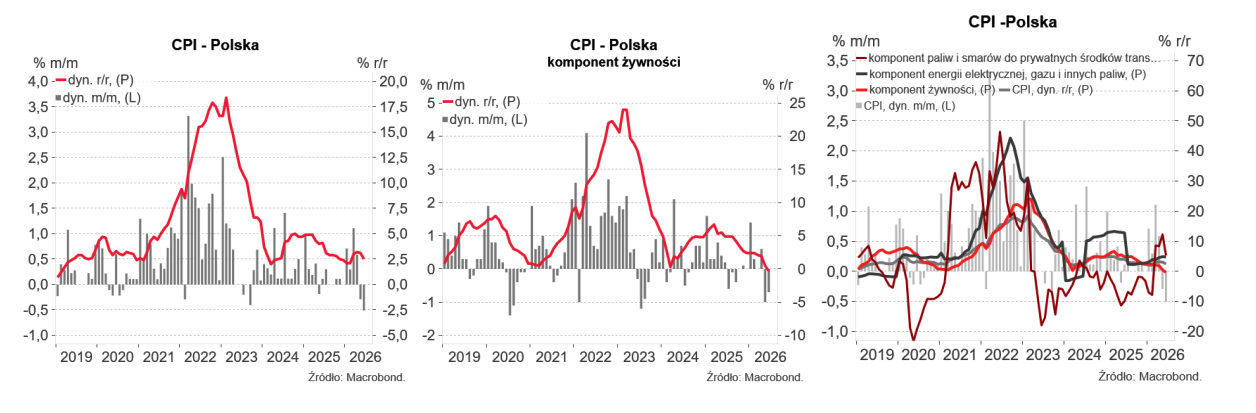
The yesterday’s inflation reading is identical to our scenario of CPI staying below the upper deviation band from the target until the end of the quarter. It also supports the argument that the RPP does not need to raise rates.
US Debt Weakens Again
We left a weak session for offshore debt. Macro data, especially a slightly better-than-expected JOLTS reading, negatively affected UST valuations. According to BLS, the number of vacancies reached 7.6 million in May (consensus 7.3 million). Housing prices rose slightly stronger than forecasts – 1.1% y/y for 20 metropolitan areas surveyed by S&P Case‑Shiller. US bonds may also have been under pressure from increasingly bold statements from the hawkish FOMC wing.
Beth Hammack said on CNBC on Tuesday that inflation remains too high (not just an energy component effect), which should favor tightening monetary policy by the FOMC. Ultimately, on the main nodes the US curve moved up by 4, 6 and 5 basis points to 4.14% (2Y), 4.44% (10Y) and 4.91% (30Y).
Interestingly, yields also rose after the “fixing”. In this case we see more of a market game before the end of the quarter and settlement of forward transactions. The 10‑year tenor closed at 4.47%. In the case of Bund volatility was limited. A reading close to forecasts came from our western border – 2.3% y/y for the aggregate and 2.5% y/y for the core component. Food and service price dynamics remained at May levels – 0.4% y/y and 3.1% y/y.
Ultimately, on the main nodes the Bund yield change was -1, +3 and 0 basis points to 2.53% (2Y), 2.89% (10Y) and 3.42% (30Y). During the Asian session the 10‑UST yield remained near 4.47%. This negatively affects the Bund opening, which moves up the entire curve by 2‑3 basis points. The relatively high Treasury yields reduce the potential for further debt weakening even with strong readings (ADP, ISM).
SPW Stronger, but Potential for Continued Decline Diminishes
Contrary to our expectations, domestic bonds strengthened yesterday. This was mainly due to lower-than-forecast domestic inflation dynamics (commentary in the second paragraph). In the region, changes were symbolic, fitting the base market impulses dominating until the end of European trading.
Ultimately, on the main nodes the SPW yield change was -6, -5 and -3 basis points to 4.04% (2Y), 4.69% (5Y) and 5.26% (10Y). We assess that without strong external impulses, the potential for continued SPW decline may be hindered.
The market quickly recovered most losses from negative impulses from the Middle East. Returning to 5.00% on the 10‑year tenor (pre‑war Gulf value) is more a matter of future quarters than the next weeks.
Today, however, we expect a slight reversal of yesterday’s strengthening, but the long‑term POLGB should stay below 5.30%.
EURUSD Flat, Yen Still Under Pressure
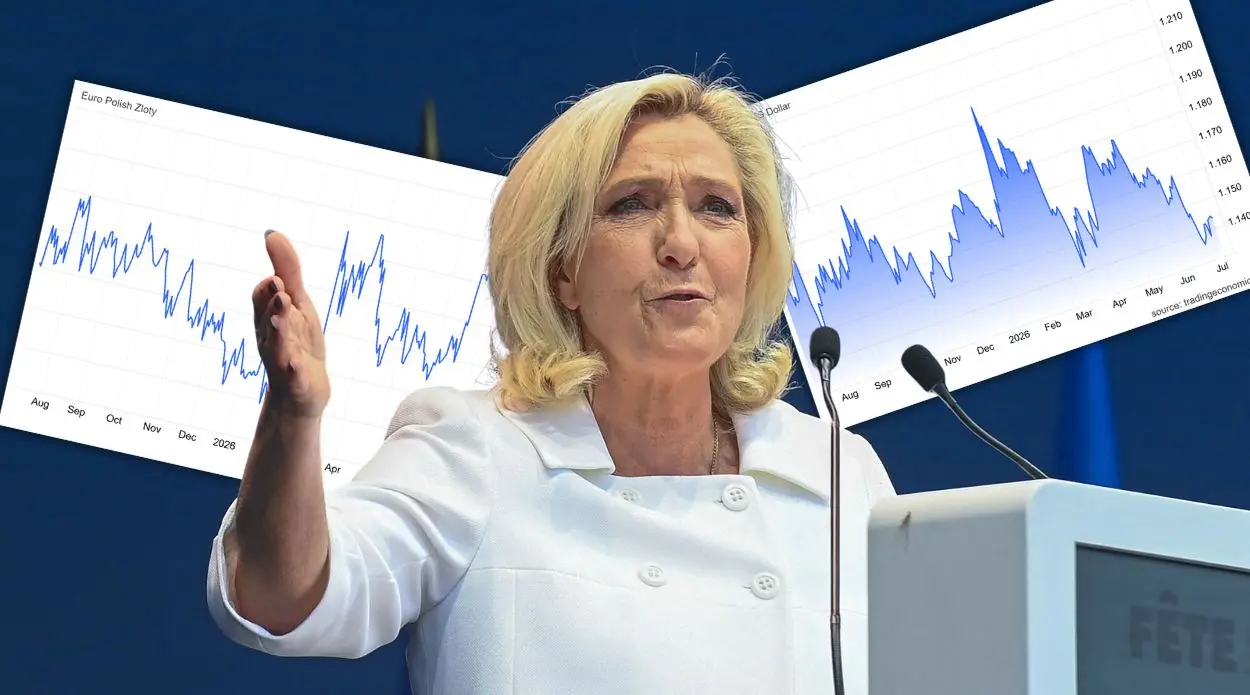
We left a relatively calm session on base FX. EURUSD spent most of the time in the 1.1390‑1.1430 range.
Not much happened on EURGBP and EURCHF either. The yen continued to depreciate, pushing USDJPY to new 40‑year highs (162.70).
The Japanese currency was not helped by market speculation of potential intervention. EURUSD opened the European session with a slight decline (from 1.1420 to 1.1400), likely due to yesterday’s rise in UST yields before the end of Tuesday trading (details in the FI section).
Despite a macro‑filled calendar, we do not expect increased volatility on the pair.
Testing 4.30 PLN per Euro
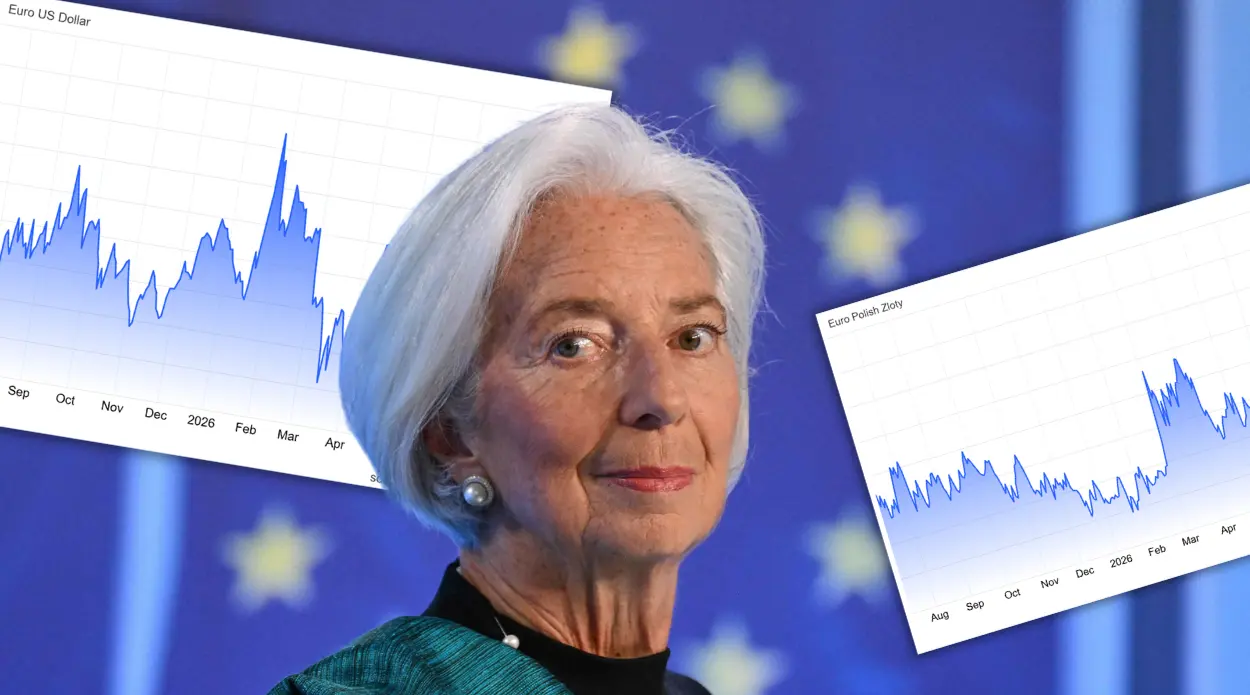
Tuesday saw the zloty weaken. This was a direct consequence of lower-than-expected inflation and falling implied rates relative to the region and euro zone. EURPLN finished the session at 4.30 after a 0.25% rise.
We assess that the potential for further decline of the domestic currency is exhausted.
The market has practically stopped pricing in tightening monetary conditions by the RPP. We expect a similar approach for the euro zone in the coming weeks.
This should support a scenario of EURPLN stabilizing near 4.30.