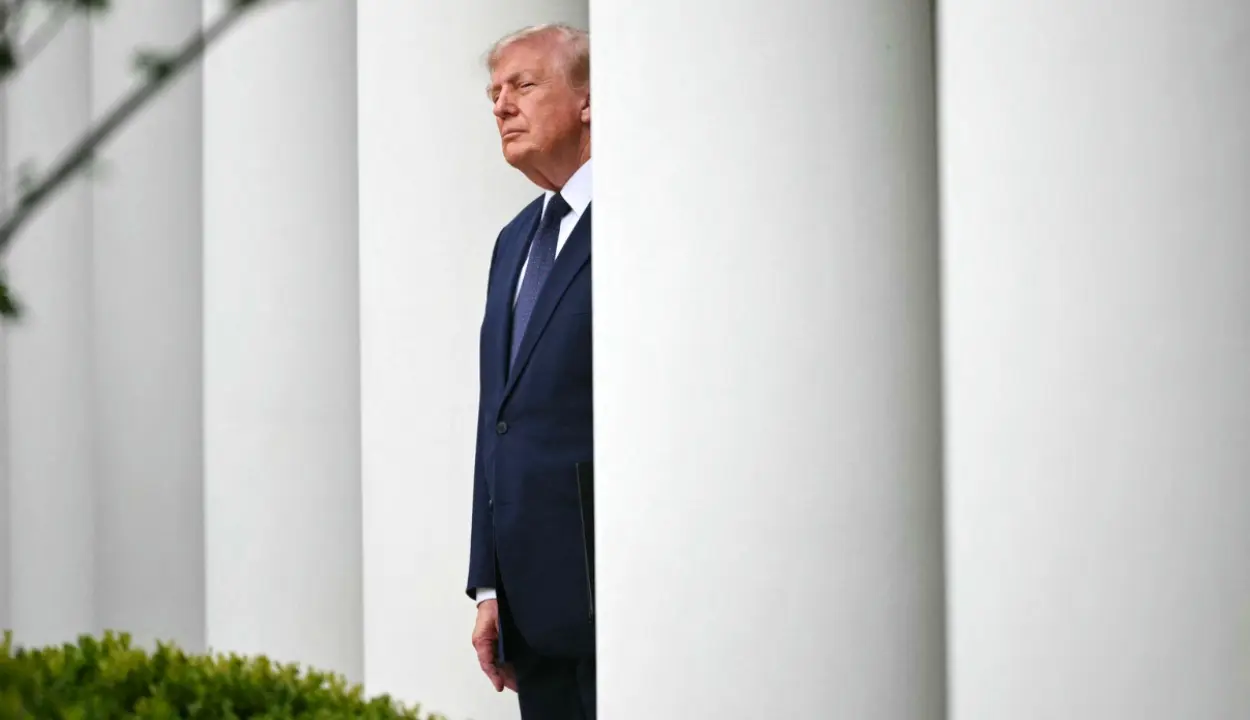
Trump, Vance and Qalibaf signed the memorandum. Behind the scenes of the secret US‑Iran negotiations
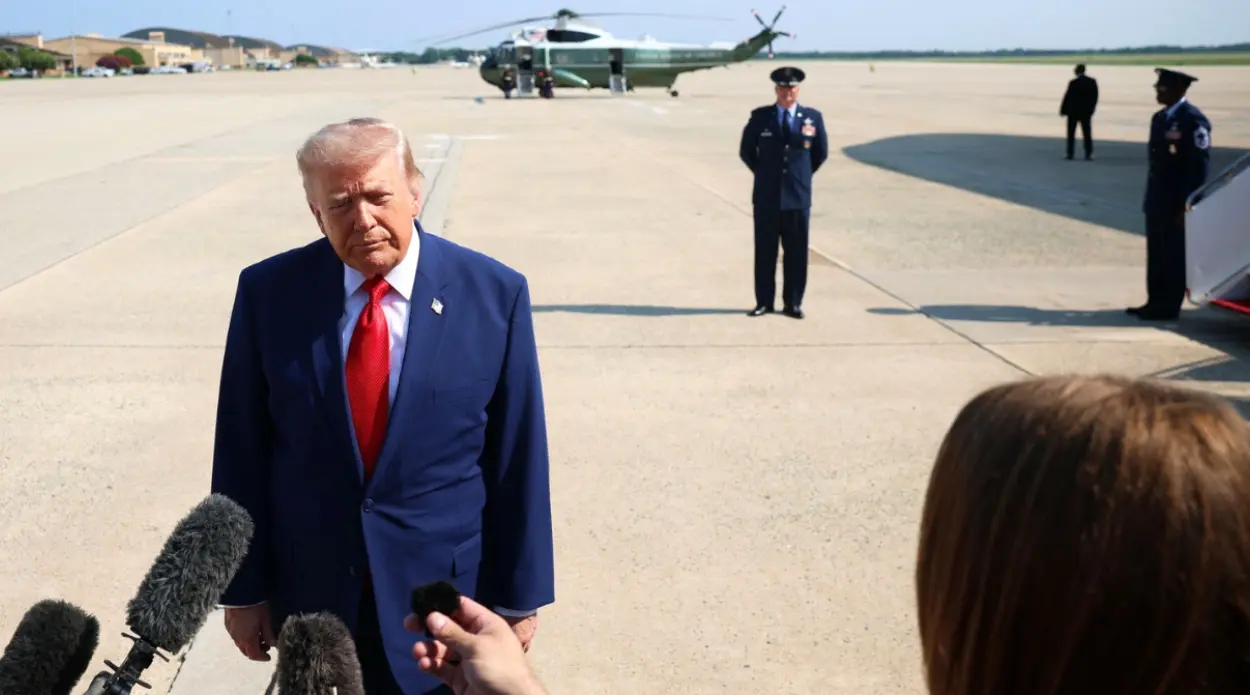
The information is also corroborated by a Reuters dispatch. "The memorandum was signed by President Donald Trump, Vice‑President JD Vance and the chairman of the Iranian parliament, Mohammad Bagher Qalibaf," a US administration official told the agency. Although the text of the document is still unknown, it is not excluded that it will be published before Friday. Further, conflicting information is presented about what the agreement requires and what each side will receive in return.
The portal claims that this is mainly due to the fact that the talks were conducted by mediators and the document is of a general nature. This leaves enough ambiguity for both sides to achieve their goals – even if they have different expectations about the further development of events. A high‑ranking administration official quoted by Axios stated that the discrepancies actually arise because Iran exaggerates the importance of the agreement for internal use.
From a market perspective, however, the opening of the Strait of Hormuz, its throughput capacity and the reduction of risk factors related to potential disruptions of its functioning are crucial. This requires time, and the ambiguities of the agreement will extend the period of an additional risk premium in oil prices.
Energy import costs highest since Russia’s invasion of Ukraine
Yesterday the GUS provided supplementary data to the earlier NBP data on the balance of payments, detailing international goods exchange for April. It shows that the deterioration of the goods balance unexpectedly led to a significant increase in energy imports. In April it was 2.7 bn EUR per month versus 1.8 bn EUR in January. Nominally this is the highest level since the beginning of 2023, when the global economy was dealing with the after‑effects of the 2022 supply‑side energy crisis following Russia’s invasion of Ukraine. A significant increase in imports was also recorded in the category of machinery and transport equipment, almost reaching 13.0 bn EUR per month.
The accompanying rise in exports of this category also reached historic highs at 12.4 bn EUR. However, the deficit in this category is a new situation. In 2023 the surplus in this category was the second largest after food. Fortunately, Poland’s export hit (food production) maintains a consistent result above the threshold, although not as impressive as last month (+1.3 bn EUR vs +1.7 bn EUR).
We believe that higher chances should be linked to an optimistic scenario for the ‘machinery and transport equipment’ category, meaning it is a basis for later re‑exports with recorded added value. This is a trend we observe in national accounts. They show that Polish exports of goods at constant prices are among the fastest growing in the EU.
Inconsistent change in service prices
Yesterday the GUS released final CPI data for May (we commented on the preliminary reading here). We remind that the main surprise in the previous month’s reading was food price deflation. Compared to our forecasts, we see that almost all categories surprised in the negative, especially vegetables (-7.8% m/m vs -0.9% m/m) and meat (-0.7% m/m vs no change). That is, we recently wrote that it is still too early to talk about long‑term deflation in this category, so yesterday’s data confirm the earlier assumption of a one‑off incident.
From the details of core inflation we see that, unchanged, the bulk of it is driven by service inflation with base goods prices still "stuck" at a fixed level. However, the change in service prices was not unidirectional. For example, recreation and culture prices fell (-2.1% m/m), while insurance and financial services rose (+0.7% m/m). The majority of changes, however, push the aggregate up. For now we see the largest portion of core inflation remaining above 3.0% y/y.
May readings from China disappointed. The NBS released a package of readings for the previous month. The retail sales dynamic is particularly negative. For the first time since the pandemic it was negative (-0.6% y/y, consensus 0.0% y/y). At the same time, compared to the aggregate, three categories performed exceptionally poorly. The new car market crisis deepened (-16.1% y/y, previous 15.3% y/y, -11.8% y/y YTD). Household appliances/TVs also saw a sales collapse (-15.6% y/y, previous -15.1% y/y, -6.9% y/y YTD). Furniture (-8.7% y/y) and building and decorative materials (-13.6% y/y) fared slightly better.
Relatively high sales were seen for consumables (4.8% y/y), drinks (6.1% y/y), clothing (3.8% y/y) and medicines (4.0%). Industrial production dynamics were relatively strong (4.5% y/y, consensus 4.3%). It was mainly driven by new technology and agri‑food processing sectors. With such steep declines in car retail sales, vehicle production also rose sharply (+8.3% y/y). Investments again performed poorly (decline 4.1% y/y for the Jan‑May period).
Primarily, private durable goods spending fell (-7.1% y/y). At the same time, the Chinese real estate market continues to falter. Housing sales (value) fell 15.6% y/y from Jan‑May, and commercial premises by 22.0% y/y. Additionally, new housing retail prices fell 3.5% y/y in May, extending the four‑year downturn in the sector.
Data from the Middle East fit the long‑standing trend. Risk aversion among Chinese consumers due to the negative wealth effect (falling property prices) translates into low durable goods sales. This trend could further deepen the crisis in the Middle East. At the same time, production in China grows (e.g., the automotive sector), creating pressure from producers to allocate surpluses abroad (hence solid export data). As a result, maintaining the Chinese business cycle depends mainly on the health of trade partners, increasing risk factors for the Middle East.
Bonds held gains until the end of the session
The yesterday’s session on US securities was not impressive. US bonds initially gained value on the oil price decline following the de‑escalation of tensions in the Gulf. This trend did not hold until the end of the day. On one hand, the market began to question the durability of the agreement, and on the other, positive equity sentiment pressured higher yields. Ultimately, the yield change on the main UST nodes was -2, -1, and 0 basis points to 4.07% (2Y), 4.47% (10Y), and 4.97% (30Y) respectively.
The situation on the Old Continent benchmark was better. The middle of the German curve fell about 5 basis points at open and managed to maintain most of that move until the end of the session. Finally, the yield on the main BUND nodes moved down by 3, 4, and 3 basis points to 2.58% (2Y), 2.95% (10Y), and 3.52% (30Y).
The Asian session did not bring major changes to UST. We expect that without strong signals from the Middle East, today’s Treasury session should be calm. In the macro calendar we have a second set of readings (trade exchange prices, real estate market), which before tomorrow’s FOMC meeting should not generate higher volatility.
Exceptionally good domestic bond spread
Monday brought another solid strengthening of domestic debt (double‑digit across the curve). Over the last five sessions, the 10‑year yield fell by just under 40 basis points. Partly this was due to the weak condition of POLGBs at the start of the month (a fairly sharp reaction to deteriorating Middle East sentiment). In a broader sense, however, the relative condition of domestic bonds has practically returned to the pre‑Iran conflict period.
The spread between the 10‑year Polish and Czech bonds narrowed to 75 basis points, returning to the volatility range at the start of the year (60‑80 basis points).
Ultimately, the change in SPW yields was yesterday on the main nodes -14, -14, and -13 basis points to 4.13% (2Y), 4.95% (5Y), and 5.44% (10Y). We assess that today’s session may bring a slight correction to POLGBs. External impulses are neutral, and yesterday the domestic market could have expected better performance of the base FI in the evening. As a result, the end of SPW debt could return to the 5.45‑5.50% range.
FX expected more
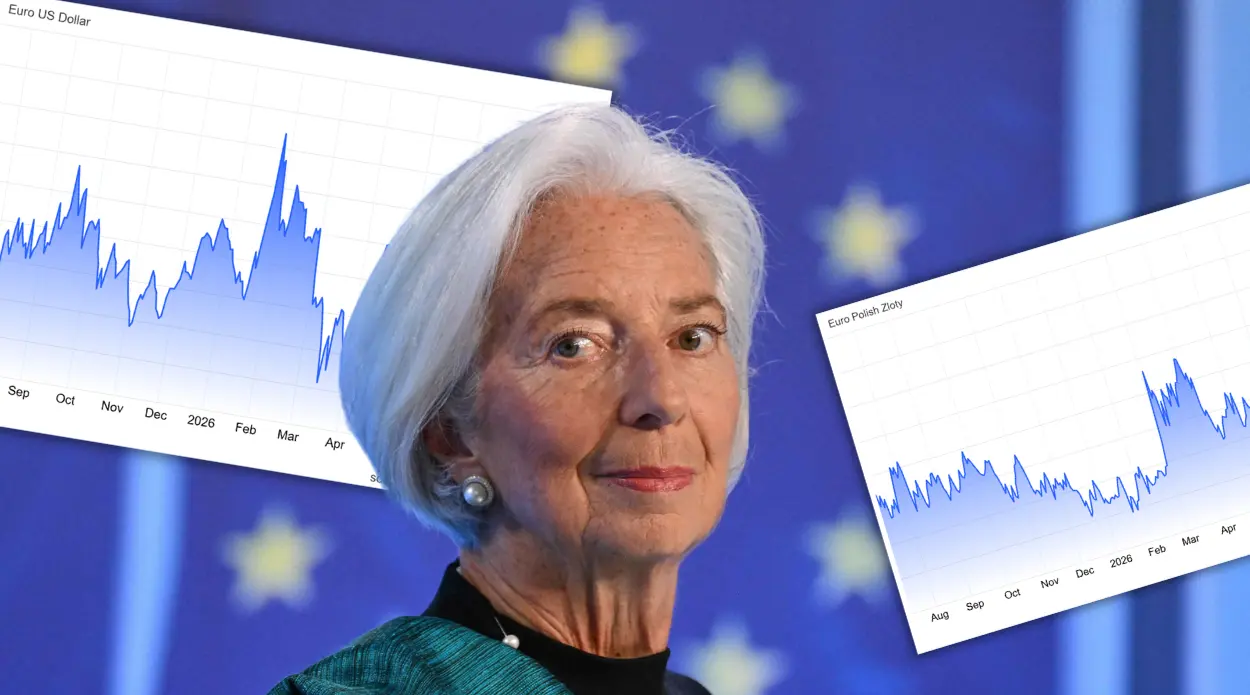
EURUSD did not stay above 1.1600 until the end of yesterday’s session. Rising (compared to open) US bond yields slightly supported the dollar and brought the pair to 1.1590 by the end of Monday’s quotes. On the broader market it was also relatively calm – the euro marginally strengthened against the yen and pound, but lost value against the franc. The start of Tuesday’s trading brings marginal pressure on EURUSD.
The pair was not helped by weak Chinese economic data and the lack of positive impulses from the Middle East. In the base scenario we still assume relatively calm trading on EURUSD with a symmetric distribution of risk factors.
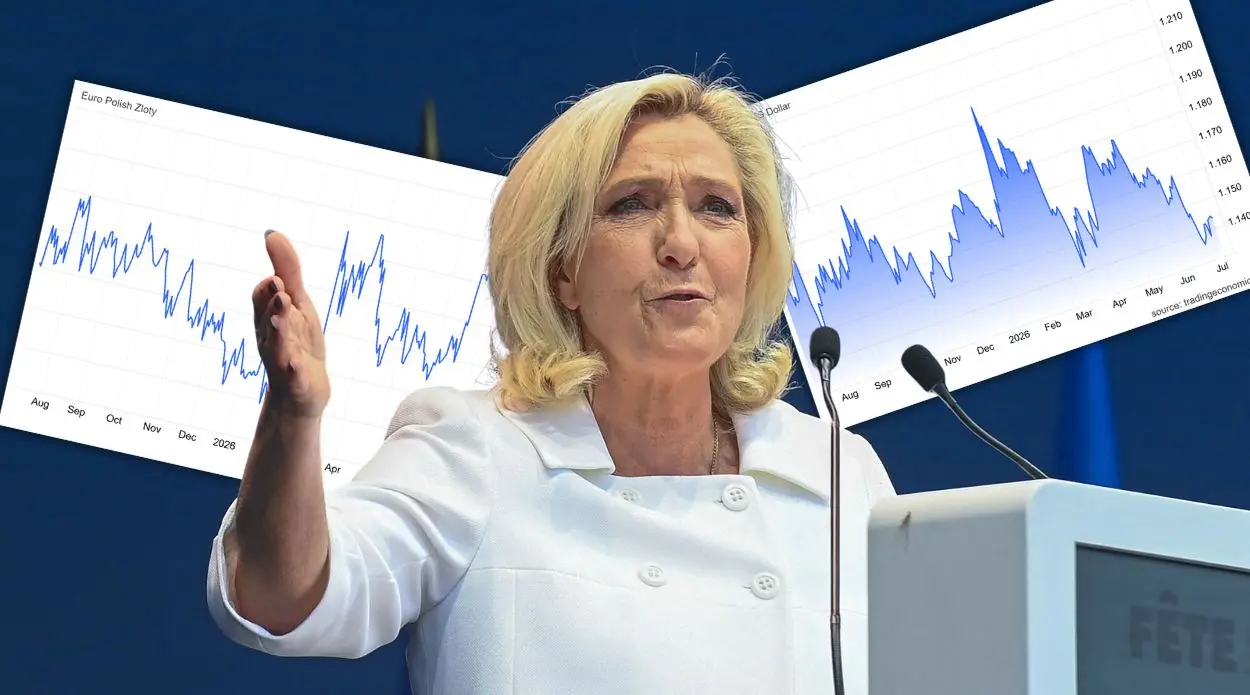
Euro at 4.25 PLN
According to our estimates, good sentiment on the broad market and falling oil prices did not translate into a strengthening of the zloty. The increased appetite for risk was absorbed by debt instruments.
Euro rate – forecast for today
Again, the EURPLN condition was slightly weaker during the overseas session. Then EURPLN moved to 4.25 (+0.15%). Today we expect another calm session with pair quotes near yesterday’s close.