Reversal in US-Iran negotiations under Republican pressure
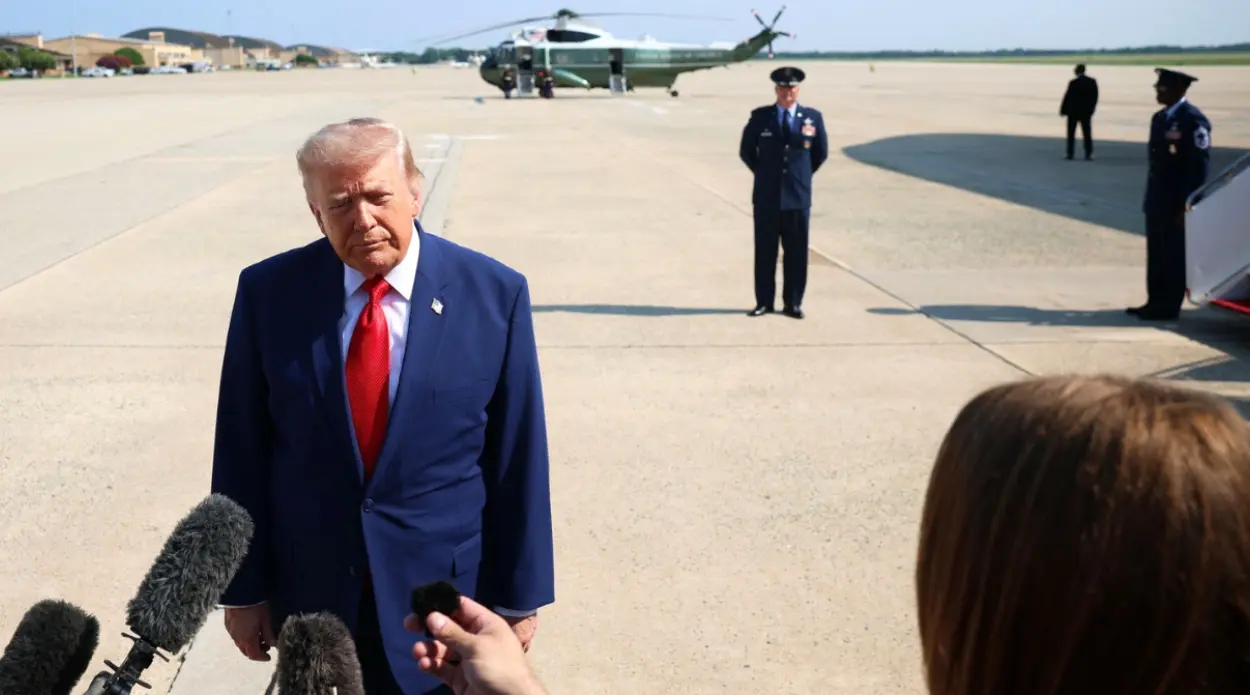
Significantly more information about the potential agreement came in on Saturday. The American president, in an interview with Axios, said that the deal to end the war with Iran would be announced "soon," and that the "final issues" are currently being negotiated.
According to unofficial information from the portal, the document would contain a 60‑day extension of the ceasefire during which the Strait of Hormuz would be reopened. At the same time Tehran could freely sell oil, and the parties would then negotiate the nuclear program. The memorandum draft would clearly indicate that the war between Israel and Hezbollah in Lebanon would end.
Regarding nuclear issues, Iran would pledge not to acquire them and to remove stocks of highly enriched uranium. Both Iranian officials and Americans suggested that the agreement could be reached on Sunday.
Yesterday, however, the mood changed. According to Reuters, the US president instructed his representatives to "not rush to conclude any agreement with Iran, while his administration was still hoping for a quick breakthrough in the three‑month‑old war that had emerged the day before." One of the reasons for a potential shift in the agreement could be negative opinions about it expressed by Republican politicians and conservative commentators.
Among others, Mike Pompeo suggested that the draft resembles the JCPOA negotiated under Obama, which the GOP protested a decade ago. Confirmation of yesterday's cooling of sentiment was today's statement by the US Secretary of State.
He told reporters in New Delhi that a "quite solid proposal" is on the table, including, among other things, opening the Strait, resuming shipping and starting serious, time‑limited talks on nuclear issues. On the other hand, M. Rubio noted that either the US will have a good agreement with Iran, or they will find "another way" to solve the problem.
Oil prices sharply down, Asian markets rise awaiting national GUS and NBP data
The market reacted optimistically to the weekend events. Although the Saturday announcement was not formalized, the diplomatic process clearly accelerated toward what could still be expected by the end of last week. This drove energy commodity prices down – including Brent crude to 98 USD/b (-5.5%).
A significant portion of markets is closed today (USA, UK, South Korea), but for example Japanese bond yields fell by 8 basis points at mid‑curve, and the Tokyo exchange appreciated by about 3%. We assess that the market will demand signals confirming a weekend breakthrough within a few dozen hours.
These could include a memorandum that would order key issues and allow the gradual opening of the Strait of Hormuz. Behind geopolitical impulses, macro news will flow. Today GUS will provide retail sales dynamics. Our forecast is more optimistic than consensus and assumes a April dynamic of 5.5% YoY (consensus 3.0% YoY).
Meanwhile, NBP will provide money supply for the analogous month (consensus 11.2% YoY). The next days are free of macro data that could clearly affect the analyzed assets.
Only on Thursday will the BEA report arrive from across the ocean, from which we will learn, among other things, about the dynamics of American income and expenditures for the last month. We will also learn the PCE deflator reading.

The FOMC‑preferred consumer inflation measure rose in April according to the Friday speech by Chair Waller (Fed, here) to 3.8% YoY for the aggregate and 3.3% YoY for the core component. The week will close preliminary CPI readings (for May) from various Eurozone countries and Poland (first consensus estimate from BBG at 3.7% YoY with a range from 3.4 to 3.9%).
Early week stronger
The Friday session on US securities was relatively calm. Bonds awaited Middle East news with an empty macro calendar. In the background, however, Chair Waller's speech appeared. Leading FOMC representatives, representing the hawkish wing of the committee, suggested that the current risk factor for the economy is the issue of high inflation, not the weak labor market as previously assessed.
Consequently, a Board of Governors member said he would support removing from the monetary policy statement the wording indicating a "tendency to ease" to clearly state that a rate cut is no more likely in the future than a rate hike. Still, the main element of uncertainty and the durability of price pressure remains the course of events in the Middle East.
If the Gulf conflict were to extend and signals suggesting a risk of unanchoring inflation expectations appeared, Waller would not hesitate to support a rate hike.
Bunds strengthen and Treasuries stabilize awaiting US and Iran moves
For now, however, the FOMC representative believes it would be premature. Ultimately, on the main nodes, the Treasury yield change was +5, -1, and -3 basis points to 4.13% (2Y), 4.56% (10Y), and 5.07% (30Y). Bund, in contrast to the UST, appreciated on Friday. Partly this was the result of a still slight strengthening of Treasuries at the end of Thursday's quotes. Moreover, the relatively weak economic outlook in the Old Continent limits the market‑valued potential for tightening monetary conditions by the ECB.
Finally, the German curve moved down by 3, 6, and 5 basis points to 2.64% (2Y), 3.03% (10Y), and 3.57% (30Y). Weekend reports on the Middle Eastern conflict (details in the first paragraph) push the Bund curve mid‑point down by about 4‑5 basis points to 2.98‑2.99%. We assess that positive momentum should be maintained for the next hours.
Even if the US‑Iran agreement were to fail, the probability that such information would arrive during today's session is low.
SPW supported by impulses from the western border
A stronger opening of the Bund at the start of Friday's quotes helped bonds in the region. Czech paper yields fell by 6 basis points, pushing debt to the end below 5.00% (-6 basis points to 4.95%). Similarly, the domestic market situation developed. The PLNIRS curve fell in parallel by 4 basis points. The ASW margin practically stayed at the level from Thursday. Ultimately, on the main nodes, yields moved down by 5 basis points to 4.57% (2Y), 5.39% (5Y), and 5.86% (10Y).
We expect that positive signals from energy commodities and increased appetite for risk associated with a potential end to the Middle Eastern conflict will push the 10‑year SPW tenor into the 5.75‑5.80% range.
Dollar under slight pressure at the week’s opening
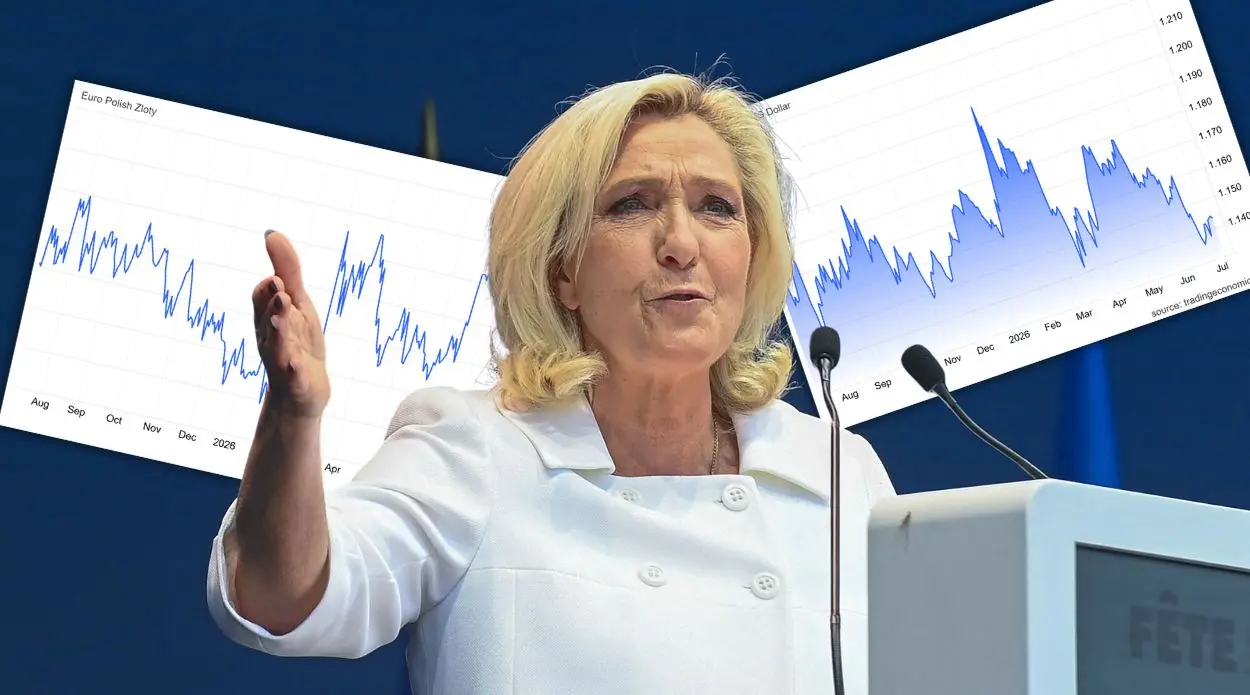
Friday’s base FX quotes were not surprising. EURUSD tested 1.1600 but ultimately held it (-0.1% to 1.1610). Little happened on other euro‑related pairs. Only the franc appreciated all day to the broader market (about 0.3‑0.4%).
Oil price re‑pricing and the growing probability of a diplomatic end to the Gulf conflict slightly over‑price the US dollar.
EURUSD rises about 0.3% to 1.1640. We still maintain our stance from previous days.
It assumes moderate FX sensitivity to Middle East news due to most commodity impulses being offset by the debt instrument market. Still, we expect EURUSD trading in the 1.16‑1.17 range.
Flat on CEE FX
The end of the week brought another calm session on the region’s currencies. The daily change on EURCZK and EURHUF did not exceed 0.1%.
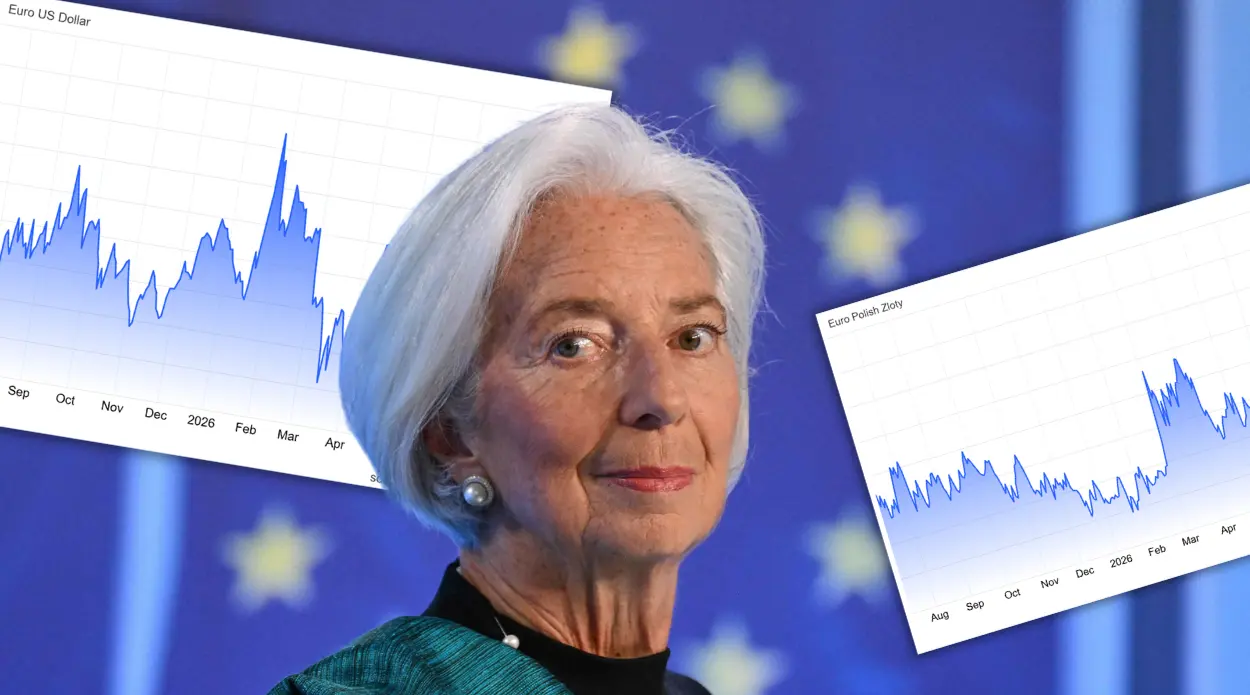
The euro to zloty valuation behaved similarly. The pair was quoted in a 1‑cent range and closed near 4.24.
The weekend rise in global risk appetite combined with falling oil prices has a marginal impact on EURPLN quotes.
We still assume that the volatility threshold for the pair is high and expect trading near 4.24.