The zloty strengthens against the euro and dollar
The zloty slightly strengthened against the euro and weakened slightly against the dollar last week – the EURPLN rate fell to 4.24, while USDPLN rose to 3.65.
The previous week began with a clear rise in bond yields, which reached multi‑year highs on many markets.
Ongoing diplomatic efforts to break the stalemate in the Middle East allowed investors in the second half of the week to view the interest‑rate market more optimistically.
With lower market liquidity due to the U.S. Memorial Day holiday, we expect a positive market reaction to weekend Middle‑East news suggesting increasing chances of an agreement between the U.S. and Iran that would open the Strait of Hormuz. Such a scenario should favor the appreciation of the zloty and the continuation of falling yields in the interest‑rate market.

Week marked by the Middle East
The key theme for the coming week will remain negotiations to end the conflict in the Middle East.
Among globally important data will be the April consumer‑situation indicators in the U.S. Consensus assumes that incomes and spending rose by about 0.5% month‑over‑month in nominal terms. A simultaneous 0.5% month‑over‑month rise in the PCE deflator suggests, however, that the real consumer situation will remain unchanged, with a risk of deterioration. In year‑over‑year terms the PCE deflator could have risen to 3.8% in April, and its core version to 3.3%, in both cases moving away from the 2% target.
In Poland we will learn data that complement the picture of the April economy, the second month of the supply shock. The expected stagnation of today’s retail sales year‑over‑year (PKOe: -0.1%; cons.: +3.0%) is a consequence of one‑off factors – the shift of food purchases before Easter and the increased fuel purchases observed in March.
Today we will also learn data on the M3 money supply (cons.: 11.5% y/y, PKOe: 11.2% y/y). On Friday, CPI inflation for May will be published, which, due to the fuel shock, has most likely risen above the NBP’s upper deviation limit from the target.
Trump dampens optimism around the Iran deal
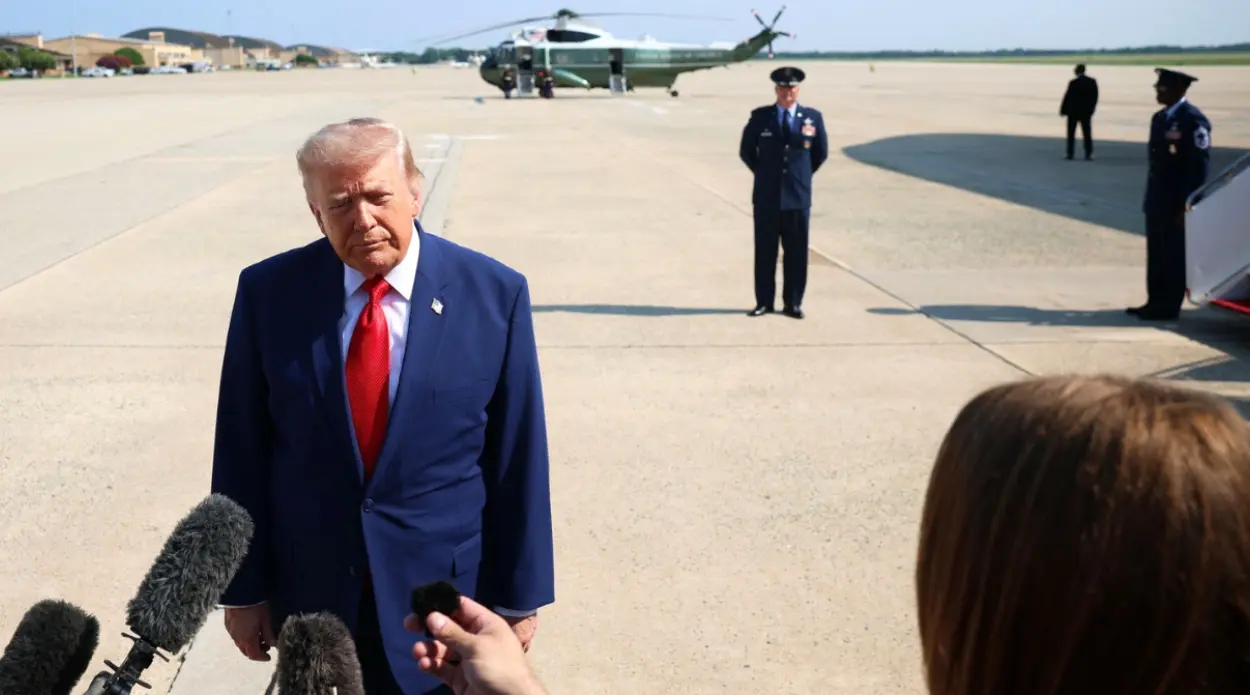
D. Trump told American negotiators not to rush into an agreement with Iran that would reopen the Strait of Hormuz, emphasizing that "both sides must act calmly and ensure everything is done properly." The U.S. president’s remarks, posted on Truth Social, appeared the day after he suggested the deal was close, claiming it had been "largely negotiated."
The diplomat quoted by the Financial Times informed that the agreement would practically extend the ceasefire by 60 days, during which the strait would gradually reopen. The extension would allow negotiators to agree on a mechanism that would have Iran renounce its highly enriched uranium stocks. U.S. administration sources said that the U.S. does not plan to unfreeze Iranian assets as part of the deal.
Stable inflation expectations amid the Iran conflict and hawkish signals from Malta
EUR: Ch. Lagarde (EBC president) stated that despite rising energy prices and deteriorating economic prospects caused by the supply shock, long‑term inflation expectations in the euro area remain firmly anchored around the 2% target. She noted that the impact of the Iran conflict on medium‑term inflation and economic activity will depend on the scale and duration of the shock and its indirect effects.
She did not specify the direction of the decision at the June meeting, maintaining the principle of data‑driven response. A more decisive stance was presented by A. Demarco (EBC, Malta Bank), assessing that the EBC will likely raise rates in June to confirm its determination to reach the inflation target and maintain monetary policy credibility. In his view, there is currently no need for a strong rate‑increase cycle, and the scale of further actions will depend on new EBC projections.
Waller calls to remove rate‑cut hints amid stubborn inflation
USA: Ch. Waller (Fed board) assessed that the Fed should remove from its communication any hint of a "tendency to ease policy" to emphasize that a rate cut is no more likely than a hike. He pointed out that inflation is not moving in a good direction and is becoming increasingly stubborn, so rates should remain unchanged until clear signs of inflation returning to the 2% target appear.