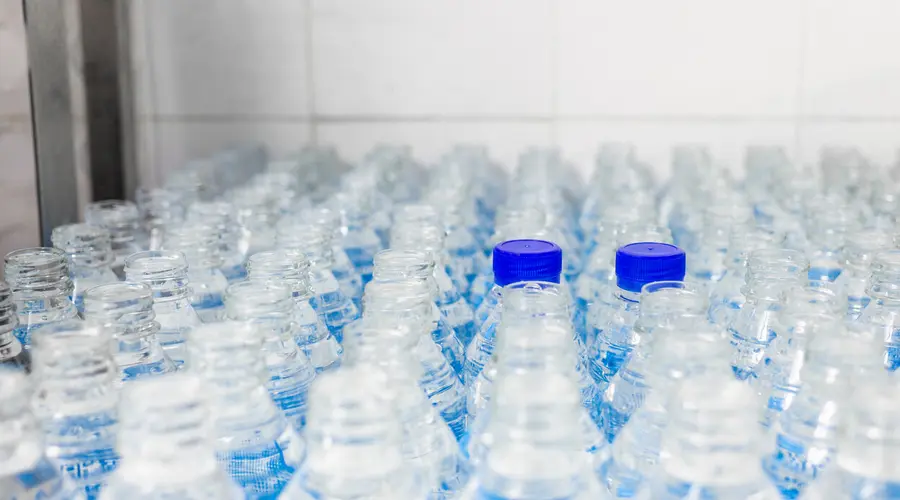
The Cisowianka producer disagrees with the state's fiscal policy, which requires paying 23% VAT on bottled water, but allows a preventive VAT rate of 5% for some beverage producers containing juices and sugars.
Polish tax policy leaves much to be desired
Poland has a reputation as a country with one of the worst VAT systems among all developed economies. The situation highlighted by the Nałęczów plant only reinforces public opinion. The bottling company points out absurdities in the state's fiscal policy. In a country that convinces its residents at every turn to care for health, the need to fight obesity, and encourages healthy food, including drinking water, the same state taxes bottled water higher than some drinks that contain sugar. Where is the logic? Representatives of the Nałęczów company, who have decided to pursue their claims in court, also do not see it.
The European Commission will investigate Poland's tax system
The Cisowianka producer has filed a lawsuit against the State Treasury in the Warsaw District Court. The company seeks explanations as to why bottled water is taxed higher than some other drinks, including flavor enhancers or sugar.
Poland's court will not be the only one to examine this matter. Nałęczów Zdrój has also approached the European Commission. The EU body will investigate whether Polish tax law complies with EU directives. EU officials have repeatedly emphasized that tax policy applied to similar products must not differ, because it can lead to unfair competition. It is also worth noting that EU institutions have repeatedly monitored fiscal policy in member states. There have been cases where a change in the tax level of a product was required.
The judgment could be a breakthrough
Tax systems in every country, including Poland, are complex mechanisms, so one should expect that the judgment in the Cisowianka case, both in the Polish court and at the European level, will not come quickly. As bottled water producers emphasize, the game is worth a candle because the problem concerns not only the Cisowianka producer but also other similar companies that may lose competition to sugary drink producers due to higher taxes.
However, this case goes beyond the dispute over whether bottled water should be taxed at a certain rate. It signals a discussion about the entire state's fiscal policy. If the judgment were favorable to the Nałęczów company, it could trigger a cascade of similar cases involving various goods that, despite being very similar, are subject to different VAT rates.
The game also concerns positioning in a tough market. The difference in tax amounts means that a beverage producer who can benefit from a preferential VAT rate is in a better position because they can offer a lower price to consumers. All this despite promoting a healthy lifestyle, i.e., theoretically drinking water without additives or sugars. If water producers had to pay the same tax as companies producing other drinks, then the rules of the free market would be more transparent for them, and competition could take place on equal terms.
See also: Poland is borrowing massively! Public debt rose by almost 47 billion zlotys in one month