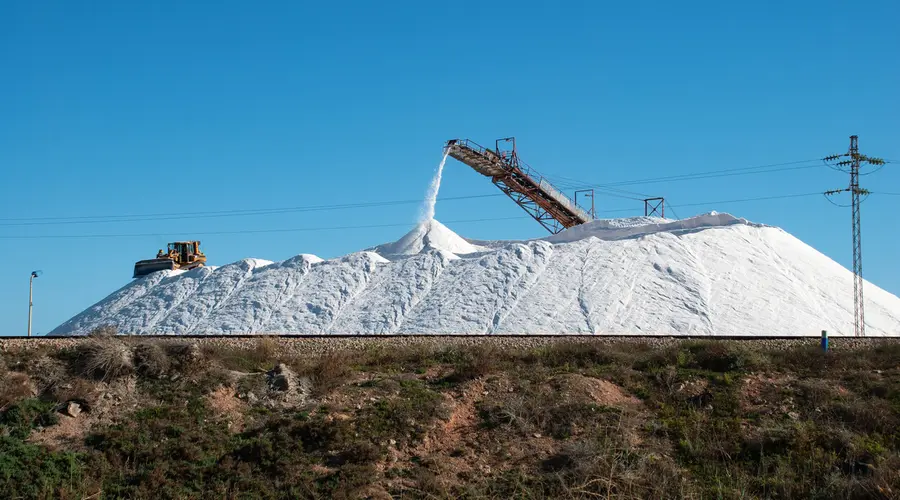
Poland has salt deposits that date back thousands of years. According to data, in 2024 the extraction of this raw material in our country reached about 2.9 million tonnes. That is only a fraction of the reserves estimated at 112 billion tonnes. These deposits are documented, and in practice there may be even more.
Why, then, is salt extraction in Poland becoming less profitable? Several factors contribute. One is the cost of extraction, which is rising at a dizzying pace mainly due to higher energy prices. But not only that. Employee maintenance costs and the deeper mining of deposits also affect the price of extracted salt.
In our country, there are currently rock salt mines: Kłodawa Salt Mine and Polkowice-Sieroszowice Mining Works. But these are not the only places from which salt is obtained in our country. There are also Inowrocław Salt Mines Solino, specializing in the production of sea salt from brine. And KGHM Polska Miedź, for which salt is a by-product of copper extraction.
Polish salt in a difficult situation
Profitability of Polish salt mines is declining year by year. Apart from the mentioned rising extraction costs, there are more reasons. Among them is lower demand for salt in the winter season. Due to milder winters in recent years (except perhaps the last winter), companies maintaining roads ordered significantly less raw material than in previous years. For example in 2024 it was 2.9 million tonnes, and a year earlier almost 3.3 million tonnes. This affects the entire industry.
Another major threat is competition that Polish salt producers must face. Poland imports salt from Europe, including Germany, but also from Africa, Egypt, Tunisia or Morocco.
Most of this salt – especially that originating from Africa – is produced by evaporating seawater. This means its production costs are significantly lower than those of mine-derived raw material, mainly due to lower energy consumption. Consequently, even adding transport costs to Europe, African salt is competitive compared to that from Polish enterprises.
Security and the economic account
Salt is one of the foundations of the Polish economy. The raw material is used to maintain roads, and thus national transport. But this is only part of its purpose. Salt is also used in the chemical industry. Without it, chlorine could not be produced, and consequently many plastics, medicines or disinfectants would not be made.
It shows that maintaining salt production in the country, and also mining the raw material from mines, should be treated by the government as a strategic action so that our country can develop. Profitability of domestic salt production could be higher if regulations were introduced that would prioritize domestic raw material over imported ones.
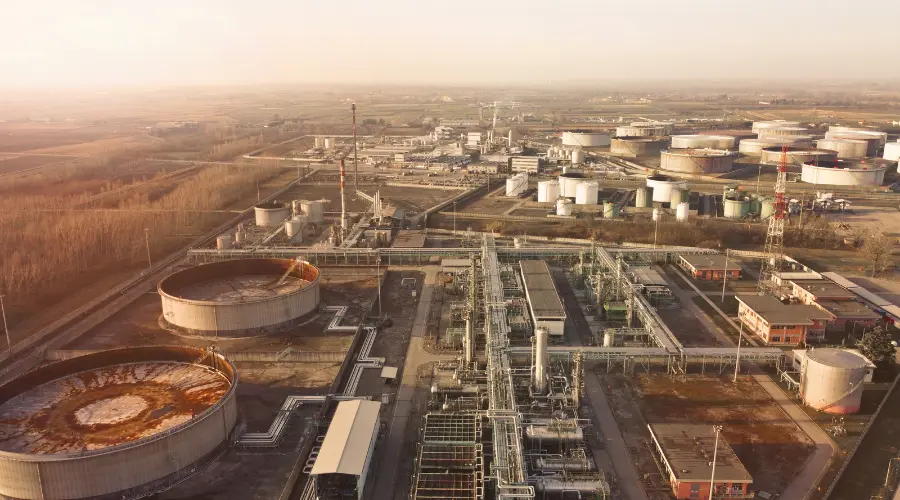
In a situation of geopolitical tensions, maintaining the extraction of domestic raw materials is not only an economic interest but also a path to security. A perfect example of what can happen when an economy depends on imports is what the world experienced after the outbreak of war in the Middle East, especially after the blockade of the transport route known as the Strait of Hormuz. Having our own raw materials leads to resilience against such events, including price increases. Of course, Poland does not have oil, so we still have to import that raw material. But the deposits we have as a country, and their extraction, should form the foundation of the state's economic policy. This applies not only to salt but also to other raw materials, such as copper, and also coal, which for now is the fuel that powers most of the electricity in our country.
See also: War in the Middle East leaves a mark on another industry. Will road transport collapse due to expensive fuel?