Air fuel is worth its weight in gold. Lufthansa changes strategy
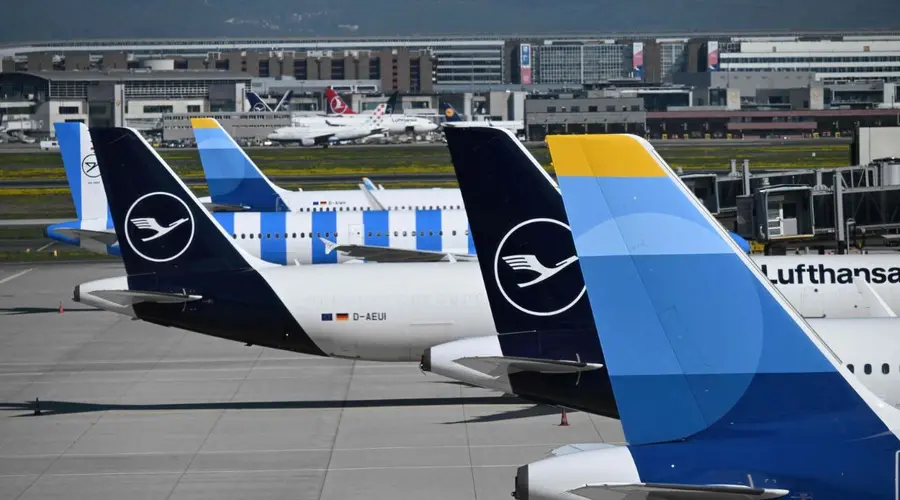
The decision by Lufthansa’s board to remove 20,000 flights from the short‑haul summer schedule is not a simple seasonal adjustment. This difficult decision bears the stamp of brutal geopolitics and is the result of the last two months.
The USA‑Iran conflict has demolished the global energy supply chain. The ongoing closure of the Strait of Hormuz has caused air fuel prices to rise by nearly 100% in just one month.
For Lufthansa, whose main strategy is to operate on low margins in the European segment, such volatility is a financial chin. The giant decided to act because cutting connections is expected to bring savings of about 40,000 tonnes of fuel.
Lufthansa adds in an official statement on its website that this is not the end:
Due to capacity restrictions, work is underway to update the medium‑term route plan for the coming months; it will be published at the end of April or early May. It will cover the optimization of short‑haul connections for the entire summer season, ensuring stability of the flight schedule during that period.
It is worth noting that Lufthansa’s decisions also hit the Polish aviation market like a shotgun, as flights from Frankfurt to Bydgoszcz and Rzeszów disappear from the network. The company clearly shows that in a serious crisis there is no room for unprofitable routes.
The situation is serious, as reported by the International Energy Agency (IEA). Reports are alarming because IEA warns that fuel reserves on the continent will last only 6 weeks.
Europe faces the specter of real fuel shortages. EU transport ministers are looking for alternative sources of airline fuel, considering imports from the USA.
See also: Europe faces a communication paralysis. Airline fuel reserves may last only 6 weeks!
Lufthansa Group shares fall
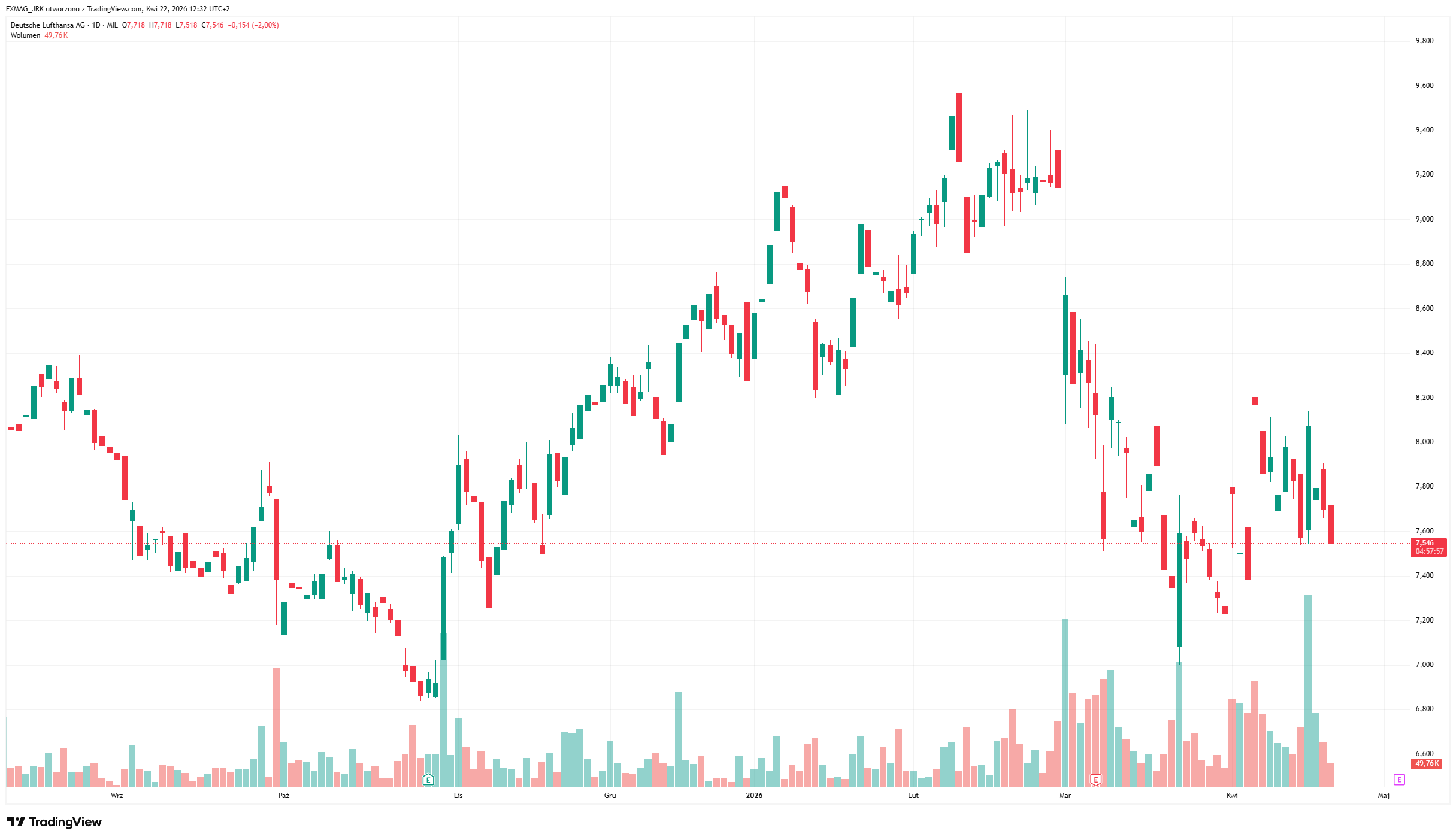
The market and investor reaction to the news of 20,000 cancelled flights was easy to predict. Lufthansa AG shares (LHA.DE) fell by over 1.1% to about 7.70 EUR.
Although a dip of a little over 1% in the airline giant’s shares does not seem huge, the broader picture paints a rather pessimistic view. Analysts point to strong selling signals both short‑ and long‑term.
Investors now view Lufthansa not as a market leader but as a hostage of geopolitical decisions. The company’s market cap is literally melting under the weight of mounting operating costs.
Fully shifting these costs onto passengers is equivalent to a total collapse of demand.
It is worth noting that not only Lufthansa is in a dire situation, as KLM and United Airlines plan similar moves. This does not change the fact that the German giant, as Europe’s airline hub, loses the most in terms of a stable partner image.
Chart. Deutsche Lufthansa AG share price
Source: TradingView
See also: Air communication difficulties are increasing. The problem will not only be higher prices
AI decides on flight cuts
Lufthansa did not decide on flight cuts at random; it was advanced AI systems that identified the 20,000 flights to remove. The system analyzed the profitability of each individual route in real time, taking into account not only load factor but forecasted fuel cost on a specific route relative to ticket revenue.
Such network optimisation is today a necessity to keep ticket prices at a relatively normal level while avoiding being buried by the literally astronomical rise in airline fuel costs.
If the Middle East conflict continues until the end of 2026, we can expect further flight cuts and continued erosion of aviation companies.
See also: Fuel prices before the next drop? TACO Trump rules the oil market. Expert warns of a "catastrophe"
Source: Lufthansa Group.