

Kamil Markiewicz (FXMAG): What does the Mercosur agreement mean for Polish agriculture? What should farmers fear about its signing?
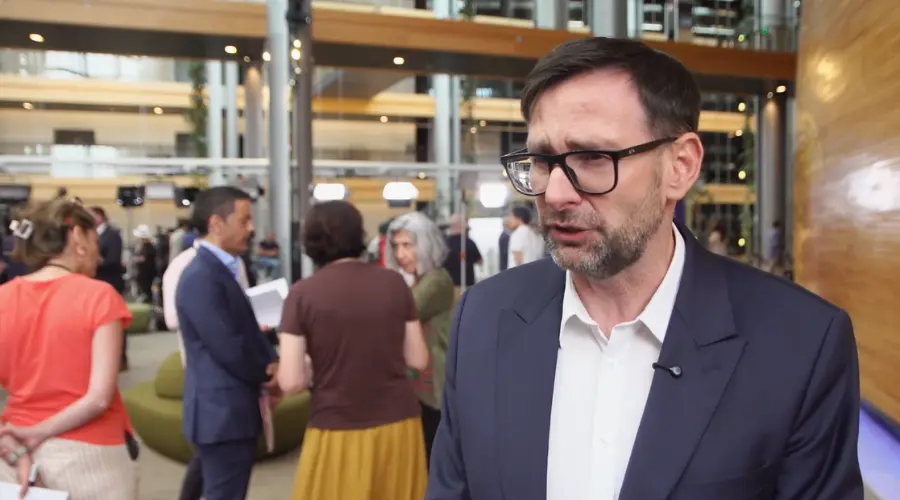
Dr Arkadiusz Chudzik (economist, agriculture expert, Józef Gołuchowski Applied Sciences Academy in Ostrowiec Świętokrzyski): I wanted to start by explaining what Mercosur actually is. It is a grouping of several South American states such as Brazil, Argentina, Paraguay, and Uruguay, which a while ago created something akin to the European Economic Community. It was obviously about free trade, which could be conducted without restrictions. It involves about 200 million people, including both producers and consumers.
This huge mass of people is a tempting target for many economies, including the biggest ones like the United States, China, and Europe.
Is it a threat to agriculture? Opinions are divided, very much so. There are positive views from enthusiasts and extremely negative signals from opponents of the solution. Personally, I think it is a large market, but the condition is one – that we can sell our products there. What can we sell? In reality, not much, when it comes to our agricultural sector. Among the goods that could find buyers in Mercosur countries could be Polish apples, for which we are constantly searching for markets. It could also be other fruits, including processed ones.
However, we must remember that it is a huge production market, producing large amounts of beef, poultry, dairy products, sugar, and many other goods. For Poland, the biggest threat is beef and poultry, which could come to our country from South America. We sell 80% of our beef in European markets. At this point, our producers will have to face huge competition, which will certainly lead to them losing markets. Why will this happen? Because we will lose on price. The European Union imposes increasing restrictions on farmers and pork producers. Many plant protection chemicals are being withdrawn, and new ones that are introduced are increasingly expensive. This reflects on the final price of the produced product that reaches the market. Added to this are restrictions that prohibit the use of antibiotics in animal breeding. Of course, this is a correct direction that protects consumers from acquiring antibiotic resistance.
These restrictions do not exist in Mercosur countries. As a result, production costs are much lower there. It is estimated that it is about one fifth less than in the European Union.
Polish farmers find themselves in a very difficult position because production in our country is more expensive than in other EU states. All this is due to very high electricity prices and very expensive fertilizers. This will make food from South America, which reaches our market, competitive enough that Polish farmers will find it hard to sell their goods.
It should be noted that even now some beef available in European markets comes from South America. This meat goes to fast‑food chains. But when the agreement comes into force, there will be even more. It is estimated that about 99 thousand tons of beef will reach Europe annually, which is not that much, about 1.5% of EU production. However, this amount can stir up our markets. The additional pool of goods that will appear on the market will be felt by farmers. This could lead to Polish producers being forced to lower margins, which are already negligible. All because exporters will not want to lower their prices, and to stay in the market, they will have to limit profits to an absolute minimum.
Will Mercosur countries be able to adapt to EU restrictions on the ban of antibiotics in pork and poultry breeding? Recently the European Commission gave Brazil an ultimatum, which seems to be doing nothing with EU guidelines.
Mercosur countries do not have the restrictions we know from Europe. This applies to beef, poultry, and even fruits and vegetables. These are a series of elements we should consider. In recent days, transport from Brazil was halted. All after the Netherlands, which next to Germany is the largest importer of meat from South America, tested beef that contained large amounts of antibiotics banned in the EU. Let us hope that it is the Dutch and Germans who will be the ones testing goods entering Europe, eliminating all those that may threaten the health and life of Europeans.
In theory, this is guaranteed by the European Union. All restrictions will only come into effect in September, when the transitional agreement ends, and the final one signed by the European Commission comes into force. If the provisions were respected – and I fear they will not – safety should be maintained. It is worth noting that if Mercosur countries want to trade with the EU, they will have to adapt. But will it be so? We remember examples of trade with Russia, and after the war broke out on our eastern border with Ukraine, which was supposed to only transport grain through our country to Western Europe. Later it turned out that transport in Poland disappeared. And in fact, the grain that was in it was terrible in terms of quality. I fear similar things can happen with transports from South America.
My concerns are not random. Many experts have accused EU politicians and negotiators of the Mercosur agreement that they were very subservient to Brazil. EU officials even suggested that countries such as Poland, Hungary, or Austria, which were opposed to the agreement, “were beating foam” without fear. Voices appeared that we should adapt to the current situation and take advantage of the opportunity the agreement offers, as France or Italy did.
I wonder if agriculture was “offered on the sacrificial altar” in exchange for being able to sell other products to South American countries, such as cars.
Do you think the EU “sold agriculture” for other economic needs? For example, saving the German economy, which is based on automotive. In fact, the problems with selling cars are not only for Germany but also for France or Italy, which ultimately did not agree to challenge the agreement with Mercosur, even though it initially pointed to it. It should also be noted that European car producers face increasing competition from China. An example is Germany, where the Chery group, the producer of Omoda and Jaecoo, is starting sales. This may cause Germany to switch to Chinese cars. And we will have to find a new market for German cars.
You hit the heart of the problem with this question. I myself use a Chinese vehicle and know how good it is compared to other European brands I had before. I am even surprised by the quality of the materials used, and the workmanship of the parts. These are not the Chinese products that remind us of poor workmanship and bad quality.
Europe, instead of understanding where the problems are and trying to change something, still holds onto certain standards that can no longer meet market expectations. I get the impression that as Europeans we are convinced of our infallibility, living in the belief that everything will be as it has been so far. This is wrong thinking, because Europe is stuck, and Asian countries are rapidly developing. We need to shake this off, because there is no future in such an approach.
From what you say, it can be inferred that the EU has “sold farmers” for the possibility of maintaining this vision of Europe, as the one that dictates trends. The Mercosur agreement will accelerate some European economies, especially the German one, which has been in a slump for a long time.
Not only Germany. I do not like the statement that the EU does everything only for Germany. Although I would agree that our western neighbors, who are among the dominant car producers, will certainly benefit. France and Italy will also benefit.
From Poland's point of view, it is very bad news. Just look at how large a part of our economy is agriculture, and the activities around it, such as processing. Poland, although it has production plants, is not a producer of any car brand. Of course there are companies cooperating with the industry through cooperation with German companies, but that is a much smaller share than agriculture.
I do not want to be misunderstood. I am not opposed to automotive and Polish companies that cooperate with it. I believe we should encourage entrepreneurs to open more factories, but for now their impact on GDP is negligible, unlike agriculture, which is a powerful branch of the Polish economy. So we should primarily defend that sector.
Looking at all this, I fear that the EU's intentions for the Mercosur agreement are different from what was officially said. I fear that by improving the automotive industry in Germany, France, or Italy we are handing over agriculture. This is especially about smaller agricultural producers who operate in countries such as Poland. In France, there are huge farms that, despite competition from South America, will manage in the market. The problem will concern small farms, where it will be even harder to lower the margin, which is already at a level that is not always profitable.
But considering large agricultural firms from Germany, France, or the Netherlands, we know well that they also have large shares in Ukrainian farms, where production is much cheaper. This allows them, using so‑called economies of scale, to achieve satisfactory income with high turnover. Polish farms, which have 100 or even 200 hectares, cannot really compete with those companies due to production costs in our country.
Are the protective mechanisms for agriculture included in the agreement from the EU side sufficient in your opinion?
I think life will show. An example we had not long ago was the outbreak of war in Ukraine. At that time, protective mechanisms were also applied, which were supposed to guarantee that Ukrainian food would only be transported through Poland, eventually reaching our market. It showed that EU safeguards were not airtight. Will it be the same this time? We will soon find out.
The truth is also that EU mechanisms work very slowly. I am curious how it will look when it turns out that they are ineffective? How long will we wait for a response from the European Commission? If the response is immediate and decisive, for example by preventing ships carrying goods from South America from entering European waters, then I would consider these mechanisms effective. But will it be so? We do not know.
An example I will give again is Brazil, from which transport was blocked. One is that illegal substances were found in food, and another is that the country did not even present documents proving that it had introduced procedures to ban substances that are prohibited in the EU, such as antibiotics. Will this change? It is hard to assess.
Looking at the balance of profits and losses, do you think the Mercosur agreement is beneficial?
For Poland and our economy, definitely not.
Do you see any benefits for Polish agriculture that arise from this agreement?
It will depend on the approach of the farmers themselves. I must point out that in the times we live in, a farmer is not only a producer of vegetables, fruits, or a pork breeder. It is primarily a manager who must navigate every situation, maneuvering in such a way that he can earn income from his activity. He must be able to adapt to market conditions, analyze and predict certain situations. And not just reduce to production and complain about reality.
Farmers should focus on finding ways to increase production, optimize revenue, and seek new markets for produced goods. It may not be popular what I say, but farmers should spend less time on politics, protest, and more on thinking how to get out of the current situation to turn what is happening into real benefits.
We must anticipate what will happen in the market and sometimes even shift production to something more profitable.
Answering your question directly, there may be benefits, but everything depends on the farmers' approach. It is true that small farms are becoming less profitable unless they produce something that found a niche. Moreover, large farms may be required, for example by creating cooperatives, to meet market expectations and especially to face competition. If we can adapt and have the right strength, by acting in large groups, we may even succeed in this difficult situation.
So could the Mercosur agreement work positively for Polish agriculture? Farmers have so far been reluctant to cooperate. They did not want to establish agricultural cooperatives. Could this change?
I hope it will. I count on farmers drawing lessons from the current situation. There is a Polish saying that illustrates what is happening: “what does not kill us, strengthens us.” I hope that will be the case with the agreement with South American countries and Polish agriculture.
Farmers should learn to cooperate with each other, not eliminate each other from the market as they have often done.
We must take an example from Western Europe, such as the Netherlands or Sweden, where farmers cooperate to prevent foreign competition from entering the market.
With this agreement, can we expect a decrease in agricultural production in Poland?
I think not. I think farmers will try to keep production at a similar level, even when it becomes less profitable. What is happening may lead to the closure of a few small farms.
In economics, it is considered that a farmer's work is not a cost. The payment for his work is the revenue from sold goods. Even if the margin has to be lowered, with large scale production it should still be possible to earn a profit.
Thank you for the conversation.
See also: Europe is messing around with Polish producers. The Mercosur agreement could be a hiccup for many companies